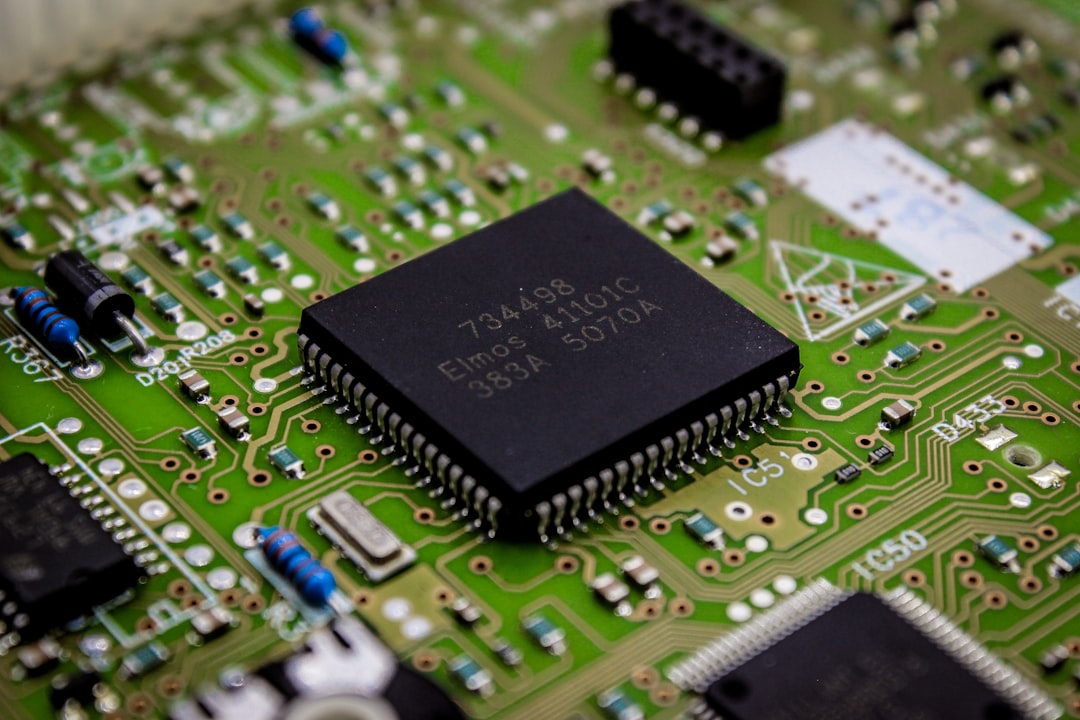
Chinese AI startup DeepSeek, known for its large language models rivaling those of OpenAI and Anthropic, has embarked on an ambitious plan to design its own AI chips. According to a Reuters report, the company has been working on the project for about a year, has reached out to potential hardware partners, and is hiring specialized engineers. The goal is to reduce dependency on Nvidia and Huawei, two key suppliers increasingly constrained by international trade restrictions.
US export restrictions push DeepSeek toward silicon
Recent US export controls have made it difficult for Chinese companies to access cutting-edge chips. DeepSeek, like other players in the sector, faces an uncertain supply of high-performance semiconductors. By designing proprietary chips, DeepSeek could control its supply chain and tailor hardware specifically for its models, potentially gaining efficiency and cost advantages. This move aligns with a broader trend among Chinese AI firms to develop in-house hardware solutions, as seen in other initiatives. The company's strategy highlights the growing importance of vertical integration in the AI industry.
Sponsored Protocol
An ambitious project with enormous technical challenges
Designing AI chips is no small feat. It requires expertise in hardware architecture, integrated circuit design, manufacturing processes, and software optimization. While DeepSeek has demonstrated remarkable capabilities in AI software, it is venturing into a domain dominated by giants like Nvidia and Huawei. However, the company could leverage its experience in language models to create specialized chips for training and inference, using architectures such as tensor cores or neural processors. Success will depend on attracting top talent and partnering with foundries like TSMC or Samsung, though US restrictions may complicate access to these facilities. DeepSeek's hiring spree suggests it is taking the challenge seriously.
Sponsored Protocol
Impact on the AI market and strategic alliances
If DeepSeek manages to launch competitive chips, it could reshape the AI hardware landscape. Currently, Nvidia dominates with its GPUs, while Huawei offers alternative solutions. A new independent Chinese player could offer lower prices and optimized performance for language models, attracting customers in China and beyond. DeepSeek has already formed hardware partnerships and is exploring collaborations with universities and research centers. The move mirrors earlier efforts by startups like OpenAI, which explored hardware projects, but DeepSeek's approach appears more concrete and production-oriented. It remains unclear whether DeepSeek will mass-produce chips or use them internally, but the direction is unmistakable.
Sponsored Protocol
Meanwhile, other companies are pursuing different strategies. OpenAI is distributing financial incentives to American users, a stark contrast to DeepSeek's approach as discussed in this article. Anthropic, on the other hand, has expanded its Claude assistant with Claude Cowork for Max subscribers, showing that AI innovation spans both hardware and applications. For more background on US export controls, see the Wikipedia page on export controls.