The James Webb Space Telescope has enabled astronomers to achieve a historic milestone: precisely measuring the mass of a dormant black hole, an object that had previously eluded direct observation. The same observational campaign also uncovered the remains of a long-lost protoplanet that once orbited in the early Solar System. The results, published this week, mark a leap forward in understanding stellar evolution and planetary formation.
The challenge of dormant black holes
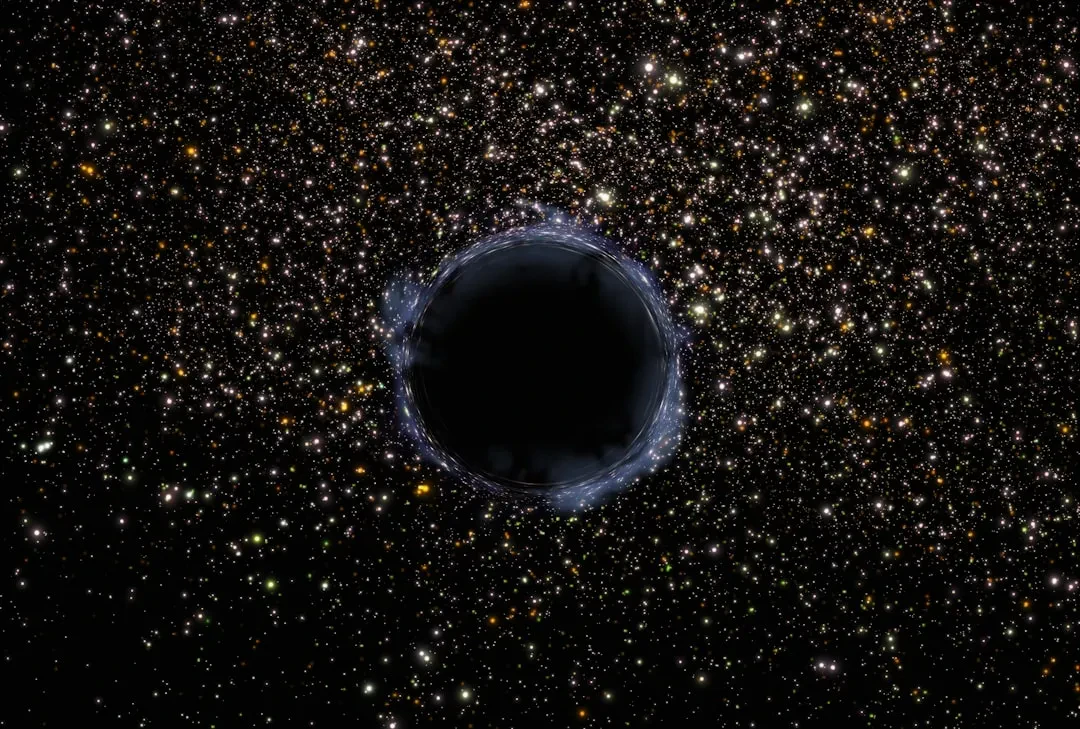
A dormant black hole emits no radiation because it is not accreting matter. To detect them, scientists must observe gravitational effects on nearby stars or gas clouds. JWST, with its infrared sensitivity and unprecedented resolution, analyzed the motion of a companion star around an invisible object in galaxy NGC 4889. The calculation revealed a mass of about 30 solar masses, confirming a stellar-mass black hole of intermediate size. This measurement paves the way for a systematic census of dormant black holes, previously hypothesized but never reliably detected.
Sponsored Protocol
The Solar System's lost protoplanet
Within the same science program, the telescope identified rocky fragments in orbit between Mars and Jupiter that, according to models, belong to a protoplanet destroyed by a cataclysmic impact about 4 billion years ago. Spectroscopic analysis showed a composition similar to Earth's mantle, supporting the idea that such objects supplied material for Earth's formation. The finding strengthens the theory of a lost planet in the Solar System, suggesting that collisions of this kind were common in the system's early history.
Sponsored Protocol
Implications for space technology and data science
These discoveries are not just an astronomical triumph. They demonstrate that next-generation instrumentation, combined with advanced data processing techniques (similar to chain-of-custody principles used in cybersecurity), can extract information from extremely faint signals. The methodology applied to the dormant black hole will be replicable to improve our ability to detect compact objects in other galaxies, while the protoplanet find provides a natural laboratory to test planetary formation models. Next steps: expand the search to thousands of binary systems and refine orbital dynamics models.