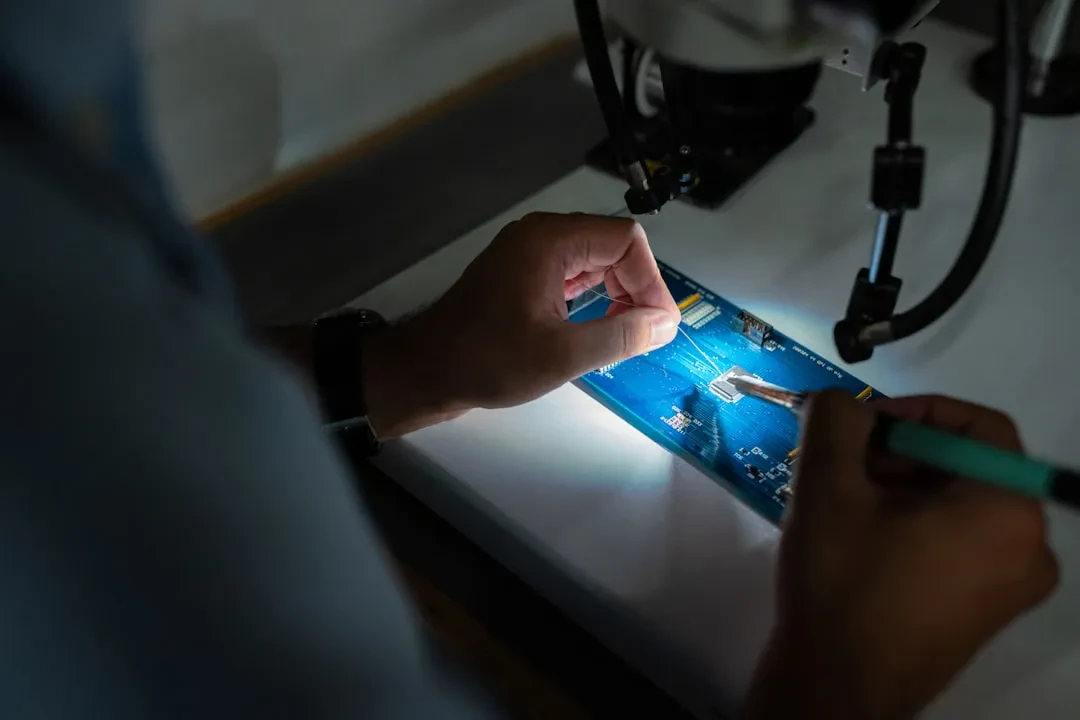
When Lior Susan started investing in hardware and manufacturing companies over a decade ago, his strategy seemed out of step in a landscape dominated by software and digital services. Today, with Cerebras Systems exiting at a valuation of $2.5 billion, Eclipse's thesis has proven prophetic. Cerebras is not just an AI chip maker: it is the symbol of a return to investment in the physical world, where innovation does not stop at code but embraces giant wafers, complex cooling systems, and state-of-the-art factories.
Eclipse, the fund founded by Susan, bet on Cerebras when few believed in scaling AI hardware beyond traditional GPUs. The company's success, with its WSE-3 processor and applications in energy and pharmaceuticals, shows that the next frontier of artificial intelligence will be physical before it is digital. As reported by TechCrunch, this win is just the start for Eclipse, which now looks at robotics, additive manufacturing, and energy infrastructure.
The Context of Talent Wars and the Tech Divide
In an era where the AI gold rush is creating a deeper divide between those with access to compute resources and those without, companies like Cerebras offer an alternative. While cloud giants monopolize the most powerful chips, specialized hardware can democratize access to large language models and complex simulations. This theme was explored in our article The AI Gold Rush Is Creating a Deeper Divide Between the Haves and Have-Nots, which analyzes emerging inequalities.
Sponsored Protocol
Parallelly, the war for talent in the automotive sector and beyond shows how much demand for hardware skills is growing. Designing a wafer-scale chip or a liquid cooling system requires rare technical figures, which companies fight over with million-dollar salaries. On this front, our report The New Gold Rush: AI Talent Wars in the Automotive Industry highlights how the physicality of solutions is attracting engineers worldwide.
Implications for the Future of Tech Investments
Eclipse's thesis is not limited to semiconductors. The fund has invested in startups developing solid-state batteries, industrial robots, and even CO2 capture technologies. AI thus becomes an accelerator for the real world, not just a digital product. This shift has profound consequences for traditional venture capitalists, used to lightweight, fast business models. They must now understand supply chains, manufacturing processes, and long development times.
Sponsored Protocol
Furthermore, the focus on the physical world aligns with growing geopolitical pressures. The desire to reduce dependence on Taiwan for chips is pushing governments and funds to finance local fabs. Eclipse, with its experience in this area, could become a key player in reshaping the global supply chain. As Susan emphasizes, the investment in Cerebras is only the first piece of a much larger mosaic.
Cerebras' Role in the New AI Economy
Cerebras has shown that it is possible to overcome Moore's Law limits with radical architectures. Its WSE-3 chip, the size of a dinner plate, integrates 4 trillion transistors and allows training AI models of unimaginable size with traditional GPUs. Companies like the US Department of Energy use it for climate simulations and nuclear fusion. This convergence between AI and fundamental physics opens scenarios far beyond software, touching drug discovery and advanced materials design.
Sponsored Protocol
The future, according to Eclipse, will be increasingly hybrid. Startups that combine innovative hardware with intelligent software will have a competitive edge. And while some funds continue to invest in entertainment apps or chatbots, Susan bets on more tangible realities. The coming years will tell whether his vision becomes the new standard or remains a niche. But one thing is certain: the physical world is back at the center of the tech stage.