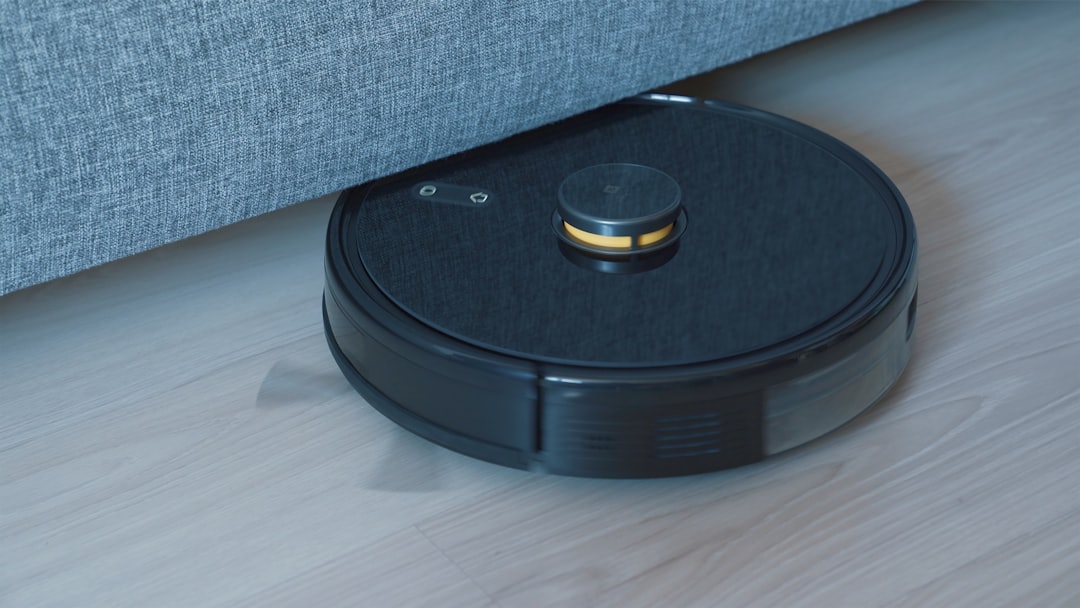
The Federal Communications Commission has expanded its covered devices list to include foreign-produced advanced robotics and connected power inverters, inadvertently banning the import of non-U.S. robot vacuums into the United States, according to The Verge. The ruling prevents new models from obtaining the equipment authorization required for import, marketing, or sale unless they pass a four-part test rooted in national security criteria.
The four-part test that catches domestic robots
The determination, attached as Appendix C to the FCC public notice, applies to any mechanical mobile device capable of locomotion, obstacle avoidance, navigation, or ground movement while operating at a distance from a human operator. To qualify as a covered device, the robot must meet four conditions: weigh more than 4.4 pounds including its charging dock, carry an environmental sensor, have a wired or wireless connection capable of at least 200 kb/s in either direction, and contain software controlling autonomous navigation, perception, data collection, or remote command and control, including AI or machine-learning model weights. FCC media relations director Katie Gorscak confirmed to The Verge that robot vacuums meet this definition.
Sponsored Protocol
Six categories are exempted: connected vehicles of any gross weight, rail vehicles, uncrewed aircraft, uncrewed underwater vehicles, FDA-regulated devices including surgical systems and powered wheelchairs, and fixed industrial arms such as SCARA, delta, and gantry designs. Drones were placed on the covered list separately in December. Crucially, the definition of foreign-produced relies on the Buy American Act: an item must be manufactured in the U.S., and the cost of domestic components must exceed 65% of total component cost through 2028, rising to 75% from 2029.
Firmware updates and certification consequences
Covered list status blocks Class I and Class II permissive changes, the mechanism manufacturers use for firmware and security patches on certified hardware. However, the Office of Engineering and Technology suspended those prohibitions for robots and inverters hours after the listing, repeating the relief given to drones in January and routers in March. Despite the suspension, the risk of lasting damage is real. DJI disclosed in an April court filing that the FCC revoked authorizations for 14 existing products and blocked 25 planned 2026 launches, with Chinese customs data showing civilian drone exports to the U.S. down 60% to 70% year-over-year since December.
Sponsored Protocol
Parallels with drone and router restrictions
Manufacturers can apply for a Conditional Approval from the Department of Defense to lift restrictions, a process Netgear and Amazon Eero completed within weeks after the March router ban. For robot vacuum makers, the path may be more complex given global supply chains. The U.S. regulation fits a broader geopolitical tension around connected technology security, similar to European concerns on AI. As noted in the article LLMs Are Insecure by Design, institutions must address intelligent system security systematically.
Sponsored Protocol
For U.S. consumers, the immediate impact could be reduced supply of Chinese or Korean robot vacuums, potentially driving up prices for remaining models. Domestic manufacturers might benefit, but large-scale production of consumer robots relies on global components hard to replace quickly. The FCC has shown willingness to suspend restrictions for security updates, but the final stance will depend on the evolving trade dynamics between the U.S. and China.