In the world of skillets, stainless steel has long been the quiet option, seen but rarely chosen first. While the market has oscillated between toxic nonstick and heavy cast iron, stainless steel pans have quietly improved, offering superior durability and searing performance. After testing five 10-inch models from All-Clad, Hestan, Viking, and Heritage Steel, we found a new benchmark: Heritage Steel, whose flatness and heat distribution outperform even the celebrated All-Clad D3.
Nonstick pans fall out of favor: stainless steel returns
In recent years, nonstick cookware has suffered a crisis of confidence. Teflon, once miraculous, was abandoned due to toxic fumes at high heat. Ceramic alternatives quickly lose their nonstick properties. Into this void, stainless steel is making a comeback. It is not nonstick, but a pat of butter solves that. It sears beautifully and, with care, lasts a lifetime. Brands like All-Clad have dominated for years, but our tests revealed surprising flaws in the D3: a slight doming of the cooking surface and imperfect rivets.
Sponsored Protocol
All-Clad D3 disappoints: doming and rivet issues
We received two All-Clad D3 samples. The first had rivets not fully squished and a slightly convex surface. The second had correct rivets, but the doming remained, about 0.5 mm difference from edge to center. All-Clad confirmed this is within their tolerance, but we find it unacceptable. Flatness is crucial for even cooking, and the D3 failed our feeler gauge test.
Viking Pure Glide Pro: a letdown with potential
The new Viking Pure Glide Pro, with a textured titanium layer, promised to combine nonstick and durability. But in testing, it became a giant hot spot, reaching over 370°F (versus 150°F for competitors), and the pan arrived already warped, with oil forming a moat in the center. If Viking fixes the warping, it could be a great option, but for now we cannot recommend it.
Sponsored Protocol
Heritage Steel Titanium: perfect flatness and even heat
The Heritage Steel Titanium Series 10.5-inch skillet impressed. It sandwiches three layers of aluminum between stainless steel and a titanium-molybdenum cooking surface. After 30 minutes of high-heat stir-frying, it showed no warping. Our Warp Gap test gave an excellent score, confirming near-perfect flatness. Heat distribution was uniform, with only 14-21 degrees difference between hottest and coolest spots. At $150, the same price as the D3, Heritage Steel offers superior quality.
Sponsored Protocol
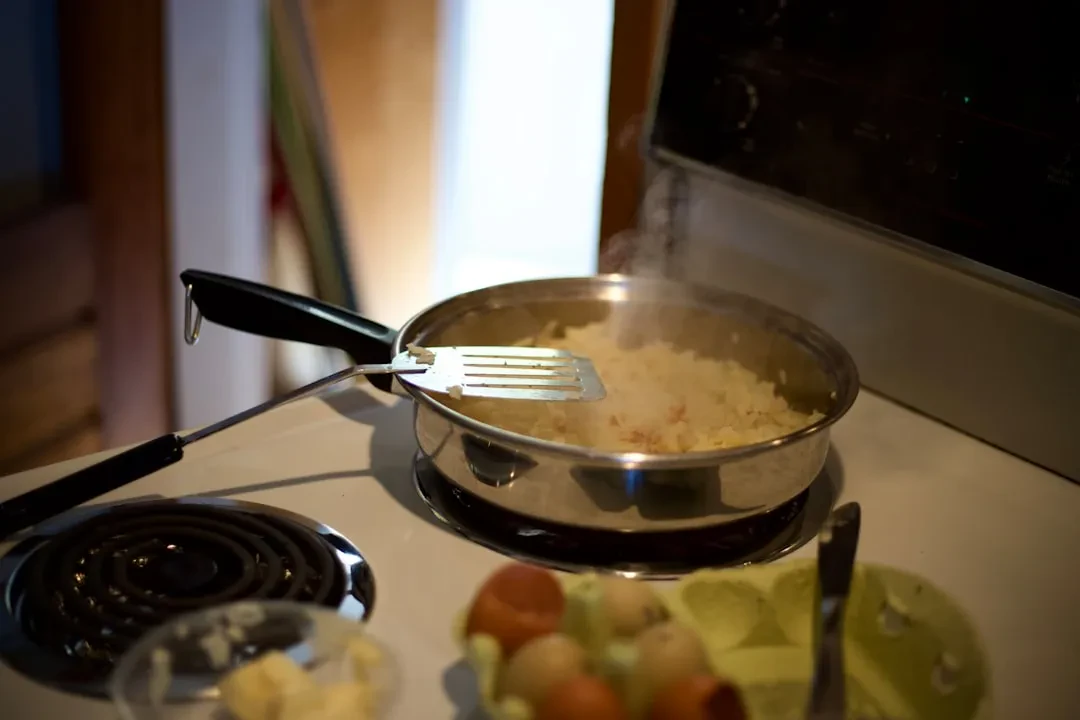
In practical cooking, we made shrimp with scrambled eggs, pork with cabbage and dill, zucchini poached in yogurt, and a ham steak. The skillet performed admirably, with perfect fried eggs and excellent sears. We recommend it to anyone looking for a pan that will last decades and can handle high heat.
If you are shopping for a new skillet, stainless steel is the right choice. Heritage Steel Titanium is our top pick for 2026, outperforming established models in flatness, heat uniformity, and durability. For deals, consider waiting for Prime Day 2026 for potential discounts. Learn more about materials on Wikipedia's stainless steel cookware page.
Source: https://www.wired.com/story/stainless-steel-skillets-are-great