Jensen Huang, CEO of Nvidia, spent two days in Tokyo on July 15 and 16 forging deals that span Japan's entire tech ecosystem. Following a keynote in Taiwan and a visit to South Korea, Huang targeted Japan as the next frontier for artificial intelligence: physical AI, which operates on machines, robots, and factory floors. The agreements range from a national AI factory to partnerships with leading robotics manufacturers and collaborations with chip-material suppliers powering Nvidia's next-generation GPUs. The message is clear: Nvidia is targeting Japan's factory floor, and many of the country's largest manufacturers are joining in.
Noetra: Japan's sovereign AI factory
Japan does not want its factories and robots running on American or Chinese AI. The government gathered roughly 44 domestic firms, with SoftBank, Sony, NEC, and Honda at the core, to create Noetra, a consortium dedicated to developing physical AI foundation models. Tokyo is committing up to 1 trillion yen ($6.2 billion) over five years, betting on homegrown AI for machines. However, the hardware to train them still comes from Nvidia: the U.S. chip giant will build a Vera Rubin AI factory, a massive data center with 13,750 Vera CPUs and 27,500 Rubin GPUs, delivering 140 megawatts, expected by 2028. Noetra will oversee the project, developing a reasoning model strong in Japanese by fiscal 2026, an omni-modal version handling text, images, video, and audio by 2028, and a "Real-world Native AI" to run robots by 2030.
Sponsored Protocol
The robotics coalition aligns behind Cosmos
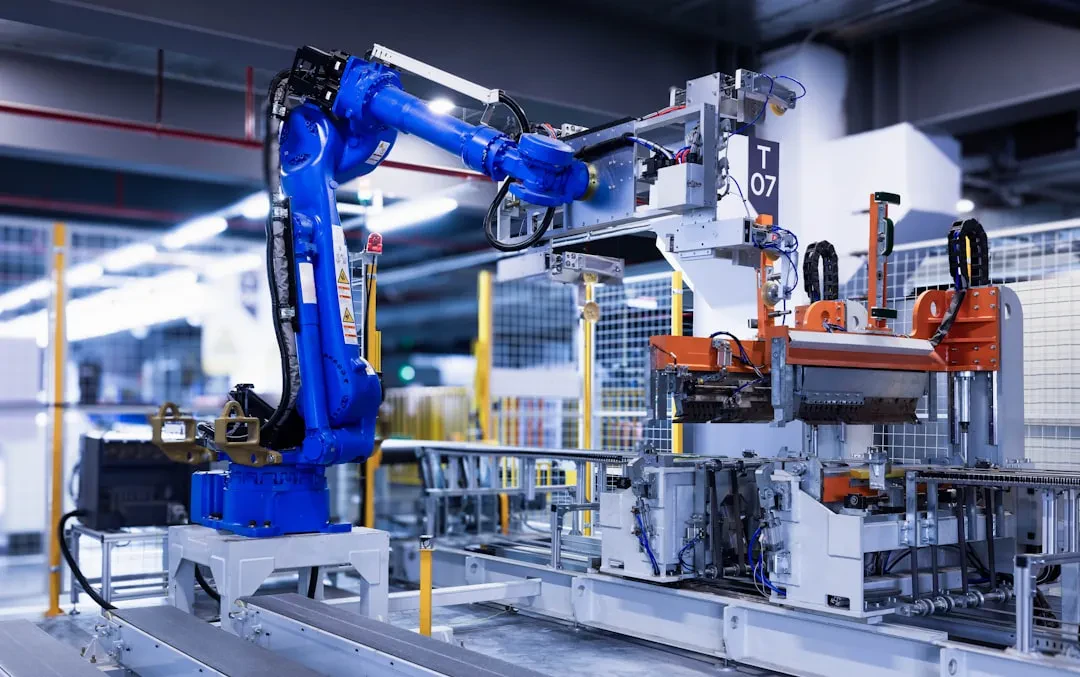
Nvidia is targeting Japan's factory floor, and many of the country's top robotics and manufacturing players are signing on. Fanuc, Yaskawa, Kawasaki Heavy, Fujitsu, Hitachi, NEC, Sony, SoftBank, Kubota, and the AIRoA group have announced plans to build on Nvidia's Cosmos models. In Tokyo, Huang unveiled Cosmos 3 Edge, a version that runs on Jetson Thor chips inside the machines themselves. Some are already testing a shared control system; Honda R&D and Omron are building on the tools now. "The next frontier of AI is in the physical world, and this is a once-in-a-generation opportunity for Japan," Huang said in a statement. "Japan invented modern manufacturing. Now, it has the opportunity to reinvent it for the age of intelligent industries."
Sponsored Protocol
Toyota: from cars to physical AI
Toyota already uses Nvidia chips across much of its stack. At CES 2025, it committed its next-generation vehicles to Nvidia's Drive platform; now the collaboration extends to manufacturing, with simulations for production line design, vehicle software, and road traffic systems. Toyota's cars will feature advanced driver assistance that steers and brakes but still requires a driver, a more conservative approach than Waymo and Tesla. The deal strengthens the bond between Nvidia and Toyota, placing the automaker at the heart of Japan's physical AI strategy.
Sponsored Protocol
Huang's visit put physical AI at the center of Japan's industrial strategy. Facing a shrinking workforce, Japan aims to deploy 10 million AI-equipped robots across 18 sectors by 2040, backed by $65 billion in public and private investment. The AI Robotics Strategy, released in March, targets capturing more than 30% of the global AI robotics market by 2040, a market Tokyo values at roughly $133 billion. Noetra's factory, dubbed by Nvidia as "the world's first national AI infrastructure," is the clearest bet yet. Yet Japan's push for independence, for now, runs on American silicon.
For more on AI biases, read the Princeton study showing that AI models develop hiring biases more readily than humans. To understand the global landscape, compare Japan's strategy with China's surpassing Europe in AI. For the full story, see the original TechCrunch article.
Source: https://techcrunch.com/2026/07/19/what-to-watch-for-after-jensen-huangs-japan-visit