The global tech landscape is witnessing two significant moves that are redrawing the boundaries between national defense and cybersecurity. On one side, Mach Industries has invested 50 million dollars to solve a critical defense problem, improving the unit economics of its vehicle programs. On the other, Ocean, an agentic email security platform, has raised 28 million dollars to counter AI-driven phishing threats. These developments, announced on May 19 and 20, 2026 respectively, mark a turning point in integrating AI into traditionally rigid sectors.
Mach Industries and the Defense Manufacturing Shift
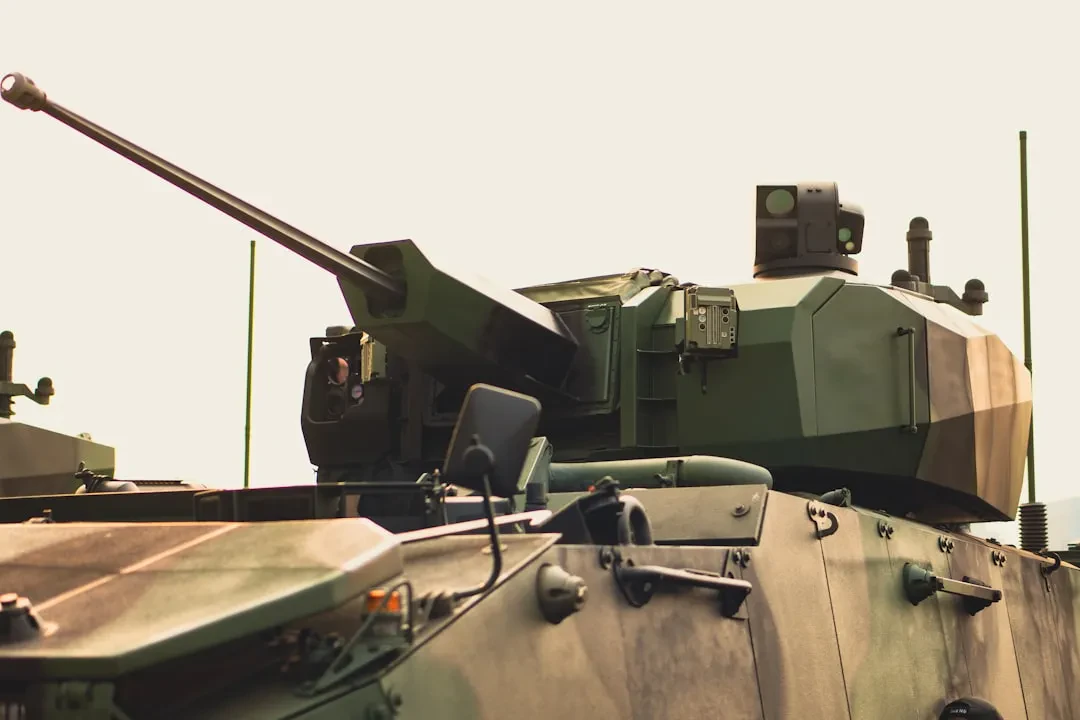
Mach Industries, a emerging defense company, spent 50 million dollars to acquire technology capable of solving a long-standing engineering problem. According to sources close to the company, the acquisition meaningfully improves unit economics across its five vehicle programs at exactly the moment the company is starting to scale. This investment is not just about budget; it represents a paradigm shift in designing defense systems, where cost efficiency is often sacrificed for performance. Mach aims to democratize access to advanced military technologies by reducing costs and speeding up deployment times. The move comes as the Pentagon and NATO allies seek agile, modular solutions to counter hybrid threats. According to a TechCrunch report, Mach's vertical integration could redefine how autonomous battlefield vehicles are designed. The convergence of AI and defense is evident: mission-control software and smart sensors become the beating heart of these new systems.
Sponsored Protocol
Ocean and the Fight Against AI-Generated Phishing
In parallel, Ocean, founded by a former teenage hacker now an Iron Dome researcher, has closed a 28 million dollar funding round to bolster its email security platform. Ocean uses an agentic AI to thoroughly analyze the context of every incoming email, detecting fraud and impersonation attempts with unprecedented accuracy. AI-powered phishing has exploded in recent months: attackers use language models to craft extremely convincing messages. Ocean promises to counter them by analyzing not only content but also intentions and behavioral anomalies. This approach marks an evolution over traditional spam filters. The scarcity of effective tools against AI phishing is pushing enterprises and governments to seek innovative solutions. The startup, as reported by TechCrunch, fits into a broader cybersecurity ecosystem where platforms like Discord implementing end-to-end encryption for all calls mark a privacy step forward but require new protection tools against insider threats.
Sponsored Protocol
Implications for the Future of Technology
Both these investments reflect a wider trend: AI is no longer just an abstraction for research labs but a concrete enabler for high-impact sectors. In Mach's case, production cost optimization could make feasible new unmanned vehicle concepts for surveillance or logistics transport. For Ocean, the ability to protect millions of users' email inboxes reduces the risk of large-scale breaches, like those seen in the past against government agencies. Moreover, Ocean's founder background ranging from military experience (Iron Dome) to former hacker activities demonstrates how the line between offensive and defensive security is thinning. The synergy between defense and cybersecurity is set to intensify, with increasing crossovers of talent and technologies. While the regulatory landscape struggles to keep pace, companies like Mach and Ocean are writing the rules of the future.
Sponsored Protocol