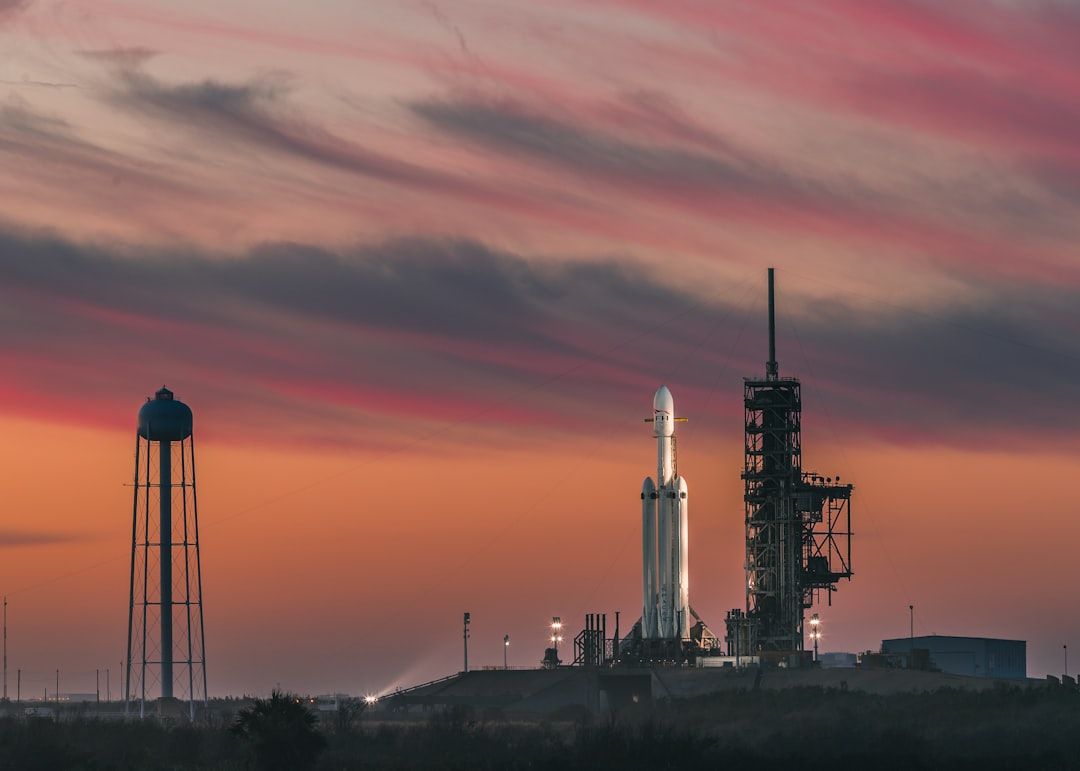
NASA has changed the launch vehicle for its upcoming solar research mission. The six small satellites of the Sun Radio Interferometer Space Experiment, known as SunRISE, will no longer fly on a United Launch Alliance Vulcan Centaur rocket. Instead, they have been reassigned to a SpaceX Falcon Heavy, according to a NASA mission update. The mission is designed to serve as an early warning system for solar storms, and the switch follows an anomaly on the Vulcan's solid rocket booster during a recent national security launch.
Rocket swap after recurring booster issue on Vulcan Centaur
SunRISE was originally manifested on a Vulcan Centaur. However, the USSF-87 mission experienced an anomaly in one of the solid rocket boosters, the second such incident in four Vulcan flights. Although the payload reached its intended orbit, the recurrence prompted the U.S. Space Force to pause national security launches on Vulcan pending an investigation. SunRISE is part of a rideshare mission sponsored by the Space Systems Command. While NASA did not specify which specific launch SunRISE will now join, SSC has previously shifted payloads between Vulcan and SpaceX's Falcon 9, making the switch plausible.
Sponsored Protocol
Six mailbox-sized satellites to fly in formation as a giant radio telescope
SunRISE is a heliophysics study under NASA's Explorers Program. The constellation consists of six smallsats, each about the size of a mailbox, equipped with 10-foot (2.5-meter) antenna booms. They will orbit at an altitude of roughly 22,000 miles (35,000 km), flying in a 10-mile (16-km) wide X formation. This arrangement allows them to act as a single large radio telescope, tracking solar radio bursts that travel faster than the energetic particles from a solar storm. Such storms, like the one that hit Earth in January, can disrupt satellites, endanger astronauts, and affect airline passengers near the poles.
Sponsored Protocol
Falcon Heavy: a proven workhorse for heavy payloads
SpaceX's Falcon Heavy is a heavy-lift vehicle consisting of three modified Falcon 9 first stages. It can deliver up to 58,860 pounds (26,700 kg) to geostationary transfer orbit. Since its debut in 2018, it has flown 12 times, including four national security missions. Its most recent flight was in April 2026 with the Viasat-3 F3 satellite. The next Falcon Heavy launch is NASA's Nancy Roman Space Telescope, scheduled for no earlier than August 30. SunRISE is expected to launch later this year, but no specific window has been announced.
Sponsored Protocol
SunRISE will not provide real-time alerts; instead, data from the mission will improve space weather prediction models, helping to protect orbital infrastructure. For more on software reliability tools used in critical missions, see this article on Git Bisect and Blame. Additional details on the Falcon Heavy can be found on Wikipedia.