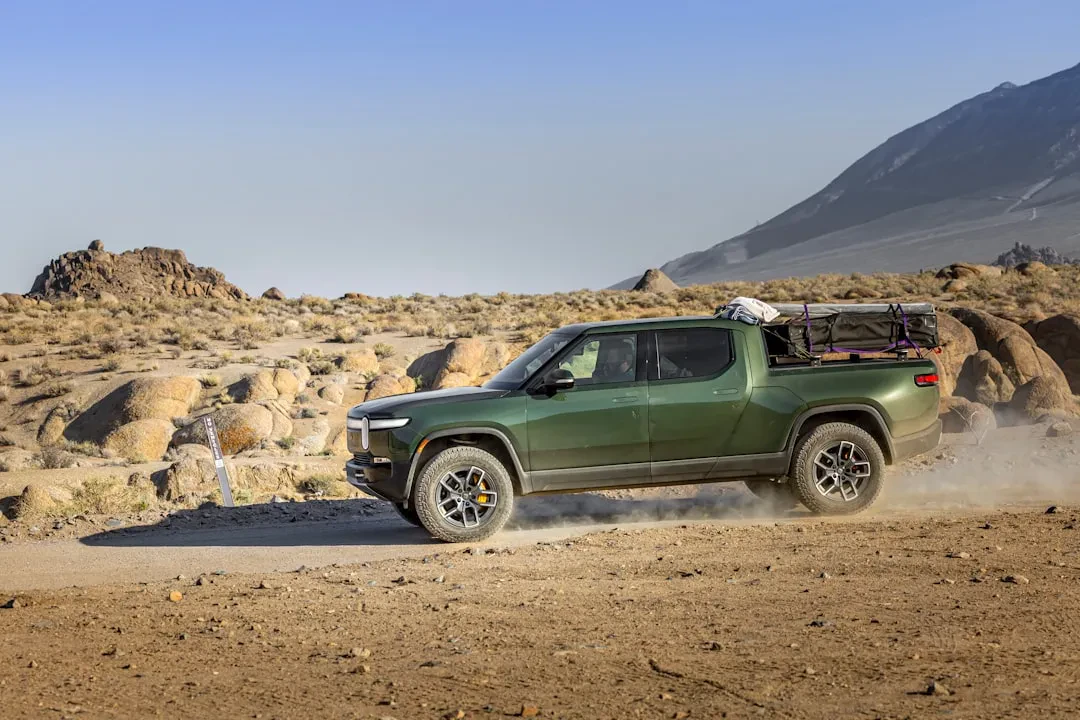
In the rapidly evolving landscape of electric vehicles, Rivian has announced the commencement of production for its highly anticipated R2 SUV. This milestone marks a significant step for the company, although details regarding customer delivery timelines reveal a phased launch strategy. Rivian's CEO, RJ Scaringe, personally drove the first electric SUV off the production line at its Normal, Illinois facility. This event takes place shortly after a storage and logistics building at the same site was damaged by a tornado, highlighting the company's resilience in the face of adversity.
A Phased Market Rollout
Despite the start of production, customers will have to wait a while longer before they can get their hands on an R2. According to Reuters, Rivian CFO Claire McDonough specified that customers will only be able to configure their orders starting in June. The initial units rolling off the line are intended for Rivian employees, a method to further test and optimize the process before the public release. The more affordable variants, with an announced starting price of $45,000, are not expected until late 2027, while the first models to be delivered this spring will start at $57,990 for the Launch Package. The Premium trim, expected in late 2026, will cost $53,990.
Sponsored Protocol
Technical Specifications and Market Positioning
The R2 was unveiled in 2024 as a more compact and lighter offering compared to the flagship R1 model. Rivian aims to position the R2 as a direct competitor to the Tesla Model Y, one of the best-selling electric vehicles in the global market. All versions of the new two-row SUV are rated for at least 300 miles of range on a single charge. Technical specifications include a standard NACS charging port and the ability to charge from 10% to 80% in under 30 minutes using a DC fast charger. This makes the R2 an attractive option for those seeking a practical, high-performing electric SUV with an eye for design, while maintaining a competitive price point in the segment. The delayed launch strategy might serve to manage demand and ensure an impeccable customer experience from day one, a crucial aspect in the automotive industry. The company is demonstrating remarkable recovery capabilities, as seen with the recent tornado incident, and a commitment to innovation in the EV sector.
Sponsored Protocol
This development comes at a time when the electric vehicle market continues to expand, with companies like Tesla dominating the scene and new players emerging constantly. Rivian's strategy of differentiating delivery times for various R2 configurations is a common tactic to maximize revenue and gradually meet customer expectations. While the spotlight is on the R2, it is interesting to see how it fits into the broader ecosystem of electric car manufacturers and what challenges they will face in capturing significant market share. Other manufacturers are focusing on AI to enhance user experience, as seen with Google Maps' Generative AI enhancements, but for Rivian, production and delivery remain paramount priorities.
Sponsored Protocol