South Korea‘s government, together with tech giants Samsung, SK Hynix, and Hyundai Motor Company, has unveiled a $1 trillion plan to boost memory chip production, build new AI data centers, and accelerate the commercial deployment of humanoid robots by 2028. The initiative is one of the most ambitious industrial strategies ever launched in the artificial intelligence sector.
Unprecedented investment to address AI chip shortages
The explosive demand for high-performance memory, driven by generative AI model training, has strained global supply. Samsung and SK Hynix have posted record profits, but scarcity has driven up consumer electronics prices. The South Korean package aims to increase domestic production capacity, reducing dependence on foreign suppliers. The goal is to double production of HBM (High Bandwidth Memory) chips by 2027, a crucial component for AI data centers. This move could rebalance the global market, where China and Taiwan currently dominate semiconductor manufacturing.
Sponsored Protocol
Humanoid robots ready to enter Hyundai factories by 2028
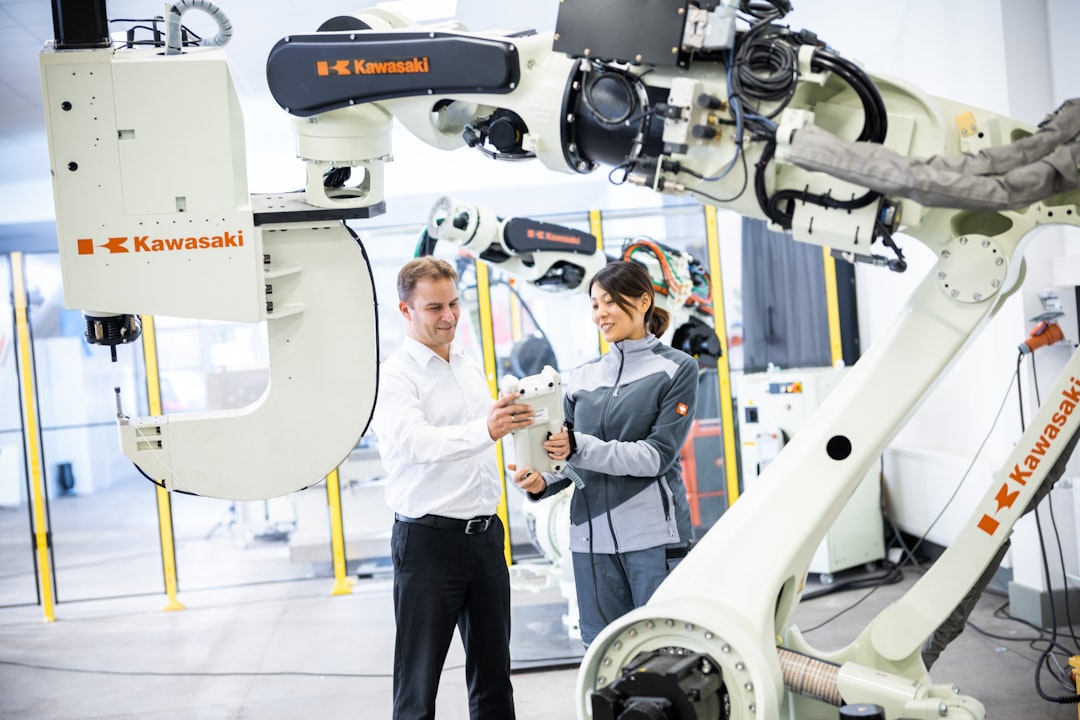
Hyundai Motor, through its subsidiary Boston Dynamics, is accelerating mass production of humanoid robots designed to replace workers in repetitive and dangerous tasks. The company plans to deploy the first robots in its own automotive factories as early as 2028, later expanding to other industrial sectors. The South Korean government will allocate $150 billion in subsidies to promote robot adoption in manufacturing, aiming to create a physical AI ecosystem that integrates hardware and software. President Lee Jae Myung stated in a televised speech on June 29: “We must secure the core elements of AI faster than any other country.” BBC News covered his remarks, highlighting the strategic urgency.
Sponsored Protocol
AI data centers: the third pillar of the plan
Beyond chips and robots, the plan includes constructing 10 mega data centers powered by renewable energy, with an investment of $300 billion. These facilities will be designed to host generative AI, machine learning, and real-time inference workloads. South Korea aims to become Asia‘s primary AI hub by 2030, leveraging its geographical position and semiconductor strength. Meanwhile, in Europe, discussions about restricting AI access are ongoing: for instance, OpenAI has tightened access in Europe, hurting Italian SMEs. South Korea’s approach contrasts sharply, emphasizing technological sovereignty and public investment.
Labor market impact and global trends comparison
Industrial automation raises questions about employment. However, a recent report by Ramp and Revelio Labs debunked the myth that AI destroys entry-level jobs. According to the study, AI adoption tends to create new roles despite replacing some tasks. South Korea plans to manage this transition through state-funded retraining programs, allocating $50 billion to train engineers and technicians specialized in robotics and chip design.
Sponsored Protocol
The South Korean initiative serves as a wake-up call for Europe and the United States, which are struggling to keep pace. With an investment equal to 7% of its GDP, Seoul is betting everything on AI. The success or failure of this plan will influence the geopolitical balance of technology for decades to come.