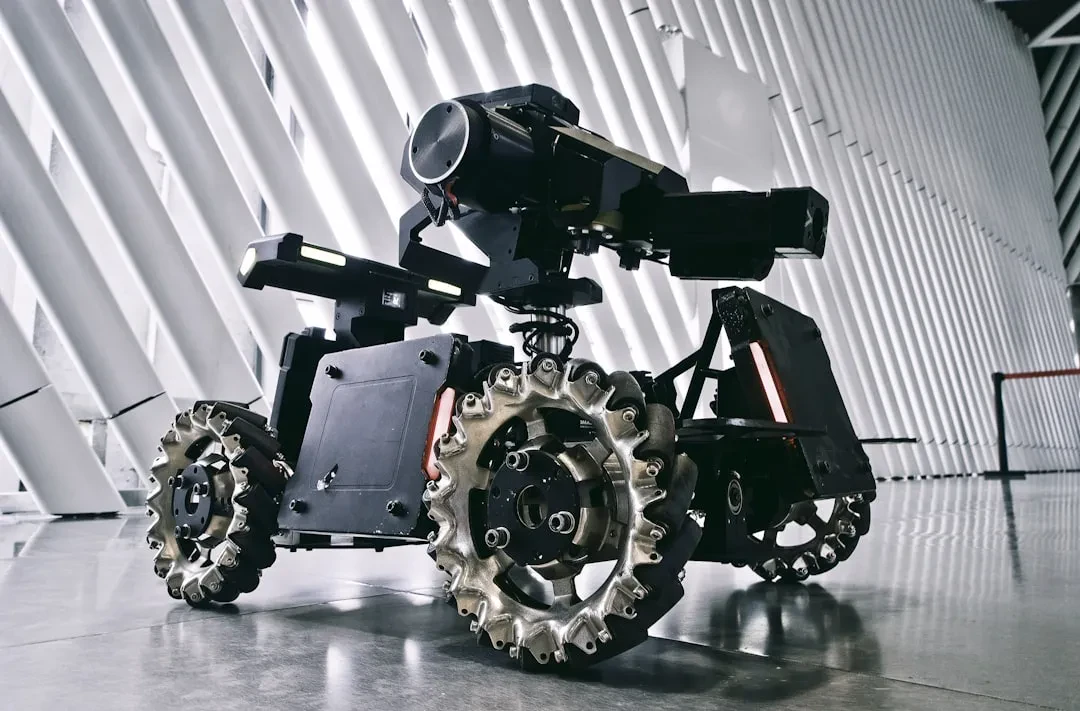
The manufacturing industry is undergoing a quiet but radical transformation. While many focus on humanoid robots with fixed designs inspired by machines like those from Boston Dynamics, a startup has chosen a completely different path. Theker has just announced an $85 million funding round to develop industrial robots that do not specialize in a single task but can be reconfigured to adapt to any production need. This news arrives at a time when the sector is seeking flexible solutions to counter the rigidity of traditional assembly lines.
The philosophy behind Theker is simple yet powerful: instead of building machines designed for one purpose, they create interchangeable robotic modules that can assemble into different configurations depending on the job. Imagine a robotic arm that transforms overnight into a gripper, a welder, or a laser inspection system without costly reprogramming or downtime. This approach echoes what is happening in the software development world, where tools like Cursor AI and AI-assisted development are making workflows more adaptable and less tied to single technologies.
Sponsored Protocol
The funding, led by top venture capitalists, underscores confidence in Theker's vision. With $85 million, the company plans to expand manufacturing capacity, hire specialized engineers in modular robotics, and launch partnerships with major manufacturing groups. Demand for flexible automation is growing strongly, especially in sectors like electronics, automotive, and logistics, where product life cycles are shortening. Traditional specialized robots, expensive to repurpose, can no longer keep up.
How reconfigurability works
Theker's secret lies in a system of standardized interfaces and advanced control software. Physical modules connect via smart connectors that transmit both power and data. An orchestration algorithm automatically decides the optimal configuration based on the received task, reducing setup time from hours to minutes. This means a factory can switch from producing a smartphone to an automotive component without replacing the entire robotic line. This is not just flexible hardware but a true operating system for production.
Sponsored Protocol
This innovation arrives amid heated debates about cybersecurity in interconnected systems, as highlighted by the recent zero-day vulnerability fixed by Microsoft after a heated researcher dispute. The reconfigurable nature of Theker robots requires careful cybersecurity management, but founders emphasize that every module is designed with software-updatable security protocols. The open model, similar to open-source AI projects like MiMo Code by Xiaomi, could foster widespread adoption.
The news has already sparked reactions at major industry events. According to analysts, the global modular robotics market could reach $15 billion by 2030, with Theker positioning as a pioneer. Compared to humanoid robots that often require redesigned environments, Theker's machines integrate easily into existing factories. The competitive advantage is clear: lower installation costs, faster conversion speed, and a long-lasting investment.
Sponsored Protocol
To better understand the technological context, it is worth exploring the concept of reconfigurable robotics on authoritative sources such as Wikipedia. The theory behind modular robots has existed for decades, but only today's computing power and component miniaturization enable practical implementation. Theker has seized this synergy, attracting substantial capital at a time when industrial automation seeks sustainable solutions.
The future of factories might not consist of giant humanoids walking between departments, but of intelligent blocks reorganizing like Lego pieces. With $85 million in the bank, Theker has the resources to prove that flexibility is the new frontier of productivity. We await the first industrial case studies, which could redefine how we envision 21st-century manufacturing.