This week the tech world witnessed three announcements that, taken together, paint a clear picture of how artificial intelligence is reshaping software and hardware creation. On one side, the funding of Atech, a startup bringing so-called vibe coding to the physical world, on another, Richard Socher's debut with an ambitious $650 million project for a self-improving AI, and finally, the release of Grok Build, xAI's coding agent. These three parallel movements converge toward a future where the line between idea and product becomes increasingly thin.
Vibe Coding Finds a Home in Hardware
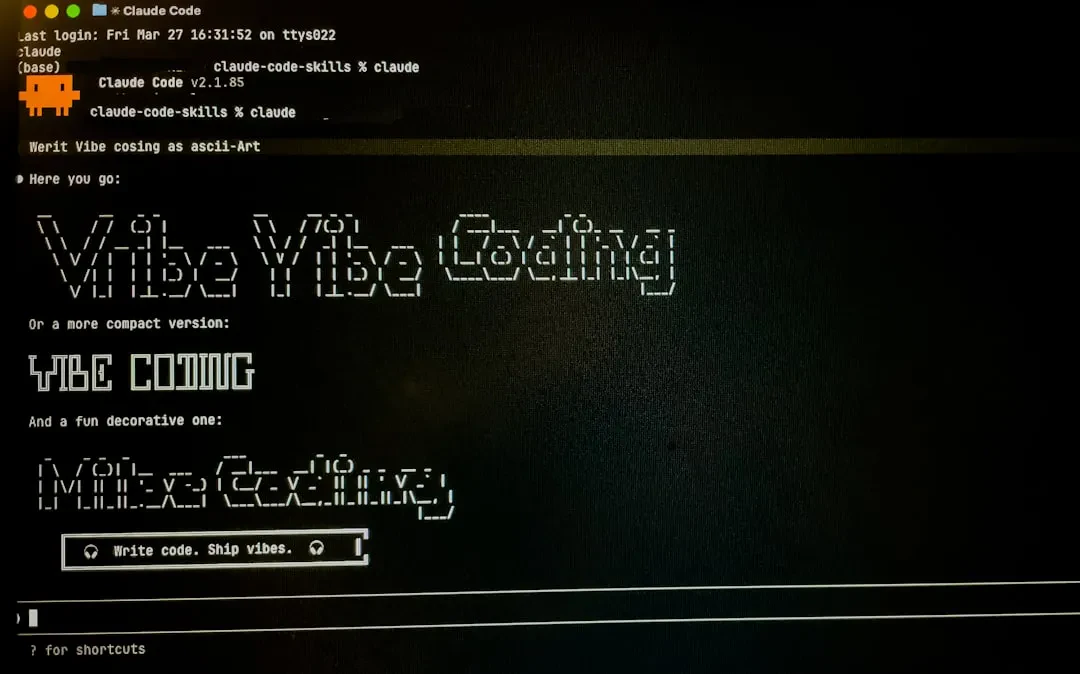
The concept of vibe coding, popularized by Andrej Karpathy, describes a development approach where you rely on large language models to generate code almost magically, without worrying about technical details. Until recently this was purely a software phenomenon, but Norwegian startup Atech has just raised $800,000 in a pre-seed round led by Lovable, with participation from a16z’s scout fund, Sequoia Scout Fund, and Nordic Makers. Atech's goal is ambitious to apply the same philosophy to hardware design. Practically, engineers will be able to describe a circuit or an electronic device in natural language and have the AI generate schematics, PCB layouts, and even manufacturing specifications. If vibe coding democratized app creation, Atech aims to do the same for physical devices, opening doors for a new generation of makers and inventors. To better understand the evolution of AI coding tools, it's worth looking at how OpenAI Codex came to the phone and Clawdmeter revolutionized AI coding monitoring, a sign of how powerful AI is becoming increasingly portable and accessible.
Sponsored Protocol
The AI That Builds Itself: Richard Socher's Dream (and Funding)
While Atech aims to simplify human creation, Richard Socher, former CEO of You.com and NLP pioneer, has unveiled a far more radical project. His new startup, fueled by a $650 million funding round, wants to build an artificial intelligence capable of researching and improving itself indefinitely. Socher insists this AI won't just be a lab experiment but will ship real products. The concept raises deep questions: what happens when a system starts rewriting its own code, optimizing its algorithms, and discovering new architectures without human intervention? While some warn of an uncontrolled singularity, Socher stresses that his approach includes safety mechanisms and oversight. The path to a self-improving AI is complex, but the capital invested shows Silicon Valley is betting big on this vision.
Sponsored Protocol
Grok Build: xAI Enters the Coding Agent Race
Elon Musk could not stay out. His company xAI has launched Grok Build, a coding agent in early beta, currently exclusive to SuperGrok Heavy subscribers. Grok Build enters a crowded market with GitHub Copilot, OpenAI Codex, Anthropic's Claude, and others, but with a key difference native integration with the X (formerly Twitter) ecosystem and access to increasingly powerful language models. Although it's early to evaluate its performance, the very fact that xAI enters this segment confirms that coding agents have become the new AI battlefield. The race for automated development tools is now global, with every major player trying to offer the fastest and most integrated solution. For a parallel view of hardware AI investments, read the article on Cerebras raising $5.5 billion and making the biggest tech IPO of 2026, an event showing how the computing power demand for these AIs is growing exponentially.
Sponsored Protocol
Future Implications and Convergence
These three stories are not isolated. They represent different facets of a single phenomenon the democratization and acceleration of technological creation. Vibe coding applied to hardware could cut prototyping times from months to days. Self-improving AI could automate scientific research itself. And agents like Grok Build make coding accessible to a much wider audience. However, issues around security, intellectual property, and control over increasingly autonomous systems also arise. As the security researcher who thwarted a Russian hacker attack on Signal explained, counter-hacking is becoming crucial in a world where AI is both a tool and a target.
Sponsored Protocol
For a deeper dive into the concept of vibe coding, you can consult the relevant Wikipedia page. Ultimately, 2026 is proving to be the year AI stops being just an assistant and becomes a full-fledged co-creator, capable of designing not only bits but also atoms.