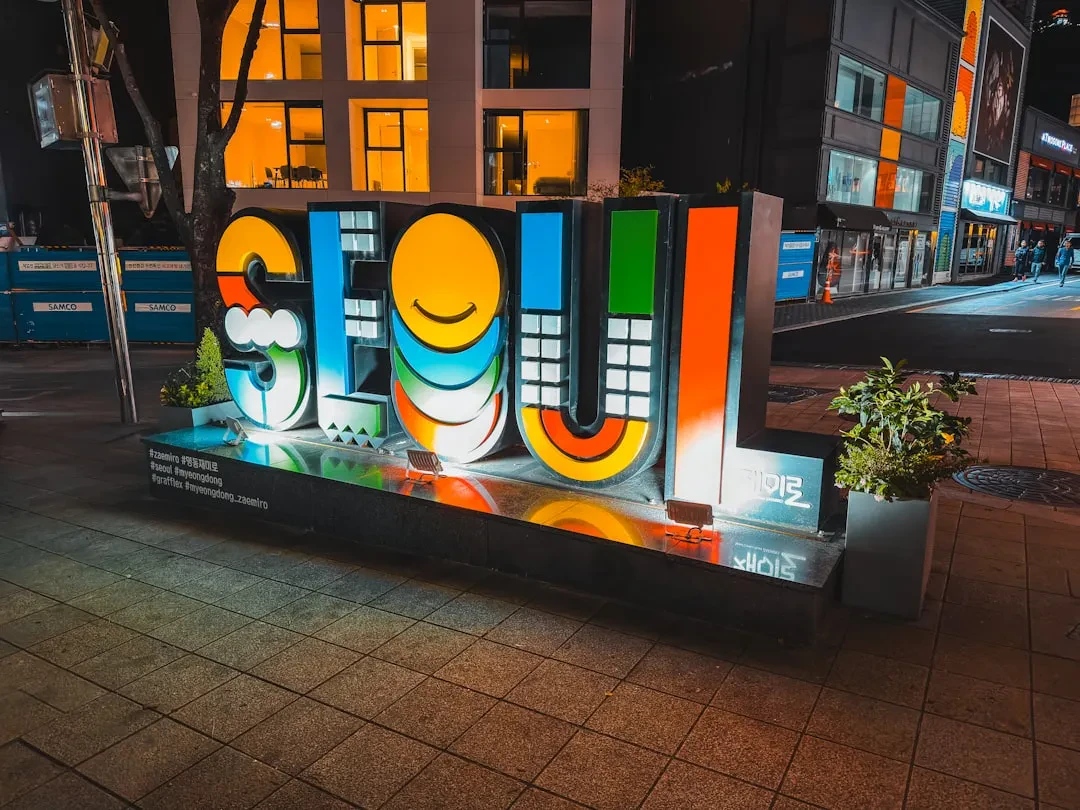
Landing in Seoul, the first impression is a country that has already embraced the future. Unmanned immigration checkpoints, robots delivering dinner at crosswalks, and interactive bus stops are the norm. South Korea not only adopts technology but lives it with excitement. While a public backlash against AI is brewing in the US, only 16% of South Koreans say they are more concerned than excited about AI, the lowest among 25 countries surveyed by the Pew Research Center. A majority of Koreans use AI daily, either as a personal assistant or for work tasks, according to surveys by the Ministry of Culture and the Korea Chamber of Commerce.
Government-Engineered Enthusiasm
This passion for AI is no accident; it has been engineered at the national level. The South Korean government has made the Fourth Industrial Revolution the cornerstone of economic growth, heavily investing in AI as the engine of the future. President Lee Jae-myung has pledged to elevate the country among the “top three AI powers” alongside the US and China. He launched the Presidential Council on National AI Strategy and a sovereign AI foundation model project, along with generous tax credits for semiconductor giants like Samsung and SK Hynix. These companies supply most of the high-bandwidth memory chips needed for training Nvidia’s AI hardware, pushing the Kospi index to record highs.
Sponsored Protocol
A History of Tech Love
South Korea has a long tradition of early technology adoption, from steel and ships in the 1970s to semiconductors in the 1980s, broadband in the 1990s, and smartphones in the 2000s. This trajectory has created a deep conviction that embracing innovation is essential for modernizing the country and solidifying its global role. AI is just the latest manifestation of this ethos. Examples include AI textbooks in schools and AI eldercare robots in welfare centers, adopted directly by government agencies.
Sponsored Protocol
Blind Spots and Concerns
However, this focus on economic growth can overshadow critical reflection on AI’s social and ethical impacts. In 2025, the government faced fierce backlash for deploying AI textbooks riddled with factual errors and privacy risks without proper piloting. Additionally, despite optimism, Koreans fear job displacement. After Hyundai announced plans to use Atlas humanoid robots in its factories, the union protested strongly. 64% of South Koreans worry AI could replace human labor and increase inequality, though 52% believe it could boost productivity.
AI as Shaman and Financial Advisor
The fascination with AI extends to the personal sphere. A 29-year-old insurance agent in Seoul confessed to asking ChatGPT for advice on work, love, and finances. 46% of South Koreans in their 20s have used a chatbot for fortune telling, according to a Gallup survey. ChatGPT becomes a kind of digital shaman, a portal to a better future. But the same person who uses it enthusiastically fears AI might take her job. This paradox sums up South Korea’s relationship with AI: deep love, but not without fear.
Sponsored Protocol
The Korean situation offers an interesting perspective for Europe, still debating between regulation and innovation. While Silicon Valley prepares apocalyptic scenarios, as highlighted in our article Elites, Cults and Matchmaking, South Korea moves forward pragmatically. For more on contrasting approaches, see also Snap Specs.
For further reading on South Korea’s tech history, visit Wikipedia.
Source: https://www.technologyreview.com/2026/06/15/1138983/why-do-south-koreans-love-ai-so-much