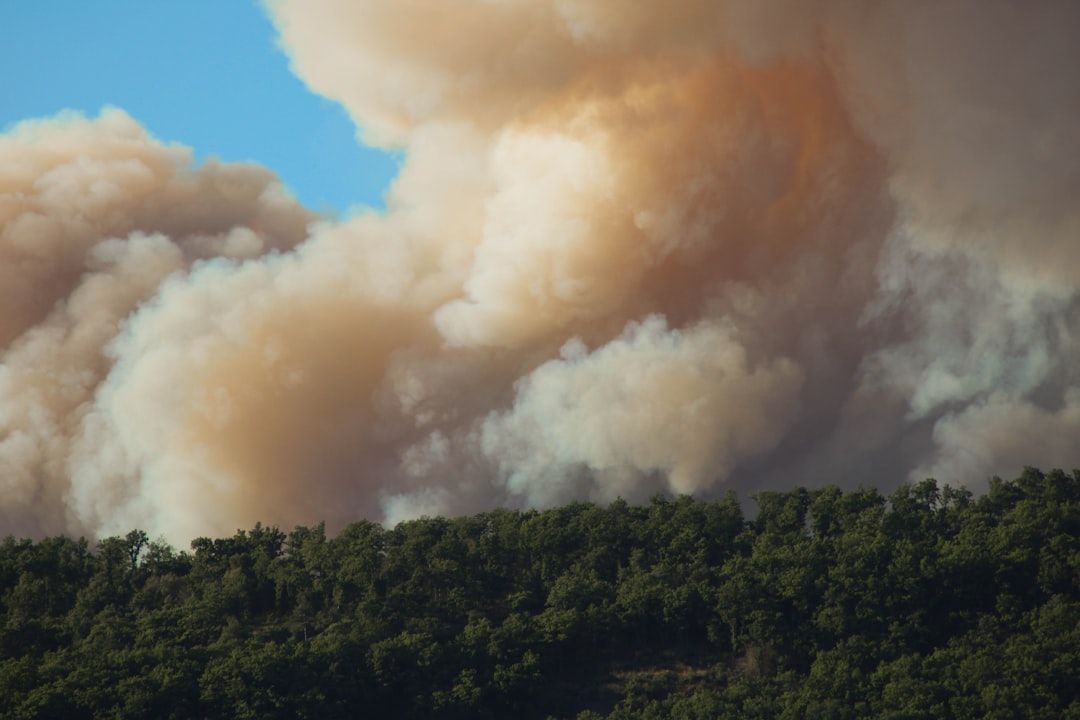
When Sylvie Andrews and her partner lost their home in the Eaton Fire in Altadena, California, in January 2025, they lost more than a house. They lost years of sacrifice and a community. While thousands fled, on Polymarket, the largest prediction market platform, bets were placed on the fire's growth. Over $1.2 million was wagered on questions like "How many acres will the Palisades Fire burn by Friday?" and "Will the Palisades Fire be contained before February?" Andrews called the practice "morally reprehensible." The Eaton and Palisades fires destroyed more than 16,000 structures and killed 31 people.
How prediction markets work and their application to wildfires
Prediction markets, as explained on Wikipedia, are gambling platforms for future events, from elections to natural disasters. On Polymarket, "yes" or "no" contracts trade between $0 and $1, with the price reflecting perceived probability. In 2025, Polymarket listed nearly 20 questions about California wildfires, attracting $1.2 million in bets. A new platform called Wyldfyre specializes in California fires, with the tagline "You can't predict wildfire. But you can trade on it." Wyldfyre uses NASA hotspot data and National Interagency Fire Center perimeters to offer real-time county and city fire risk pricing. However, the site is opaque, does not reveal ownership, and currently only allows simulated trading.
Sponsored Protocol
Ethical concerns and the risk of arson
Survivors and ethicists raise alarms. Susan Sherman, who lost her childhood home in the Palisades Fire, called the bets "crass and heartless." But the most concrete danger is arson. Theoretically, betting on a fire could incentivize someone to start or fuel one. Unlike hurricanes or floods, a fire can be manipulated in minutes by a single person. A US Forest Service spokesperson stated: "Systems that tie financial gain to wildfire outcomes risk encouraging misuse, including arson." Ann Skeet from the Markkula Center for Applied Ethics warned that markets supporting such activities are dangerous and could lead to insider trading by firefighters with privileged information. "When you start gambling on somebody's potential death or harm, you're really diminishing the value that you're placing on human life," Skeet said.
Sponsored Protocol
Firefighting agencies reject prediction market data
Despite proponents claiming prediction markets generate useful crowdsourced information, federal and state agencies do not use them. The US Forest Service clarified they rely on validated science and proven predictive tools from the National Weather Service and National Interagency Fire Center. Phillip SeLegue, staff chief of Cal Fire's intelligence program, explained their modeling is deterministic and physics-based, not informed by markets or wagering systems. "Our modeling is deterministic and physics-based; it is not informed by markets, wagering systems, crowd predictions or any other form of prediction-market mechanism," SeLegue said. Authorities use weather observations, fuel conditions, topography, and other data to predict fire spread.
Sponsored Protocol
Regulation efforts and future outlook
Lawmakers are starting to act. In March, representatives from Utah and California introduced federal legislation to ban betting on terrorism, assassination, war, and illegal activities. A California senator proposed prohibiting contracts on an individual's death. Minnesota became the first state to ban hosting or advertising (though not betting on) prediction markets, sparking a federal lawsuit. However, none of the proposed restrictions explicitly mention wildfires. Meanwhile, Andrews suggests winners should donate profits to fire survivors. The debate continues as the 2026 wildfire season begins. For more on ethical risks in speculative technologies, see our article on Pretexting and In-Person Impersonation.
Source: https://www.wired.com/story/prediction-markets-let-you-bet-wildfire