> cd .. / HUB_EDITORIALE
Sistemi Operativi & Sicurezza
Antivirus: what it is, how it works, and why it's still essential in 2025
[2026-03-30]
Author: Ing. Pietro Maiorana
Every time we open a suspicious email, click on an attachment, or download a program from a semi-unknown website, there is a silent actor that decides whether to turn that action into a disaster or a simple non-event. It's the antivirus, software often taken for granted, sometimes underestimated, periodically declared dead. Yet, in 2025, it continues to be one of the most widespread defenses against malware, ransomware, and company.
Anyone who follows the reports from independent labs like AV-TEST or AV-Comparatives sees it clearly. The number of new malware variants detected every day remains impressive. At the same time, operating systems have raised the bar, integrating increasingly advanced protections. In between, the modern antivirus has transformed into something very different from a simple list of signatures.
To understand how much it has changed, it's enough to recall the old model. In the Nineties and 2000s, antivirus was primarily a program that compared files on the disk with a list of signatures, small digital fingerprints of known viruses. It worked as long as malware spread relatively slowly and didn't change form too much. That world no longer exists today.
Contemporary malware is much more aggressive and dynamic. Ransomware that encrypts entire systems, trojans that remain silent for months, targeted phishing campaigns, exploits that target zero-day vulnerabilities. For this reason, vendors have had to push antivirus towards a broader model, often called endpoint protection or even EDR, Endpoint Detection and Response, as explained on the information pages of players like Microsoft Defender for Endpoint or the solutions presented by Kaspersky.
At its core, however, the idea remains similar. Antivirus is software that monitors the system for suspicious behaviors or files and intervenes to block, quarantine, or remove them. It's just that today it does so by combining multiple techniques. Signatures still exist, but they are complemented by heuristic analysis, behavior-based checks, sandboxes to execute code in isolation to see how it truly behaves.
A concrete example is ransomware. Many modern products don't just recognize the specific strain, but observe activity patterns. Massive file openings and modifications in a short time, processes trying to overwrite documents in sensitive folders, attempts to disable shadow copy or local backups. When these clues add up, the antivirus can intervene even without knowing in advance which variant is attacking.
Another substantial difference from the past is the constant connection to the cloud. Modern suites send, often in anonymous and aggregated form, information about suspicious files and anomalous behaviors to the manufacturer's central servers. Here, massive analysis systems and machine learning models come into play, helping to quickly classify new threats. When an unknown file is identified as harmful, the corresponding signature or behavioral rule is distributed to all endpoints much faster than in the era of daily definitions alone.
In the user's daily life, however, all this translates into something very simple. Antivirus is that software that checks email attachments, executables downloaded from the browser, USB devices we plug in on the fly, scripts that run in the background. And it's the one that, in the best cases, manages to block the threat before it can cause serious damage.
The question many ask in 2025 is legitimate. Is an antivirus still needed if Windows already has built-in protection, if macOS promises strict app controls, and if on Linux the desktop attack surface is historically more limited. The short answer is that it depends on usage, but it's rarely an absolute no.
Systems like Microsoft Defender, integrated into Windows, are in fact full-fledged antivirus solutions, continuously improved. For the average user, well-configured and paired with a minimum of common sense, they can be enough. In business contexts, however, the issue changes. Here, compliance, centralized management, incident response, integration with logs and SIEM systems come into play. Antivirus is no longer just an app on the endpoint, but part of a broader security architecture.
On macOS and Linux, the story is similar. The fact that certain platforms are statistically less affected does not mean they are immune. In mixed scenarios, with files passing from one system to another, having protection on non-Windows endpoints helps prevent them from becoming simple vectors, even when the malware primarily targets PCs.
Of course, antivirus alone is not enough. The same security agencies, like the American CISA, have been repeating for years that a multi-layered approach is needed. Regular updates, reliable backups, network segmentation, user training, sensible access policies. In this framework, antivirus is one more layer, not a panacea.
In 2025, it still makes sense precisely in this layered logic. It's the layer that intercepts many automated threats, those that travel in attachments, in links, on USB sticks, in software downloaded carelessly. It doesn't stop the most sophisticated targeted attacks, it doesn't protect from extreme carelessness, but it reduces the amount of risk that reaches the system's exposed nerves.
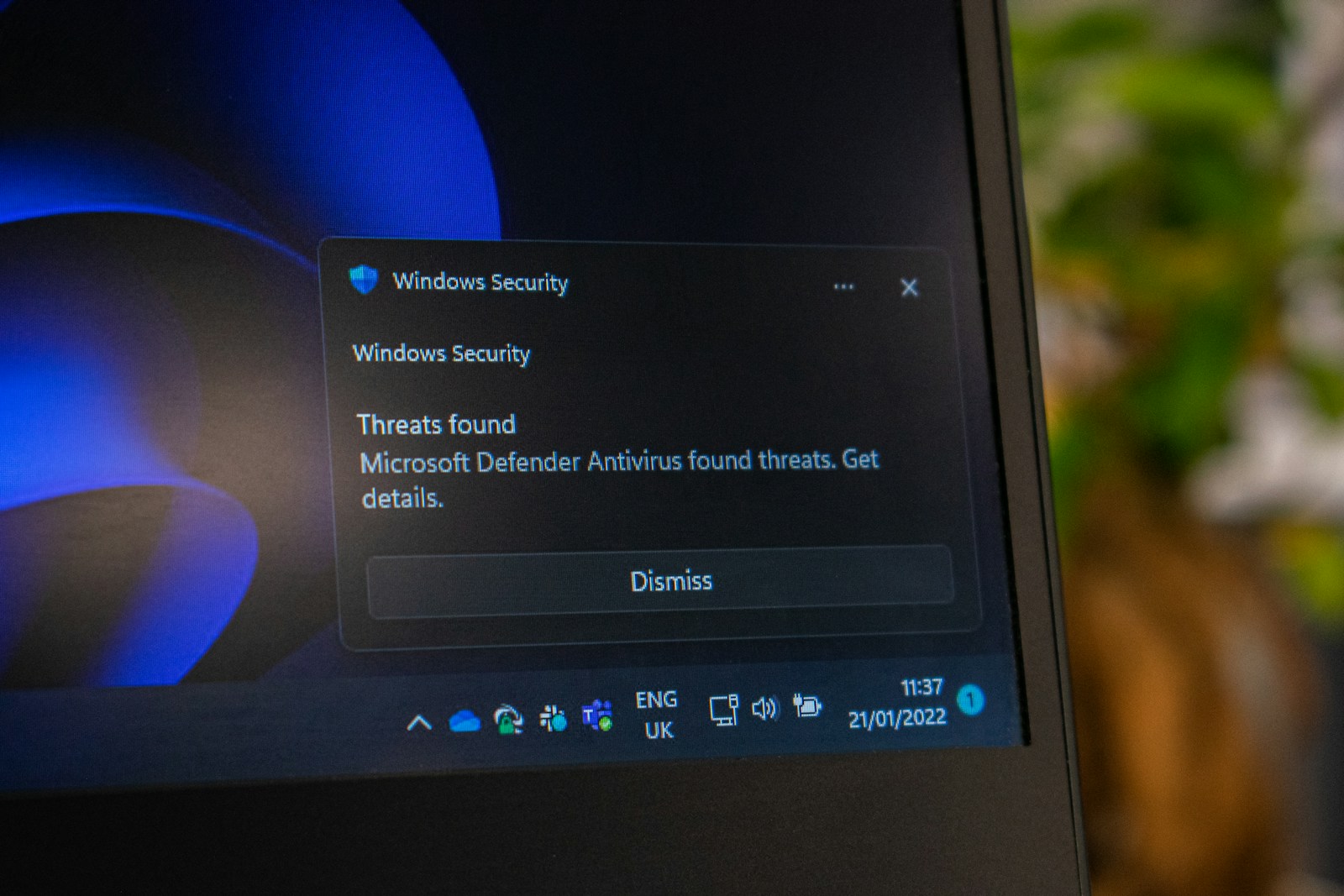
In an ideal world, perfect systems and prudent users would be enough. In the real world, where patches are missed, attachments are opened anyway, and work files and personal data coexist on PCs, having a modern, updated, and well-configured antivirus remains a sensible choice. It doesn't solve everything, but when needed, it truly makes the difference between a simple on-screen warning and a night spent figuring out how to recover encrypted data.
Ingegnere informatico e co-fondatore di Meteora Web, CMO dell'agenzia. Esperto di marketing digitale, social media, advertising, copywriting e SEO.
[ Read Full Dossier ]
> METEORA_WEB // DIGITAL AGENCY
We build the digital presence your business deserves.
Websites, social media, online advertising, e-commerce and high-performance hosting, engineered with method by computer engineers in Sciacca, for all of Italy.