 Ing. Calogero Bono
If your technician arrives on site without knowing what to do, you've already lost time and money. If the customer calls for a quote and gets no answer for three days, you've lost the client. If you don't leave a clear report at the end, you've lost trust. We, at Meteora Web, work every day with field service and installation companies. We see it: the transition from call to report is where most SMEs lose efficiency—and revenue.
In this guide, we take the full flow—from the first notification to the completed work order—and break it down into concrete steps. No theory. Let's go.
How to move from call to work order without errors?
The first phone call or email is the most critical moment. If information is scribbled on a sticky note or in a shared Excel file via email, mistakes are guaranteed. Every lost detail means a technician arriving with the wrong part or unaware of a specific installation.
Digitize the request entry
The simplest way is a web form integrated into your management system. The customer fills in: name, address, problem description, optional photos. The system automatically creates a work order with a unique ID. Benefits:
- No more illegible handwriting
- Photos are attached immediately
- Priority can be auto-calculated based on problem type
Real example: One of our clients, an HVAC installer, received requests via WhatsApp. Technicians wasted 15 minutes a day copying them onto paper. With a WordPress form linked to a MySQL database, we automated work order creation. Now each request has a timestamp and an assigned technician in under 30 seconds.
Minimum work order schema
Here's how you'd model a record in SQL if building from scratch. Copy this schema to see which fields are essential:
CREATE TABLE work_orders (
  id INT AUTO_INCREMENT PRIMARY KEY,
  customer_id INT NOT NULL,
  request_date DATETIME DEFAULT CURRENT_TIMESTAMP,
  problem_description TEXT,
  address VARCHAR(255),
  priority ENUM('low','medium','high','urgent') DEFAULT 'medium',
  status ENUM('open','assigned','in_progress','completed','invoiced') DEFAULT 'open',
  technician_id INT,
  service_date DATETIME,
  labor_hours DECIMAL(5,2),
  parts_cost DECIMAL(10,2),
  final_report TEXT
);
Whenever a new request comes in, the system inserts a row with status='open'. From there the process begins.
How to assign the job to the right technician without unnecessary phone calls?
If you have more than three technicians, manual assignment becomes a bottleneck. The dispatcher used to spend half an hour on the phone finding out who was free. Today this can be automated.
Assignment logic based on skills and location
A serious management system allows you to set rules:
- Skill: technician A handles boilers, B handles AC, C general plumbing
- Geographic zone: each technician has a defined coverage area
- Availability: integrated calendar showing free slots
When a request arrives, the system suggests the best technician based on these criteria. The dispatcher can confirm or modify with one click. Assignment time drops from minutes to seconds.
Automatic notification to the technician
Once assigned, the technician receives a push notification on the app or a WhatsApp message with all details: address, problem, any photos. They no longer need to call the office to find out what to do. We implemented for a client an automated WhatsApp Business API message as soon as the status changes from 'open' to 'assigned'. The technician arrives prepared.
How to track the intervention status in real time?
The customer calls and asks: "When will the technician arrive?" If the answer is "I don't know," you lose credibility. Real-time tracking is now a standard, not an option.
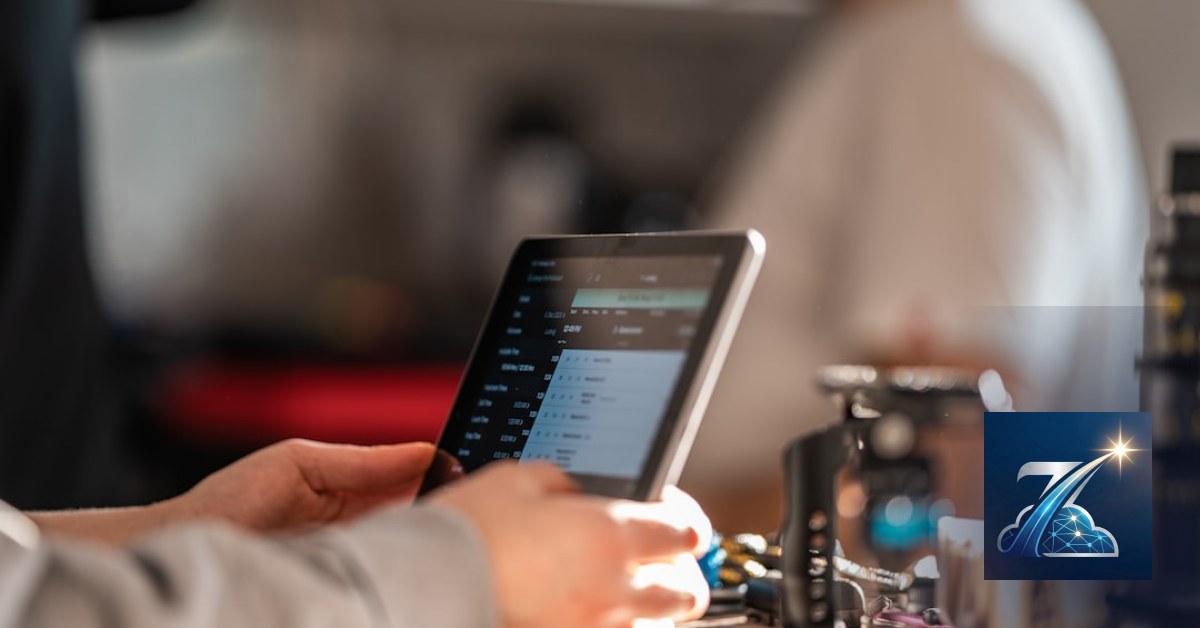
Technician app with status updates
The technician, from their smartphone, changes the job status in four steps:
- En route — geolocation starts, customer sees ETA
- In progress — timer auto-starts
- Waiting for parts — if a piece is not available
- Completed — timer stops, report can be generated
Each status change updates the management system in real time. The back office sees the situation on a map. The customer receives a notification. Zero intermediary phone calls.
Integration with spare parts inventory
One of the most common problems: the technician arrives, finds a missing part, and must return to the warehouse or order it. We've seen installers lose up to 2 hours a day for these trips. Solution: before leaving, the technician checks spare part availability in the warehouse (via app); if parts are missing, the system blocks assignment or auto-generates a purchase order. The cost of one extra trip eats the margin of the entire job.
How to generate a professional intervention report without paperwork?
The final report is the business card of your work. A handwritten sheet doesn't look good. A structured PDF with digital signature and photos does.
Automatic template from the management system
When the job is closed, the system compiles a report with:
- Customer data and address
- Problem description and work performed
- Materials used with part codes and costs
- Hours worked and labor cost
- Before/after photos
- Space for notes and recommendations
- Customer signature on tablet or smartphone
The PDF is auto-generated and saved in the system. The customer receives it via email instantly. End of paper.
Example digital signature integration
With JavaScript you can capture a signature on a canvas and save it as base64. Here's a minimal snippet to show the mechanism:
<canvas id="signature-pad" width="400" height="200" style="border:1px solid #ccc;"></canvas>
<button onclick="saveSignature()">Confirm signature</button>
<script>
  const canvas = document.getElementById('signature-pad');
  const ctx = canvas.getContext('2d');
  let drawing = false;
  canvas.addEventListener('mousedown', () => drawing = true);
  canvas.addEventListener('mouseup', () => drawing = false);
  canvas.addEventListener('mousemove', (e) => {
    if (!drawing) return;
    ctx.lineWidth = 2;
    ctx.lineTo(e.offsetX, e.offsetY);
    ctx.stroke();
  });
  function saveSignature() {
    const dataUrl = canvas.toDataURL();
    // Send dataUrl to backend via AJAX
  }
</script>
On the backend (PHP with Laravel, for example), you save the image and include it in the PDF using a library like Dompdf or Barryvdh. Customer signs, you get paid.
What tools to use for mobile field service management?
Field service management won't work if the technician doesn't have an app on the field. We have tested two approaches:
- Native app with offline support: if the technician works in areas without coverage, the app must work offline and sync when back online. In some projects we've used Ionic with local SQLite database.
- PWA (Progressive Web App): installable on the phone, works offline with Service Worker. Cheaper to develop, fewer hardware features (like continuous geolocation). For many SMEs it's the right solution.
Our recommendation: if you have fewer than 10 technicians, a PWA is sufficient. As you grow, switch to a custom native app or a ready-made platform (but watch out for lifetime subscriptions).
How does the final report close the intervention management cycle?
Once the report is signed, the system can trigger two automatic actions:
- Generate the invoice: based on hours and parts indicated, the management system prepares the document. If you have synchronized price lists, no recalculation needed.
- Send satisfaction feedback: a few days later, an automatic email asks the customer to rate the service. The data feeds reviews and service quality metrics.
We saw this working for a client that installs alarm systems: the PDF report becomes a compliance document for insurance. Transparency reduced disputes by 70%.
What to do next
You don't have to rewrite everything from scratch. Here are three concrete actions you can take this week:
- Map your current flow — take a sheet of paper and write every step from call to closure. Mark where time and information are lost. Those are your automation priorities.
- Choose a tool to digitize request entry — it can be a WordPress form, a chatbot, or an integration with your management system. We often use Gravity Forms + Zapier for quick prototypes.
- Define the minimum work order fields — use the SQL schema above as a reference. Share it with your team to decide what is essential.
If you already have a management system and want to optimize the intervention-to-report flow, let's talk. We always start with your numbers, not a sales pitch.
Zenith Service is the all-in-one platform to run your business — clients, scheduling, deadlines, invoicing and WhatsApp reminders, all from your browser. No installation required.
Discover Zenith Service →