 Meteora Web Redazione
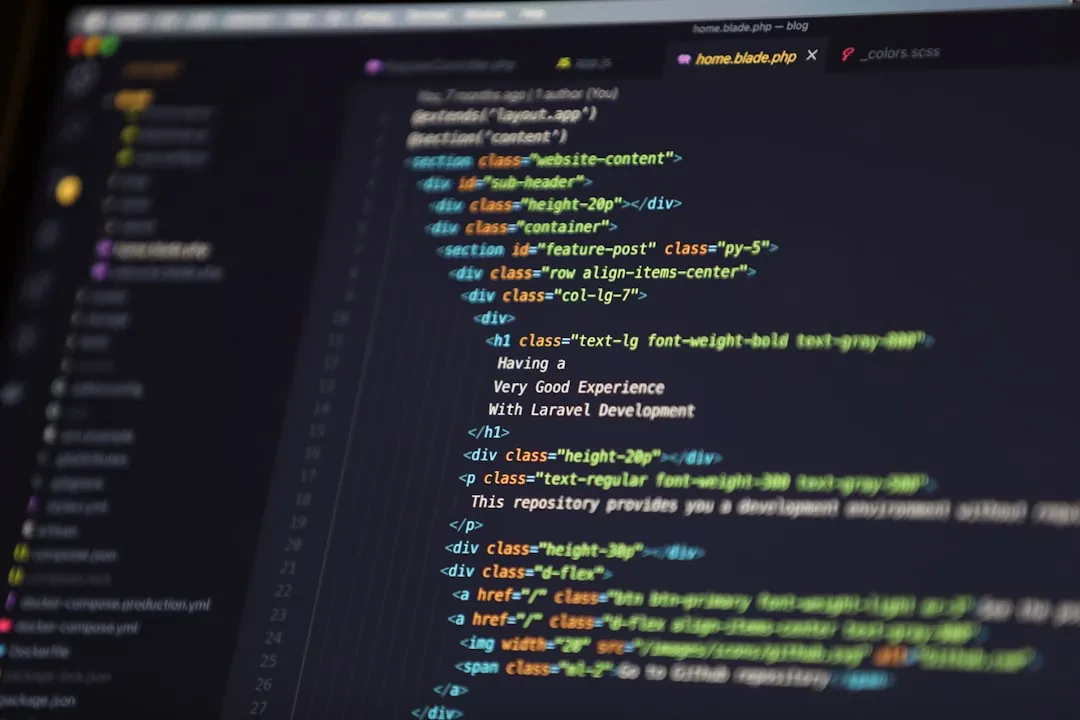
Laravel has redefined modern PHP development with an elegant and powerful ecosystem. With versions 11 and 12, the framework makes a generational leap: a minimal application structure, an optimized Eloquent ORM, and a full-stack approach without APIs thanks to Livewire 3 and Alpine.js. This pillar guide covers every macro-aspect, providing the tools to master architecture, complex data relationships, server-side reactivity, and modern deployment practices that define today's professional standard.
Application Architecture and New Structure
Laravel 11 introduced a radically streamlined application skeleton, while Laravel 12 consolidated this philosophy by removing most boilerplate files. The result is a minimal bootstrap that reduces initial cognitive load and speeds up setup.
Minimal Bootstrap and Removal of Unnecessary Scaffolding
In previous versions, every new installation included dozens of predefined classes and configurations. Laravel 11 removed default service providers, separate route files, and many generic middleware. Now the bootstrap/app.php file contains only what is essential, while the app directory is flat and the Http and Models directories are optional. This does not mean less power: everything can be requested on demand via specific make commands.
Key Differences from Laravel 10
Laravel 10 was still based on explicit Service Providers and a predefined route structure. Laravel 11 introduced the concept of health routing and zero configuration for standard applications. Laravel 12 adds native exception handling without a Handler file and a more performant service container thanks to optimized automatic resolvers.
The New Simplified Routing System
In Laravel 11/12 there are no longer default routes/api.php and routes/web.php files. Routes are defined in a single routes/web.php or routes/api.php only if needed. Loading is done via the Route::group method and support for single-action controllers makes the code more readable.
Environmental Configuration and Service Container
Configuration via .env files remains central, but Laravel 12 has improved configuration caching and environment variable validation. The service container now supports contextual binding with priority indexes and automatic dependency resolution in constructors without explicit annotations.
Advanced Eloquent ORM: Performance and Best Practices
Eloquent remains the core of database access in Laravel. Versions 11 and 12 refine the query builder, improve relationship management, and provide native tools to diagnose and solve bottlenecks like the N+1 problem.
Optimized Query Builder
Laravel 12's query builder introduces subquery expressions and optimized raw bindings. It's possible to use whereExists with complex clauses without losing parameter safety. Union queries are now native and automatically handle deduplication.
// Advanced subquery select
$users = User::select('id', 'name')
    ->whereExists(fn ($query) =>
        $query->select(DB::raw(1))
            ->from('orders')
            ->whereColumn('orders.user_id', 'users.id')
            ->where('orders.total', '>', 500)
    )->get();
Complex Relationships and Subqueries
Eloquent supports polymorphic relationships, many-to-many with custom pivots, and now hasManyThrough with additional conditions. Subqueries on relationships allow ordering by attributes of related models without loading all entities.
Eager Loading, Lazy Loading and the N+1 Problem
The N+1 problem occurs when lazy loading relationships in a loop. Explicit eager loading (with()) or lazy eager loading (load()) solves it immediately. Laravel 12 includes built-in N+1 detection in debug logs when APP_DEBUG=true. Tools like Laravel Debugbar or Telescope help identify duplicate queries in production.
// Automatic N+1 detection
$orders = Order::with('items.product.category')->get(); // single query
Attribute Casting and Modern Mutators
Eloquent casts automatically transform database types into PHP types. Laravel 11/12 support custom casts, native enums and conditional casts. Traditional mutators (getXAttribute) are deprecated in favor of accessors via Illuminate\Database\Eloquent\Casts\Attribute.
Global and Local Scopes
Global scopes automatically add conditions to all queries of a model (e.g., where('active', true)). Laravel 12 allows temporarily disabling them with withoutGlobalScope(). Local scopes are reusable methods defined in the model and callable in a chain.
Livewire 3 and Alpine.js: Reactive Full-Stack Without APIs
Livewire 3 revolutionized dynamic application development in Laravel by eliminating the need for separate REST APIs. Together with Alpine.js, it offers a server-side reactivity model with lightweight client-side interactions.
Livewire Components and Lifecycle
A Livewire component is a PHP class with public properties and action methods. The lifecycle includes mount, hydrate, dehydrate and boot. Livewire 3 optimized property serialization by reducing AJAX request size and supporting complex types like objects and enums.
State Persistence and Server-Side Validation
Livewire maintains component state between requests through a synchronized session. Validation occurs server-side using standard Laravel rules, with immediate feedback thanks to Alpine.js. Real-time actions like wire:submit or wire:click trigger a backend request without reloading the page.
Integration with Alpine.js for Client-Side Interactions
Alpine.js is used to handle transitions, animations and complex interactions without server-side JavaScript. With wire:key and x-show directives you control visibility and transitions. Laravel 11/12 do not include Alpine.js by default, but it integrates perfectly via npm and the Vite bundle.
Deploying Livewire Applications with Vite
Frontend assets are compiled with Vite, which supports hot module replacement during development and optimized builds for production. Livewire components are automatically registered via Livewire::component or by automatic class discovery in app/Livewire.
Testing and Modern Deployment
Laravel 11/12 offer native testing tools and a flexible deployment ecosystem, from traditional solutions to serverless.
PHPUnit, Pest and Parallel Testing
In addition to PHPUnit, Laravel promotes Pest as a more expressive testing framework. Parallel testing is supported with php artisan test --parallel using separate processes. Laravel 12 improved compatibility with PHPUnit 11 and introduced tests for notification channels with automatic mocks.
// Test with Pest
test('a user can create an order', function () {
    $user = User::factory()->create();
    $response = $this->actingAs($user)->post('/orders', ['product' => 'Laptop']);
    $response->assertStatus(201);
});
Deploying with Laravel Forge, Vapor and Serverless
Laravel Forge automates server provisioning and Git deployment. Laravel Vapor enables serverless deployment on AWS Lambda with automatic scaling. For containerized environments, the official Docker images of Laravel 12 support execution with PHP-FPM and preconfigured Nginx.
CI/CD with GitHub Actions and Envoyer
Typical continuous integration pipelines include linting (Pint), parallel tests and static analysis (Larastan / PHPStan). Envoyer offers zero-downtime deployment with automatic rollback. GitHub Actions can be configured in minutes using community-provided presets.
Conclusion and Concrete Next Steps
Laravel 11 and 12 represent the most mature evolution of the framework: clean architecture, high performance thanks to optimized Eloquent, and simplified full-stack development with Livewire 3. For practical details, consult the official Laravel documentation (laravel.com/docs). To stay updated on industry trends, read articles like Slate Auto Preorders and Rivian's AI and Startup Battlefield 200, which show how the tech ecosystem is rapidly evolving. Best practices include: always adopt Laravel 12's minimal structure for new projects; use eager loading and monitor queries with Telescope; prefer Livewire components for dynamic interfaces without disproportionate JavaScript; and automate testing and deployment from the first commit. These solid foundations will let you build scalable and maintainable applications for years to come.