For years, the idea of a package delivered from the sky seemed more like a viral video gimmick than a realistic piece of logistics. Yet, as vans struggle with traffic, limited traffic zones, and environmental constraints,
drone delivery tests continue to grow, especially in well-regulated areas and specific scenarios. We're not talking about replacing all couriers with quadcopters, but about supplementing traditional vehicles with a new class of lightweight, fast, and highly connected vehicles.
Understanding what drone delivery really is, how it works, and why it could change the way we imagine the last mile means looking beyond promotional clips. Behind every flight are planned routes, software platforms, control systems, and integrations with warehouses and e-commerce, often supported by solid digital infrastructure like
Meteora Web Hosting.
What is drone delivery and where does it make sense to use it
Drone delivery refers to the use of
remotely piloted drones to transport small loads from one point to another, typically over relatively short distances. We're not talking about air freight containers, but packages, medicines, laboratory samples, high-value lightweight products, moved quickly and in a controlled manner between hubs, warehouses, pickup points, or directly to the end customer.
The most interesting cases aren't always the hyper-spectacular urban ones, but those where drones solve very concrete problems. Hard-to-reach rural areas, small islands, zones with fragile infrastructure, emergency contexts where medical supplies need to be delivered quickly. In these scenarios, flying over congested or inefficient roads becomes an immediate advantage.
Drone delivery does not replace traditional logistics, but adds a new layer. It's a bit like what happens in the digital world when a new service doesn't replace an entire system, but integrates with it and makes it more flexible.
How it works between drones, platforms, and integrations
To launch a drone delivery service, three ingredients are needed.
Reliable vehicles, mature software platforms, and integration with existing logistics. The drone is just the tip of the iceberg.
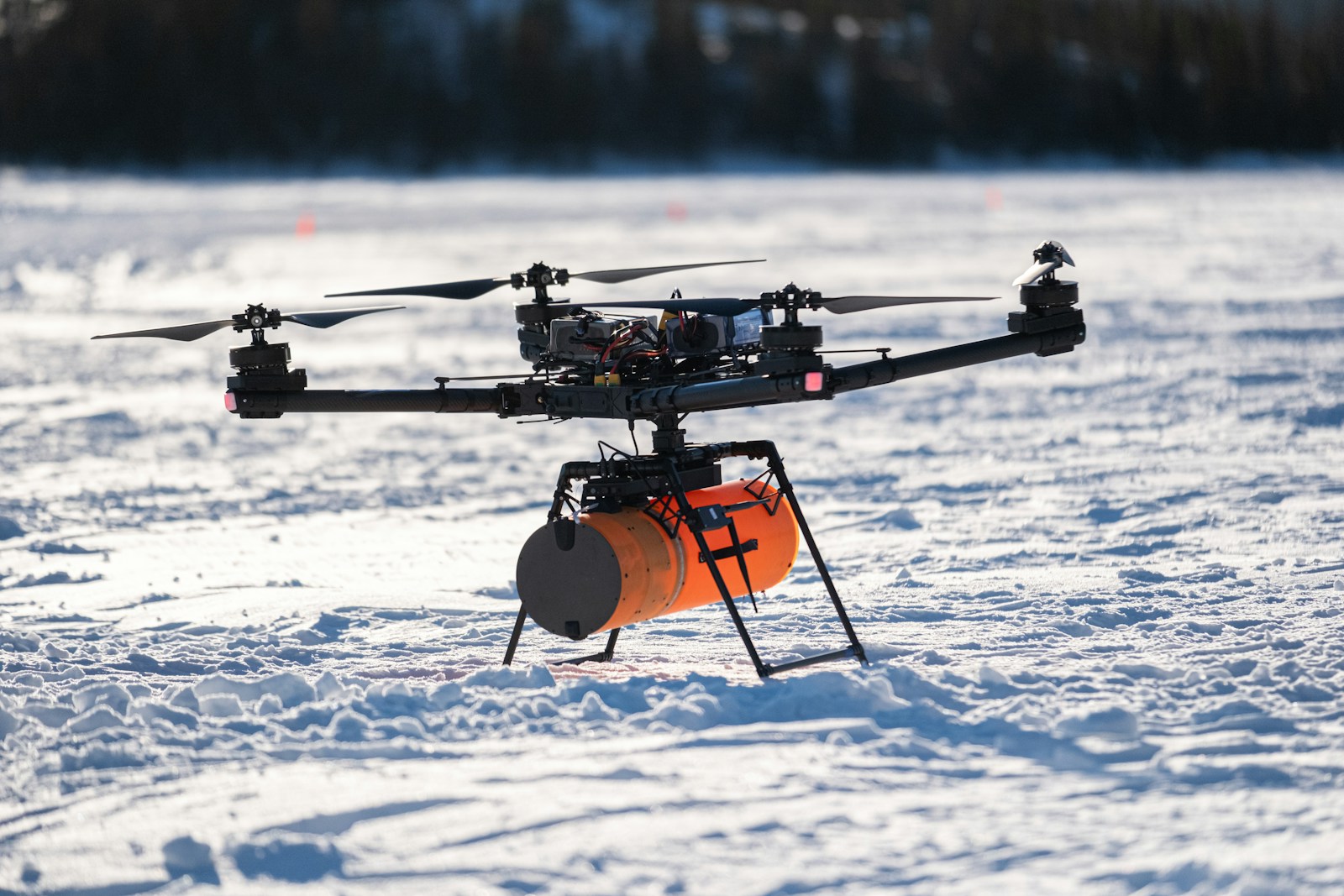
From a hardware perspective, we're talking about multirotor or hybrid vertical take-off and landing aircraft, equipped with stabilization systems, GPS, obstacle avoidance sensors, high-density batteries. Each flight is managed by a remote pilot or a supervised control system, in compliance with local regulations. Drones have a precise maximum payload, autonomy constraints, and safety mechanisms to handle anomalies, signal loss, and non-optimal weather conditions.
The real brain of the system, however, lives on the software side. A
management platform handles receiving orders, planning routes, assigning deliveries to individual drones, monitoring location and status in real-time, managing logs and history. All of this is typically exposed through web interfaces, dashboards, APIs that communicate with warehouse systems, e-commerce, CRM, and management software.
When a customer places an order, the system decides if that delivery is suitable for drone delivery. It checks weight, distance, operating conditions, any area restrictions. If the parameters are compatible, the shipment is linked to a flight mission. The package is prepared at a hub, secured to the drone with safe release systems, the route is loaded, and the vehicle takes off following predefined corridors.
Behind the apparent simplicity of a delivery from above is therefore a digital chain that must work without surprises. Servers, databases, authentication and monitoring systems must remain available and responsive, especially as the fleet grows. It's the type of scenario where high-performance infrastructure like that of Meteora Web Hosting becomes an integral part of the service's success, even if the end user only sees the drone approaching.
Why drone delivery can change deliveries
The promises of drone delivery are not just futuristic. Some advantages are very concrete even today. The first concerns
delivery times. Flying in a straight line over short distances can drastically shorten the gap between order and receipt, especially for urgent products. Under certain conditions, we're talking minutes instead of hours.
Then there's the issue of operational costs for the last few kilometers. The last mile is often the most expensive part of the logistics chain, because it requires vehicles, fuel, personnel, and management of highly fragmented routes. Drones aren't free, but they can become cost-effective in specific contexts, especially when volumes are high and delivery areas are difficult for traditional vehicles.
Another key element is the
ability to reach complex locations. Think of areas hit by natural disasters, blocked roads, territories with precarious infrastructure. In these cases, drones can deliver critical materials without having to wait for heavy infrastructure interventions. Even in peacetime, reaching scattered houses, mountain huts, or isolated structures can become easier.
All of this does not mean the transition will be immediate. Regulations on airspace use, community acceptance, noise management, safety in inhabited areas are real challenges. Drone delivery will likely grow in a patchwork fashion, starting from targeted scenarios and gradually integrating with existing models.
For those working in the digital field, however, the picture is already clear. Every new connected fleet means new data to collect, new interfaces to design, new integrations to manage. Drones are just the flying part of an ecosystem that lives on servers, APIs, web applications. The quality of this layer, from software architecture to hosting, will determine how reliable drone delivery truly is beyond the demo videos.
Ultimately, drone delivery is one of the clearest images of how physical technology and digital infrastructure are merging. A package arriving from the sky is just the final gesture. Behind it is a chain of automated decisions, distributed systems, continuous connectivity. And it is in this intertwining of air and cloud, in a very concrete sense, that the future of deliveries is being played out.