Ing. Calogero Bono
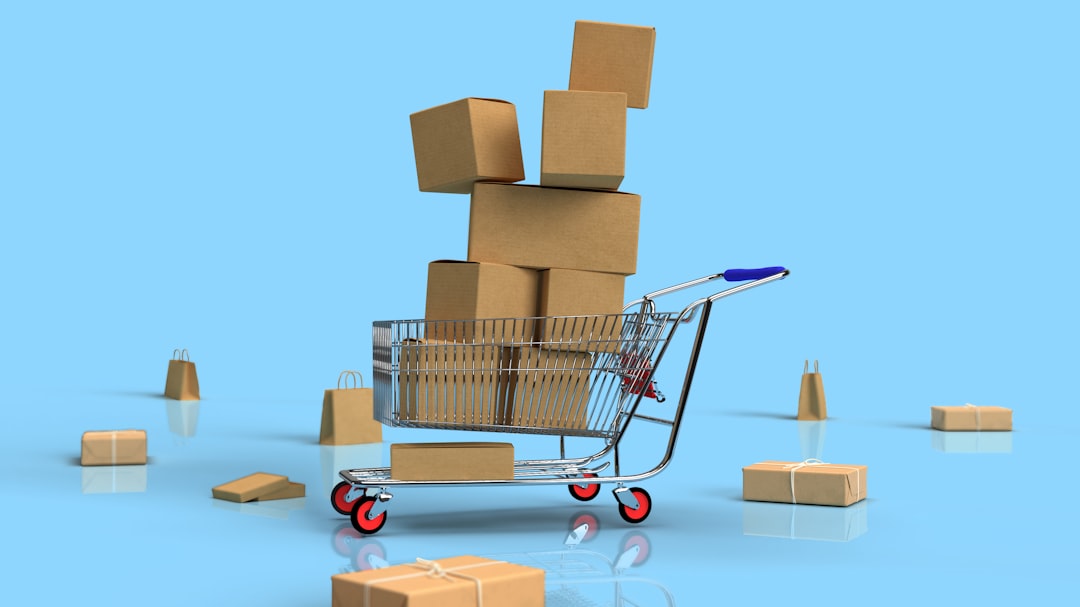
The customer added items to the cart, then closed the tab. It happens all the time, and those carts are not lost forever: an automatic email sequence can recover them. At Meteora Web, we’ve built these flows for fashion, footwear and accessories e‑commerce clients, and the numbers speak: a well-tuned flow recovers 10–15% of abandoned orders on average. But you have to do it right — not with a single flat email and forget.
Why does an abandoned cart email automation flow actually work?
When a user leaves a cart, it’s rarely permanent. Usually they were distracted, comparing prices, or need to ask someone. A timely email brings them back to the point where they already decided to buy — saving them the effort of starting over. That’s why an automatic flow outperforms any ad: it arrives after the intention, not before.
The key is the combination of a behavioural trigger (cart abandonment) and a timed sequence (quick reminder, social proof reminder, incentive). It’s not spam: it’s being helpful at the exact moment the user is most receptive. As we saw while building flows for clothing stores, recipients of a personalised sequence return at a conversion rate 3–4 times higher than those who receive nothing.
What emails should you send in an abandoned cart email automation flow?
An abandoned cart automation flow is not a single email. It’s a sequence designed to guide the user back to checkout, with tone and content that change with each step.
First email — Friendly reminder (1 hour after)
Subject: "Did you leave something in your cart?"
Content: show the abandoned product with image and price, direct link to checkout. No pressure. Just a reminder that the item is still there. We always A/B test with and without the customer’s name — personalisation boosts CTR by 20% on average.
Second email — Social proof (24 hours after)
Subject: "Others love what you chose"
Content: reviews, number of sales, or "this item was viewed by 50 people today". The goal is to reduce uncertainty: if others buy it, it’s a safe purchase. Include a direct link, but also a CTA to "see more models" if the customer is undecided.
Third email — Incentive (48 hours after)
Subject: "A little help to complete your order"
Content: offer an urgent discount or free shipping with an expiry. Caution: if you give discounts too early, the customer learns to wait. That’s why we place the incentive only on the third email, and limit it to those who haven’t bought yet. In our work with a clothing brand, this email alone generated 40% of total recovery.
How to set up an abandoned cart email automation flow in your tool?
Every email marketing platform works differently, but the principle is the same. Here’s a generic approach you can adapt to Mailchimp, ActiveCampaign, Klaviyo or similar. Follow these concrete steps:
- Define the trigger: in your tool, create an automation that starts when a contact adds a product to their cart and then leaves without completing the order. Make sure you have cart tracking via cookies or API.
- Create a segment: isolate contacts who have abandoned the cart, excluding those who already purchased or received other offers.
- Build the emails: use a template with the product image, price and direct checkout link. For the third email, add a dynamically generated discount code.
- Set the timing: delays of 1 hour, 24 hours, 48 hours. You can add a fourth email after 4 days with a last-chance offer, but be careful not to become intrusive.
- Test the flow: send it to yourself and verify that all links work and the product image loads. We’ve fixed more than one mistake with a simple test on a staging server.
Here’s a sample JSON configuration (if you use an API to integrate the cart):
{
  "trigger": "cart.abandoned",
  "delay_hours": [1, 24, 48],
  "email_template": {
    "subject": ["Did you leave something in your cart?", "Others love what you chose", "Last help - discount"]
  },
  "filters": {
    "exclude_purchased": true,
    "min_cart_value": 10
  }
}
This is a conceptual model; each platform has its own syntax. The important thing is that the flow is automatic and personalised. Personalisation isn’t just the name — it’s the exact product they left behind.
How much can you recover? Metrics to measure your abandoned cart email automation flow
If you don’t measure, you don’t know if you’re recovering or losing. Here are the three metrics we always check in the projects we manage:
- Flow conversion rate: how many people who receive the sequence complete a purchase within 7 days. A good flow runs between 8% and 15%.
- Average revenue per recovered cart: not all carts have the same value. Track the average order value of recovered carts versus normal ones: if it’s lower, your incentive might be eating into margins.
- Flow ROI: cost of the email marketing tool plus any discounts given, divided by the revenue generated by the flow. We often see ROIs of 10x or more — but only if the incentive is targeted and not overused.
Use your analytics tool (e.g. Google Analytics 4) to attribute conversions to each email. If your CRM allows it, create a dedicated report for the abandoned cart flow.
What to do right now
If you run an e‑commerce store and don’t yet have an abandoned cart email automation flow, you are literally leaving money on the table. Here are three actions to take immediately:
- Connect your email marketing tool to your cart (WooCommerce, Shopify, PrestaShop): enable abandoned cart tracking. If there’s no plugin, use the API to send the event.
- Design the three-email sequence following the pattern above: first friendly, second social, third incentive. Write the subject lines and set aside an hour to test them.
- Activate and monitor for 30 days. Then go back to the data: how many orders recovered, at what cost? If the flow underperforms, tweak the subject line or the incentive. Don’t stop at the first version.
At Meteora Web, we have been building flows like this for over 8 years, and we know the first step is the hardest. For the complete picture of email marketing for your SME, read our pillar guide on Email Marketing and Marketing Automation.