 Meteora Web Redazione
You've spent hours writing prompts in Midjourney, but the results always look “somewhat off”? Dull colors, weird compositions, misplaced details. The problem isn't you: without the right parameters, you're asking a generative engine to guess what's in your head.
At Meteora Web, we use Midjourney daily to generate visuals for clients and prototypes. We learned the hard way that a “gut feeling” prompt is like ordering a steak saying “medium” – it might work, but often comes out burnt or raw. Parameters are your thermometer and timer.
This guide gives you the survival kit: essential commands, advanced parameters, and operational tricks that turn Midjourney into a professional tool – not a slot machine.
Why Parameters Change Everything (and How to Use Them)
Midjourney interprets your prompt in a latent space of 77 tokens. The more precise you are, the less it guesses. Parameters are levers that control appearance, consistency, and variability.
The Fundamentals You Need to Know Now
--ar (aspect ratio) Defines the image format. Default is 1:1 (square). For rectangular use 16:9 (wide), 4:3, 2:3, etc. Example: /imagine prompt: a beach at sunset --ar 16:9.
--v (version) Specifies the model. Newer versions (v6, v6.1) offer better consistency and realism. Example: --v 6.1. Without it, Midjourney uses the latest stable.
--s (stylize) Controls how much Midjourney “interprets” the prompt artistically. From 0 (literal) to 1000 (highly stylized). Default 100. For realistic products or architecture keep low (--s 50). For concept art or illustrations raise (--s 400).
--c (chaos) Increases variability among the 4 generated variants. Values 0 to 100. With --c 80 you get 4 very different images; with --c 0 they are nearly identical. Useful for brainstorming.
--no Excludes elements. Example: --no people, clouds. Caution: sometimes Midjourney ignores --no if the prompt contradicts it. Better to use negative weights inside the prompt.
--iw (image weight) Used with /imagine [url] + prompt. Controls how much a reference image influences the result (0.5 = low, 2.0 = high, default 1.0).
--seed Locks the random sequence. Two identical requests with same seed and parameters produce the same image. Useful for reproducibility or controlled variation.
Advanced Parameters for Fine Control
--weird (w) Introduced in v6. Values 0-3000. Higher values yield more surreal and unexpected results. Great for creative projects.
--tile Generates seamless images for repeating patterns. Ideal for backgrounds or textures.
--stop Stops generation at a percentage (0-100). Default 100. Stopping early (e.g., --stop 80) gives less defined but more compositionally free images.
--style For specific versions (v6 has --style expressive or raw). Raw gives more prompt-faithful results, less “soft”.
Prompt Techniques That Separate Pro from Beginner
Weights and Multi-Prompts (:: separator)
You can split the prompt and assign different weights. Example: /imagine a landscape::2 mountains::1 lake::1.5 --ar 16:9. Parts after :: multiply the weight (default 1). Negative values exclude (e.g., a landscape:: red::-.5 removes red).
Image Prompting
Upload an image (URL or drag-and-drop) and combine it with a text prompt. Example: /imagine [image-url] a cat on a meadow --iw 1.5. Midjourney tries to retain the style or composition of the input image.
Remix Mode
Activate with /prefer remix or from the menu. After generating, you can modify the prompt and regenerate the same base variant with new instructions. Perfect for fast iteration on a concept.
Blend Mode
Use /blend (up to 5 images) to merge styles or subjects. Great for creating visual moodboards.
Shorten
If your prompt is too long or vague, use /shorten (select the message). Midjourney extracts the most important keywords and shows you reduced versions. Learn to write more effective prompts.
Practical Examples: From Basic Prompt to Professional
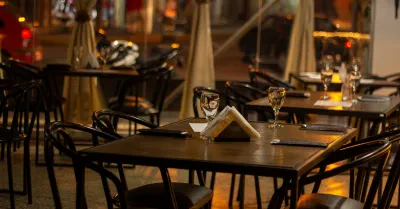
Basic prompt: /imagine a modern restaurant → Generic result, no details.
Professional prompt: /imagine interior of a modern restaurant with warm lights, dark wood tables, hanging plants, minimalist Japanese style --ar 4:3 --v 6.1 --s 150. Specifies context, materials, atmosphere, style, proportions, version, and stylization degree.
For e-commerce product: /imagine red running shoe on white background, softbox lighting, detailed sole texture --ar 1:1 --v 6.1 --s 50 --no hard shadows. Note low --s for realism, --no to remove distractions.
Common Mistakes to Avoid
- Prompts too long (over 60 words) – Midjourney truncates. Keep concise.
- Forgetting --ar for social (square) or website (horizontal).
- Using --no for abstract concepts (e.g., --no ugly) – doesn't work. Describe what you want, not what you don't.
- Not specifying version – Midjourney behavior changes between v5, v6, v6.1. If you have reference images, stick to the same version.
Operational Workflow for Ready-to-Use Images
- Define the usage (social, website, print) and choose aspect ratio and version.
- Write the prompt in English, with details of subject, environment, lighting, materials, style.
- Add control parameters (--s, --iw if using reference, --c for variety).
- Generate 4 variants, pick the best, then use “Vary (Region)” or “Remix” to refine.
- Post-production: download, upscale with
/upscale(2x or 4x) or external tools like Topaz Gigapixel.
Tools for Writing Better Prompts
- PromptHelper (prompthelper.net) – prompt generator with parameters.
- Midjourney Prompt Analyzer (community).
- Official documentation: Midjourney Parameters.
If you want to understand how to integrate Midjourney into an AI workflow for your business, check our guide AI for SMEs: Where to Start in 2025 Without Wasting Budget.
In Summary — What to Do Now
- Open Midjourney on Discord and try generating an image using at least 3 parameters: --ar, --v, --s, --c.
- Download the official parameter list and keep it open while you work.
- Rewrite a prompt you already used by adding weights (::) and --no to improve it.
- Activate Remix mode and iterate on a single image until you get the desired result.
- Measure the time spent: a well-written prompt reduces iterations by 50%. Fewer tries, more results.
At Meteora Web we use these tricks every day for our clients. Remember: AI amplifies, but competence directs. A good prompt is like a good balance sheet: if the numbers don't add up, the project won't fly.