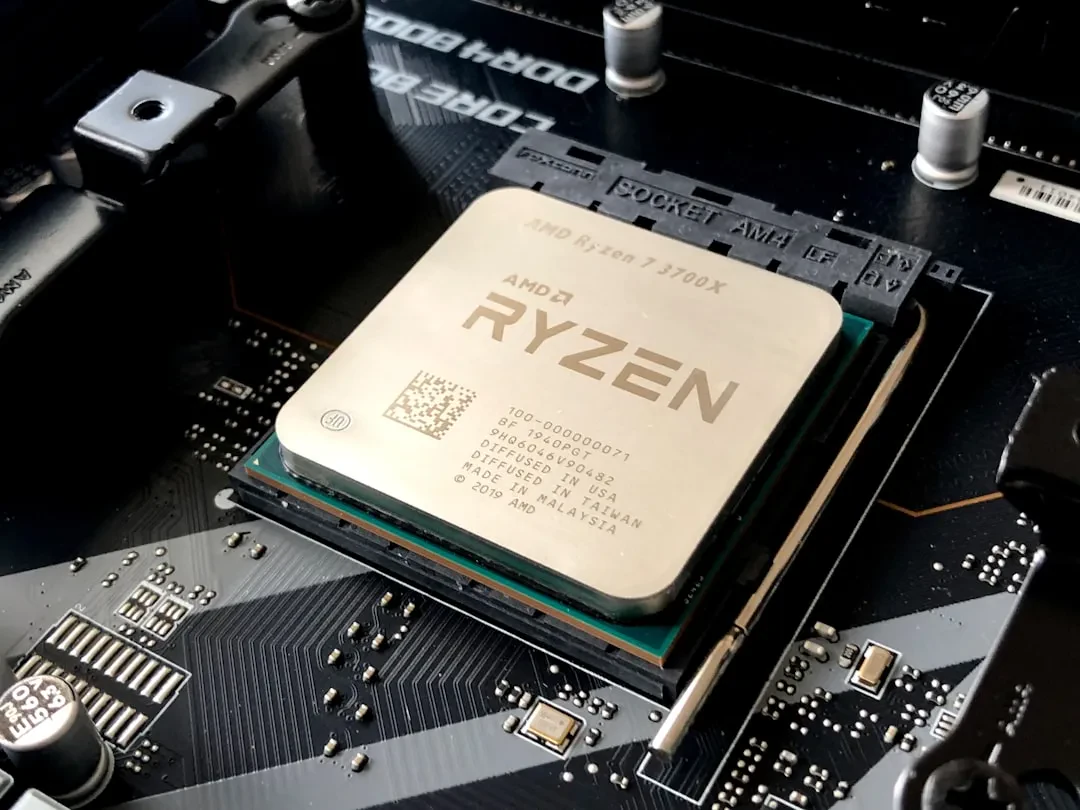
AMD's quiet decision to strip memory encryption (TSME) from its consumer CPUs has sparked a wave of backlash in the tech community. Many users discovered only after purchase that the new Ryzen processors no longer support transparent RAM encryption, a move that appears to be a cost-cutting measure disguised as an architectural update. This change, affecting the latest generation models, has deep implications for the security of personal and corporate data on desktops and laptops.
Why Memory Encryption Matters
TSME (Transparent Secure Memory Encryption) encrypts the entire contents of RAM in real time, protecting data from physical attacks such as cold boot, memory bus analysis, or DMA access. Removing this protection exposes users to concrete risks, especially in advanced threat scenarios like those covered in the pillar guide on incident response and digital forensics. Without TSME, an attacker with physical access to the computer could read passwords, cryptographic keys, and sensitive data directly from RAM.
Sponsored Protocol
User and Expert Reactions
AMD's official forum and hardware-focused subreddits have filled with outraged comments. Users accuse the company of removing the feature without notice, changing technical specifications after product launch. Some only discovered the change after running diagnostic tools. The anger is amplified by the fact that Intel, with its Intel Total Memory Encryption (TME), continues to offer protection across its entire consumer and server lineup. AMD's choice thus appears as a competitive step backward at a time when hardware security is increasingly under the spotlight, as highlighted in the article on AI-powered deception and the speed of truth for defenders.
Possible Motivations Behind AMD's Decision
Analyzing official statements, AMD claims that removing TSME from consumer CPUs is due to optimizations to reduce latency and power consumption. However, independent benchmarks show a negligible performance impact when encryption is active. Many suspect the real reason is economic: enabling TSME at scale would require additional licenses and components, increasing production costs. Furthermore, the split between consumer and professional lines (Ryzen Pro) allows AMD to reserve encryption only for enterprise chips, where clients are willing to pay a premium for security. This strategy echoes Satya Nadella's warning that AI could hollow out entire industries, just as globalization did: a caution that also applies to user trust in hardware manufacturers.
Sponsored Protocol
Impact on Trust and the Market
AMD's move risks eroding consumer trust, as users expect cutting-edge CPUs not to lose security features compared to previous models. Several cybersecurity professionals have already announced they will switch to Intel platforms or alternative architectures for their critical systems. The situation is further complicated by the fact that many users rely on their PCs for remote work, handling sensitive corporate data. Without memory encryption, a simple device theft could compromise entire corporate networks. For more on how to defend against such threats, consult the Wikipedia article on memory encryption.
Sponsored Protocol
In conclusion, AMD's decision serves as a wake-up call for the entire industry. Transparency and hardware security cannot be sacrificed on the altar of cost savings. Users have the right to know exactly which features are being removed and why. The coming weeks will be decisive in determining whether AMD will reverse course or whether the consumer market must accept reduced protection.