Transparency in artificial intelligence models is one of the industry's great puzzles. Anthropic, the company founded by former OpenAI researchers, recently published a study that offers an unprecedented window into the internal reasoning of its chatbot Claude. The discovery, announced last week, has sparked debate among experts and enthusiasts. But what does this research actually show? And what are its concrete limitations?
Claude's internal reasoning mechanism
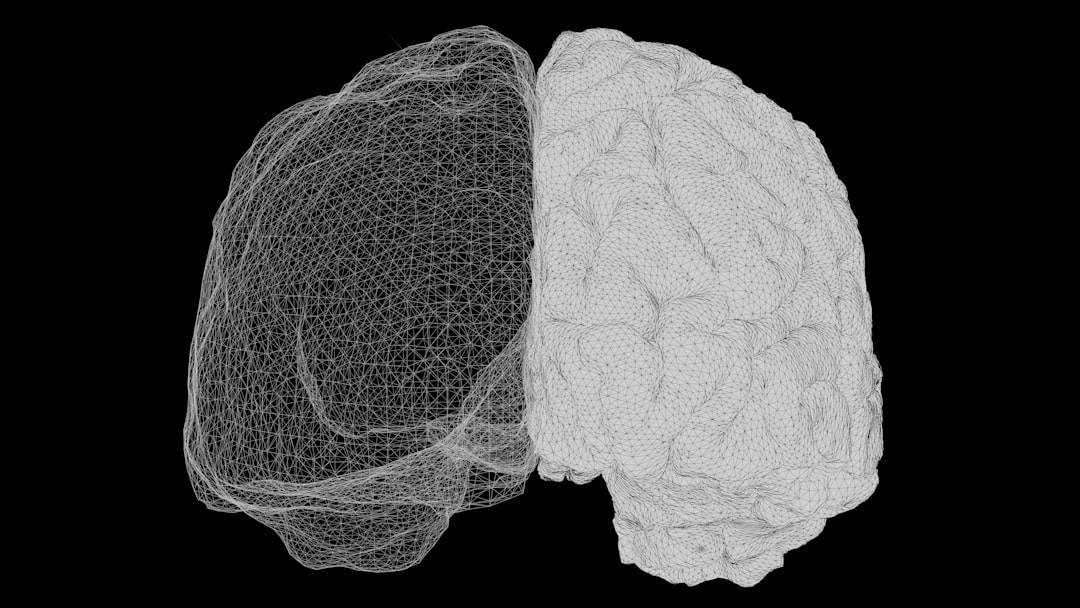
Anthropic developed a technique to trace the model's "thoughts" while it processes a response. In practice, researchers identified specific neural circuits that activate when Claude analyzes a question, evaluates options, and builds a coherent answer. These circuits, similar to those observed in smaller models, represent a partial map of internal operations. For example, when asked to add two numbers, the model activates dedicated pathways for calculation, separate from those used for language understanding. This level of detail is a significant step forward compared to previous interpretability attempts, which were limited to observing the activation of individual neurons.
Sponsored Protocol
Limits of internal model transparency
Despite the excitement, the study has important limitations. Will Douglas Heaven, senior editor for AI at MIT Technology Review, noted that the window opened by Anthropic is still narrow. The identified circuits cover only a fraction of the model, and it is unclear whether they represent actual reasoning or mere statistical artifacts. Moreover, the method requires manual intervention for each type of task, making it difficult to scale. "There is a risk of overestimating what we have understood," Heaven commented. The research, while fascinating, does not solve the black box problem of large language models.
Sponsored Protocol
The future of world models and physical AI
Understanding internal reasoning is crucial for a broader goal: building world models that can interact with physical reality. Currently, AI excels in digital contexts but fails in the complexity of the real world. To bridge this gap, many researchers focus on so-called world models, capable of simulating physical environments. An event organized by MIT Technology Review brought together experts like Sam Sinha, head of world models at 1X Technologies, to discuss how interpretability can accelerate the development of robots and autonomous systems. Model transparency is a key piece: if we can see what an AI 'thinks', we can correct errors and improve reliability. To learn more about public awareness of AI, read the article on how Marlo Anderson created National AI Day, an initiative to educate the general public.
Sponsored Protocol
Meanwhile, other players are exploring different paths. PsiQuantum aims to build the first useful quantum computer using light, a technology that could enhance the training of more complex models. Also, the Samsung Galaxy Z Fold 8 introduces Flex Titanium display, showing how hardware innovation can influence user experience with integrated AI. But the challenge remains interpretability: without understanding internal mechanisms, AI will remain a black box. For a deeper explanation of basic concepts, see the Wikipedia entry on explainable artificial intelligence.