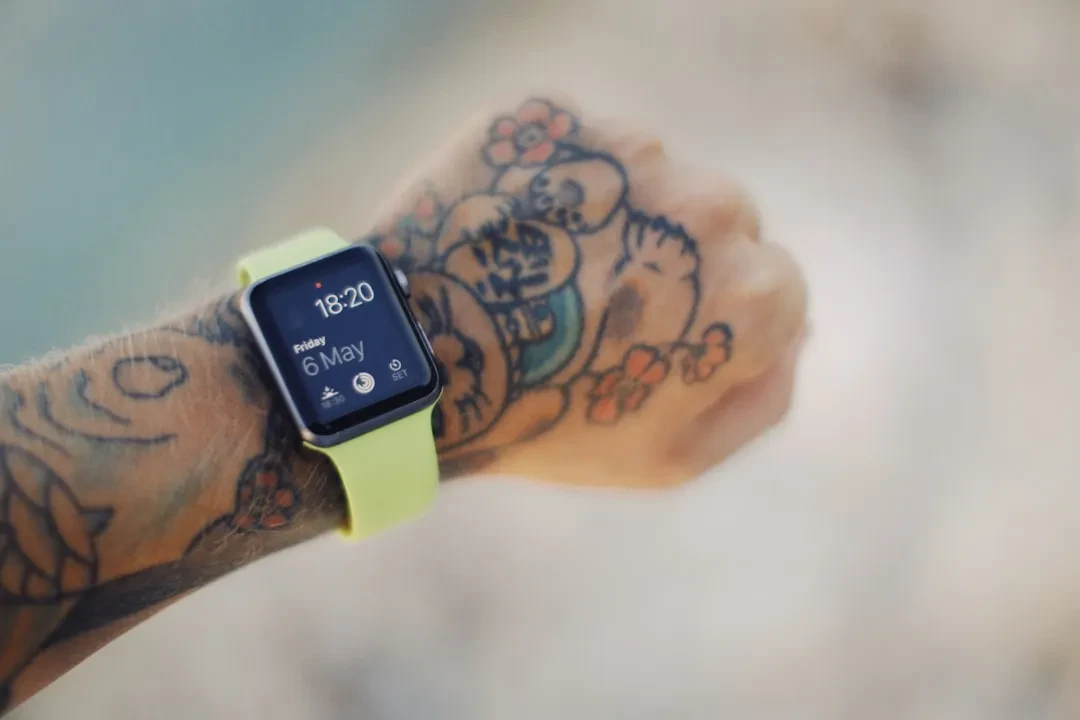
Investing in a high-end fitness tracker or smartwatch is a significant expense, but for people with wrist tattoos, it can turn into a disappointment. A frequent issue is the incompatibility between the optical sensors of wearables and tattoo ink. How widespread is this problem and what are the possible solutions? Let us explore.
The core of the issue: photoplethysmography (PPG)
Modern fitness trackers use a light-based technology called photoplethysmography (PPG) to measure heart rate. They emit green (or infrared) light through the skin and measure the amount reflected back, thus determining blood flow. However, tattoos, especially those with dark or dense ink, can absorb or block this light, causing inaccurate or missing readings. Another critical aspect is the wrist detection sensor, which uses light to determine if the device is being worn. If the sensor cannot detect the skin under the tattoo, the smartwatch may not register being on the wrist and will constantly require unlocking.
Sponsored Protocol
Recognition by manufacturers
This is not just a user complaint. Major companies like Apple and Garmin have published official notices warning that tattoos can interfere with sensors. Garmin recommends wearing the device on tattoo-free skin for optimal performance. Apple has issued similar statements since the first Apple Watch. Even with newer models like the Pixel Watch 4, improvements seem partial. Samsung attempted a software update, but complaints from tattooed Galaxy Watch users persist. It is clear that the technology still needs to evolve to be inclusive.
Sponsored Protocol
Practical solutions for tattooed individuals
If you have wrist tattoos, all is not lost. Here are some strategies that work, though not perfectly. First, try wearing the device on the other wrist if it is tattoo-free. Alternatively, place the tracker on the inside of the wrist where the skin might be clearer. Some users rely on plastic stickers or clear tape over the sensors to improve contact. If heart rate accuracy is your only concern, a chest strap like the Polar H10 is more reliable, as long as you have no chest tattoos. These fixes are not ideal for daily use but can help.
Sponsored Protocol
Scientific research confirms variability
A 2025 study analyzed differences in heart rate readings between tattooed and non-tattooed skin using the Polar Verity Sense and the H10 chest strap as a reference. Results showed that tattoos do affect readings, but with significant variability. The effect was greatest at rest and decreased as exercise intensity increased. In some cases, the tattoo had no impact at all. Factors such as ink color, saturation, and depth play a crucial role. Unfortunately, no universal solution exists yet.
For more details on PPG technology, you can refer to the Wikipedia page on photoplethysmography.
Source: https://www.engadget.com/2197736/do-fitness-trackers-work-with-tattoos