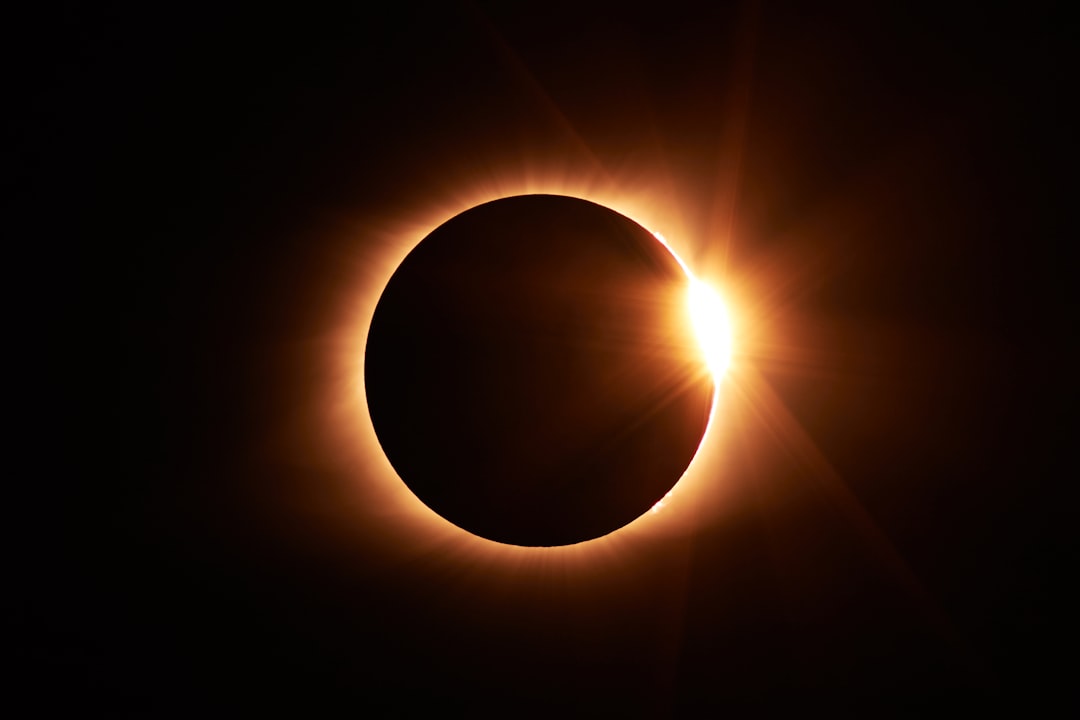
On August 12, 2026, the United Kingdom will experience one of the deepest partial solar eclipses in eleven years. Although totality will not touch British soil, in some remote areas of the archipelago the Sun will be obscured by up to 98%. This event will attract the attention of millions of people, ready to witness a noticeable dimming of daylight in the late afternoon.
Totality grazes the British Isles and moves towards northern Spain
The path of totality, about 180 kilometers wide, will cross western Iceland, eastern Greenland, and northern Spain, with the maximum duration expected in the Balearic Islands (over 2 minutes). For the UK, the event will be a very deep partial eclipse, with a maximum coverage of 98% at Great Skellig in Ireland, and about 93% in major cities. London, Manchester, and Glasgow will see 91.4% coverage, while Belfast will reach 93.1% and Cardiff 93.2%. Differences between cities will be minimal, but the effect will still be remarkable.
Sponsored Protocol
Exact timing to observe the partial eclipse in the UK
The eclipse will begin at 5:59 PM BST and end at 8:10 PM BST, with the maximum between 7:05 and 7:13 PM BST. At that time, the Sun will be low on the western horizon, appearing as a thin crescent with its tips pointing downward. There will be no total darkness, but daylight will become dim and eerie. For optimal viewing, it is advisable to choose a location with an unobstructed horizon, such as a hill or cliff, and to wear certified eclipse glasses to protect your eyes.
Weather forecasts and best viewing spots in the UK
August in the UK is not known for clear skies, but a single high-pressure system could ensure perfect conditions. National parks such as Snowdonia, Brecon Beacons, and South Downs may attract crowds of observers. If skies are cloudy, many enthusiasts will travel to northern Spain, where totality will be visible just before sunset. Additionally, the event coincides with the peak of the Perseid meteor shower, so after the eclipse, you can enjoy a show of shooting stars.
Sponsored Protocol
The event across Europe and North Africa involves millions of people
The Moon's penumbral shadow will stretch across Europe and North Africa. In Algeria, France, Germany, Italy, and Austria, millions will see the Sun set partially obscured. According to Time and Date, about 283 million people will observe at least 90% coverage. This is shaping up to be one of the most photographed events of the decade.
The future of partial eclipses in the UK until 2030
After August 12, the UK will experience a series of partial eclipses in the coming years. On August 2, 2027, a morning partial eclipse will obscure up to 48% of the Sun in southern England. On January 26, 2028, a sunset eclipse will cover up to 56% of the Sun, visible mainly from Cornwall and Wales. On June 12, 2029, the eclipse will be visible only from northeast England and eastern Scotland. Finally, on June 1, 2030, an annular eclipse will bring 49% coverage to the whole UK. A rare sequence for British skywatchers, who will not see a total eclipse until September 23, 2090. For those who want to dive deeper, on MeteoraWeb we have discussed how AirPods with cameras could debut in September and how to manage clients in a barber shop with management software. Also, for tech enthusiasts, here is our article on TypeScript with Node.js. Don't forget to check our guides on how to observe the Sun safely and how to photograph the eclipse.
Sponsored Protocol