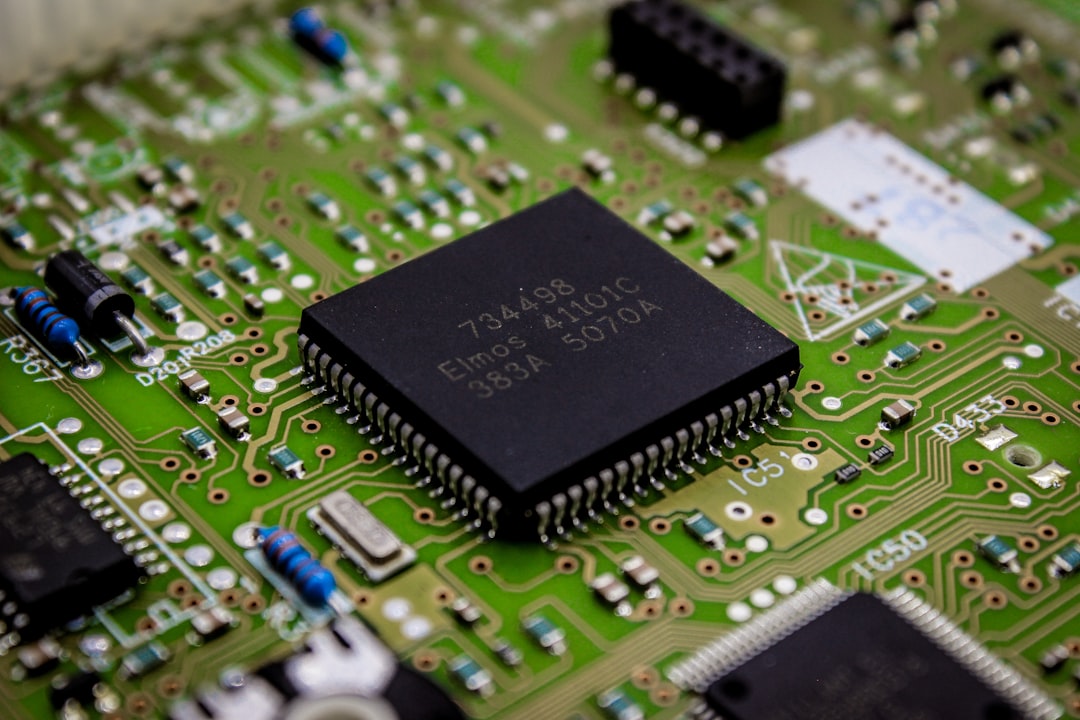
In the midst of the worst memory shortage in industry history, three of the world's largest PC makers have made a move that few would have thought possible just a few months ago. HP, Asus, and Acer have completed the qualification process for DRAM chips produced by China's ChangXin Memory Technologies (CXMT) and have started installing them in certain notebook models intended for markets outside the United States. The news, reported by Nikkei Asia, marks a turning point for the Hefei-based company, which until recently was considered a marginal supplier in the industry.
Volumes are small and the number of affected models is limited, but the most significant fact is that none of these notebooks are sold in the US market. The caution shown by manufacturers does not seem to stem so much from fears of political retaliation by the US administration, but rather from the fear of upsetting industry giants such as Samsung, SK Hynix, and Micron, which control over 90% of global supply. An executive at one of the PC companies told Nikkei that "we dare not source too much from CXMT at this moment," highlighting how buyers must move with extreme discretion to avoid jeopardizing existing agreements.
Sponsored Protocol
The situation is paradoxical: in the middle of an unprecedented memory shortage, the main constraint on diversification is the fear of displeasing precisely those from whom it is already difficult to buy. Moreover, the CXMT option is by no means a cheap alternative. According to Nikkei's sources, Chinese DRAM quotes are not lower than Samsung's, and even more surprisingly, it is not possible to book supplies beyond the current quarter, as competition to secure chips has become fierce, with CXMT seemingly prioritizing the AI ambitions of local giant Huawei.
Qualifying a memory supplier takes months of testing and complex validations
To understand the magnitude of this move, one must consider that qualifying a new DRAM supplier is not a quick operation. It requires months of engineering, signal-integrity testing, thermal work, and platform validation. The fact that HP, Asus, and Acer completed this process by mid-year means their respective technical teams worked extensively to create a concrete alternative to traditional suppliers. As a supply chain manager working with HP and Asus explained, the goal is to keep a potentially important source in a market this tight, without neglecting any option.
Sponsored Protocol
This is not a decision made on the spur of the moment, but a long-term strategy. Eighteen months ago, CXMT was not even considered by major Western brands. Today, three of the five largest PC vendors in the world have built a switch they can throw when conditions require it. And even though no one has yet moved significant volumes, the certification work is complete, and CXMT's production capacity is rapidly expanding.
Sponsored Protocol
The memory shortage we are experiencing has roots far beyond the PC industry. The demand for high-bandwidth memory (HBM) for artificial intelligence has pulled wafer capacity away from conventional DRAM at every major supplier, triggering a crisis that has caused spot RAM prices to surge by over 400% in the past twelve months. PC makers have responded by reducing memory on entry-level models and raising prices by several hundred dollars, while IDC expects the global PC market to contract by more than 11% this year.
Memory price pressure ripples through smartphones and components
The effects are also felt in the smartphone world, where some manufacturers like Xiaomi, Oppo, and Vivo have repeatedly cut shipment targets for 2026 and reduced memory configurations. Pressure has even reached motherboard makers, who have absorbed roughly 50% increases in PCB costs and trimmed their own shipment targets. In this context, the move by HP, Asus, and Acer represents an attempt to defend themselves from a wild market, but also a sign of structural change.
Sponsored Protocol
But what do Samsung, Micron, and SK Hynix think of this development? In the short term, they probably are not overly concerned. They are the primary beneficiaries of the shortage, with pricing power they have not enjoyed in a decade and no commercial incentive whatsoever to loosen supply. A few thousand budget laptops in Europe and Asia carrying Chinese DRAM do not register against that. However, the longer view is less comfortable: oligopolies are usually broken not by a competitor arriving with a better product but by customers becoming willing to qualify an alternative, and customers become willing when the incumbents make life sufficiently unpleasant. That threshold has now seemingly been crossed at three of the five largest PC vendors, during a period when the incumbents were charging whatever they liked.
Sponsored Protocol
For now, the response from the companies involved is emblematic: Acer told Nikkei it maintains close contact with multiple global manufacturers and declined to identify suppliers, citing supply chain resilience. HP declined to comment, and Asus did not respond at all. This is not the language of companies making a bet, but rather those that would like to keep as many options open as possible. In a market where every decision counts, the fact that three giants have stepped into CXMT's territory could be the beginning of an epochal shift. And while the memory crisis continues to dominate headlines, as also reported in our article on Google Home's support for third-party cameras, diversification is becoming a watchword across all technology sectors.