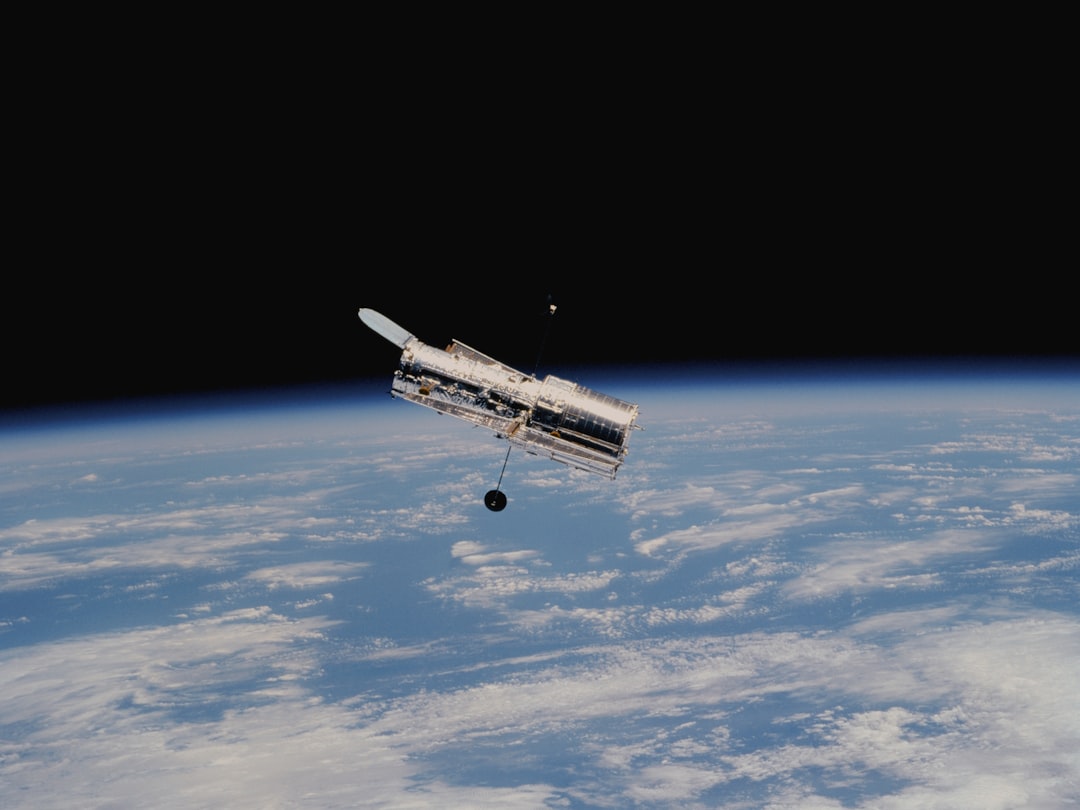
NASA's long-serving Hubble Space Telescope has enabled astronomers to witness a rare celestial phenomenon. A helium nova, the only known one in the Milky Way, is firing clumps of gas called cosmic bullets at a staggering speed of 20 million miles per hour. The discovery was announced at the Royal Astronomical Society's National Astronomy Meeting in Birmingham, UK.
The helium nova V445 Puppis and its mysterious bullets
The explosion in question is V445 Puppis, which erupted in 2000 and remained shrouded in a thick cloud of dusty debris for decades. Only when this veil cleared could a team of researchers study the system using Hubble, NASA's exoplanet-hunting TESS satellite, and the ground-based Very Large Telescope (VLT). They discovered not only the bullets but also the true nature of the system: a white dwarf feeding on a helium-rich companion star, an extremely rare object. John Mills, a researcher at the University of Warwick, said: “The origin of these bullets is a mystery. We suspect they originated post-outburst, but bullets of this kind have not been observed in any other nova.”
Sponsored Protocol
How a helium nova differs from an ordinary nova
Helium novas like V445 Puppis occur when a white dwarf strips helium-rich, hydrogen-poor material from a companion star that has already lost its outer hydrogen layers. In contrast, ordinary novas are triggered by the accumulation of hydrogen. As material builds up on the white dwarf's surface, runaway pressures and temperatures ignite a thermonuclear explosion. For V445 Puppis, the 2000 blast created two vast debris lobes resembling butterfly wings, spanning over a trillion miles. A dense dust cloud obscured the system for more than two decades, preventing astronomers from identifying its components.
Sponsored Protocol
The white dwarf reawakens and may explode again
Now that the dust has cleared, the team found that the white dwarf has overcome its stellar indigestion and resumed feeding on its helium companion. This means another helium nova eruption could be imminent. This process might also lead to a different type of explosion: a Type Ia supernova, which occurs when a white dwarf accumulates too much material and is completely destroyed. Type Ia supernovae are used as standard candles to measure cosmic distances and the universe's expansion, helping to understand dark energy. Mills commented: “I look forward to seeing how this result may help us uncover what powers other hydrogen-poor astronomical explosions, such as the famous Type Ia supernovas.”
Sponsored Protocol
For more on unusual astronomical events, read our article on how an indie game delivered malware via Steam Workshop or discover the new AI-driven homepages from Netflix and Prime Video. For further details on novas, check the Wikipedia page on novas.