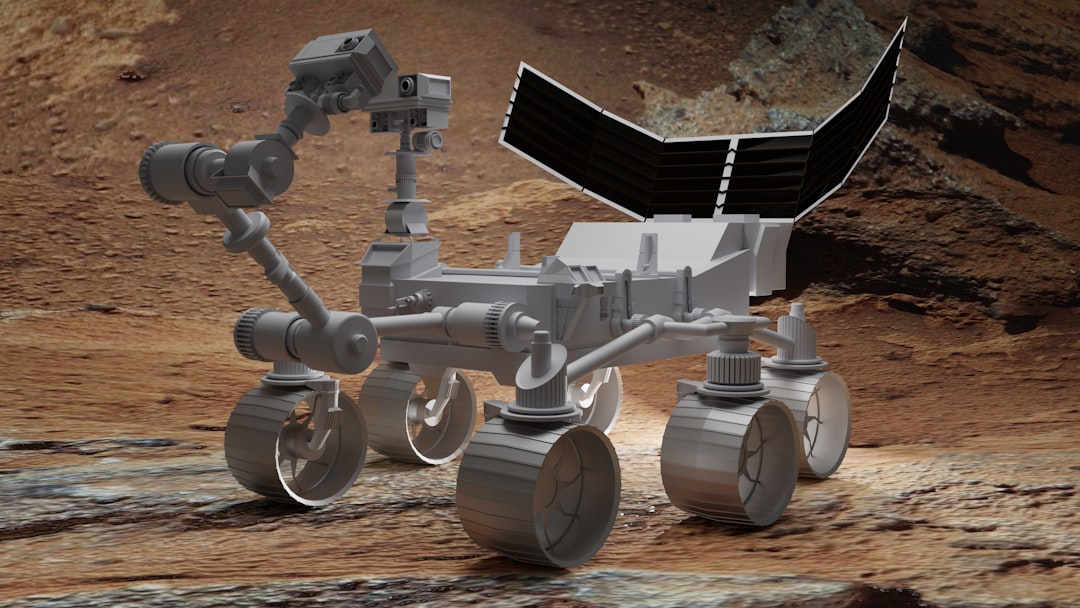
NASA's Curiosity Mars rover, exploring the red planet for nearly fourteen years, has sent back close-up images of its wheels showing significant wear and tear. The photos, taken on July 23, 2026, reveal cracks and holes in the metal surface, a direct result of rocky terrain and long distances traveled. Curiosity landed in Gale Crater on August 6, 2012, and has since covered over 32 kilometers, analyzing rocks and soil for signs of ancient life.
The rover's wheels bear the scars of a long Martian journey
The Mars Hand Lens Imager (MAHLI), a camera on the rover's robotic arm, captured the wheel details during a routine inspection. Curiosity weighs over one ton, and its wheels have faced constant abrasion from sharp rocks and shifting sands. NASA and the Jet Propulsion Laboratory (JPL) periodically check the wheels to assess safety for future missions. Despite the visible damage, the space agency stated that the wheels are holding up well, enduring the harsh conditions better than expected. While on Earth, engineering advances like the redesigned MacBook Ultra showcase consumer tech progress, Curiosity represents extreme durability in an extraterrestrial environment.
Sponsored Protocol
The challenge of exploring a distant world with robotic vehicles
The new wheel images are not just a health report for the rover but also a testament to the technological feat of sending wheeled vehicles to another planet. Curiosity has been exploring Mount Sharp within Gale Crater, climbing geological layers that tell billions of years of Martian history. Every kilometer driven is a victory for space engineering, made possible by advanced materials and robust design. The wheel wear, though concerning, has not stopped Curiosity from continuing its scientific mission. To better understand the complexity of these missions, consult the Wikipedia page on Curiosity.
Sponsored Protocol
The scientific value of the close-up wheel images
Beyond monitoring the rover's integrity, the MAHLI images provide valuable data about Martian terrain. The holes and cracks reveal rock composition and hardness, information useful for designing future rovers. Curiosity, together with its twin Perseverance, is laying the groundwork for future human presence on Mars. Each photo sent from the Martian surface reminds us how close we are to becoming an interplanetary species. The damaged wheels symbolize an unprecedented scientific adventure that is rewriting our understanding of the Solar System.