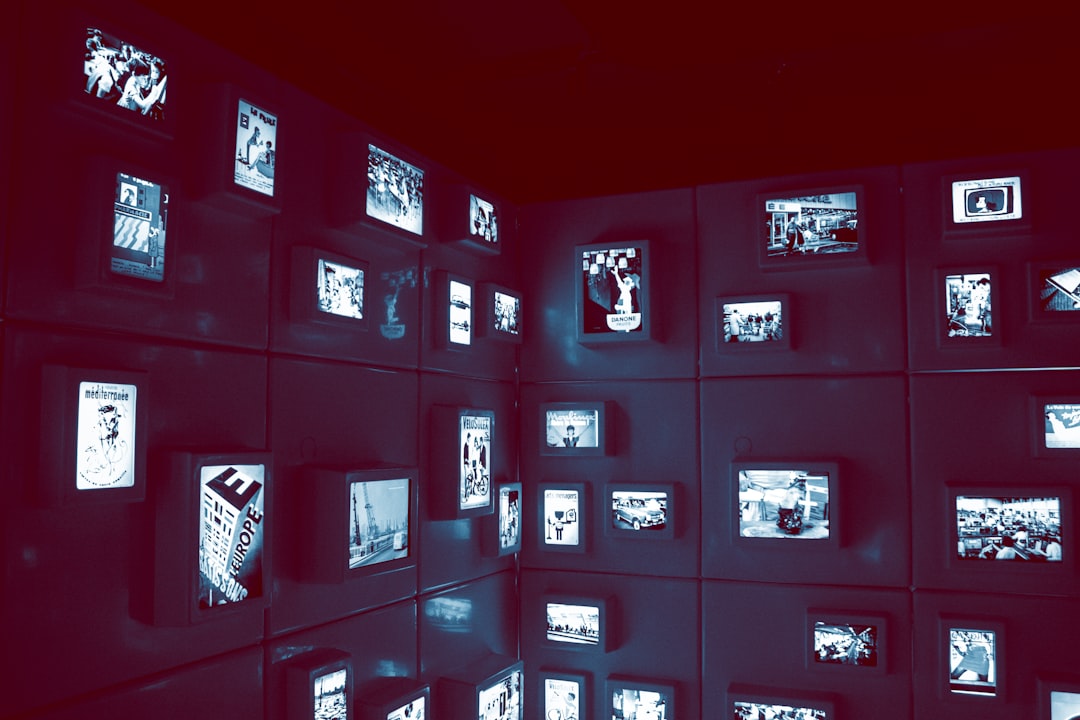
As conflict in the Middle East continues to inflict incalculable damage on cultural heritage, an ambitious project is proving that a people’s memory can be preserved beyond walls and borders. The Palestinian Museum in Birzeit has built a distributed digital archive designed, in the words of its general director Amer Shomali, to be 'unlootable'. With over 500,000 digitized photographs, identification papers, diaries, maps, films, and letters, this archive represents one of the most important digital preservation initiatives in a war zone.
Cultural heritage under direct attack
According to Amer Shomali, approximately 80 percent of Palestinian national collections have been looted, destroyed, or remain under Israeli control. Within the first week of conflict, two art galleries, seven museums, two main archives in Gaza, and hundreds of archaeological sites were bombed. A 2025 report by the Applied Research Institute-Jerusalem documented at least 2,400 archaeological sites in the West Bank taken over by Israel. As of March 2026, UNESCO had verified damage to 164 cultural sites in Gaza since October 2023, including historical buildings, religious sites, museums, and archaeological sites.
Sponsored Protocol
Technology as a shield against oblivion
To counter this systematic destruction, the Palestinian Museum began building a digital archive in 2018 that does not rely on any single physical location. The team, consisting of three full-time staff members supported by a network of volunteers, collected materials directly from Palestinian families, knocking on doors and asking permission to scan old photographs, letters, and documents. The result is an open-source platform now containing more than half a million items. To ensure resilience, the archive is replicated in multiple copies around the world, creating a distributed system that can withstand cyberattacks and even physical destruction. 'We can’t protect it from being hacked, but we can protect it from disappearing,' Shomali explains.
Sponsored Protocol
An archive that lives beyond borders
The archive is not a static collection of data. The museum has developed an 'exhibition in a box, Ikea-style' kit that allows anyone to download materials, print them, and organize exhibitions about Palestine anywhere in the world. This project has been exhibited more than 260 times, from Japan to San Francisco, and translated into five languages. International artists and curators draw on the archive for their work: in May 2026, artist and curator Leyya Mona Tawil used the collections for the exhibition My Name is Palestine: Echoes from The Palestinian Museum’s Music Online Exhibition in San Francisco. In Spain, curator Pablo Llorca spent two months selecting images for To Tell My Story, displayed in Madrid and 15 other locations, attracting interest from Spain’s Ministry of Culture.
Sponsored Protocol
Technical and cultural challenges
Digitizing fragile documents requires specific expertise. Mohammad Rabae, who oversees the digitization process, recounts handling a 19th-century Bible printed in Jerusalem and a Palestinian newspaper from 1930 with brittle pages and faded handwritten ink. 'Experiences like these show that digitization is not only about creating a digital image, but also about safely preserving fragile historical material for future generations,' Rabae says. The team also works on cataloging, translation, and linguistic proofreading, even exploring a bot capable of reading Ottoman Arabic to process historical records. To make the archive even more resilient, the museum has adopted technology solutions similar to those used for cloud-managed databases, as described in the article on AWS managed databases with RDS and Aurora, which offer distributed backups and high availability.
Sponsored Protocol
A memory that cannot be erased
The Palestinian Museum’s digital archive is far more than a database: it is an act of resistance against cultural erasure. As Shomali emphasizes, 'Having the digital archive is a way of protecting our memory.' Every scan, every backup, and every replicated copy represents an attempt to ensure that Palestinian memory survives, even if the places that hold it do not. The poet Mahmoud Darwish wrote: 'We who are able to remember are able to liberate ourselves.' This archive is a concrete demonstration of that principle. For further context on historical preservation techniques, you can refer to the Wikipedia page on digital preservation.
Source: https://www.wired.com/story/how-palestinians-are-building-a-digital-archive-that-cant-be-erased