Pat Gelsinger, former Intel CEO, has left earnings calls behind for a new role as general partner at Playground Capital, a venture capital firm focused on deep tech. His mission is to reawaken Moore's Law through nanometer-scale light-based lithography. After departing Intel in 2024, Gelsinger considered government roles, university positions, and private equity, but chose venture capital to work on technologies that 'really matter.' In an exclusive interview at the RAISE Summit in Paris, he explained why light is the key to overcoming the current bottleneck in chip manufacturing.
Light as the new frontier for lithography
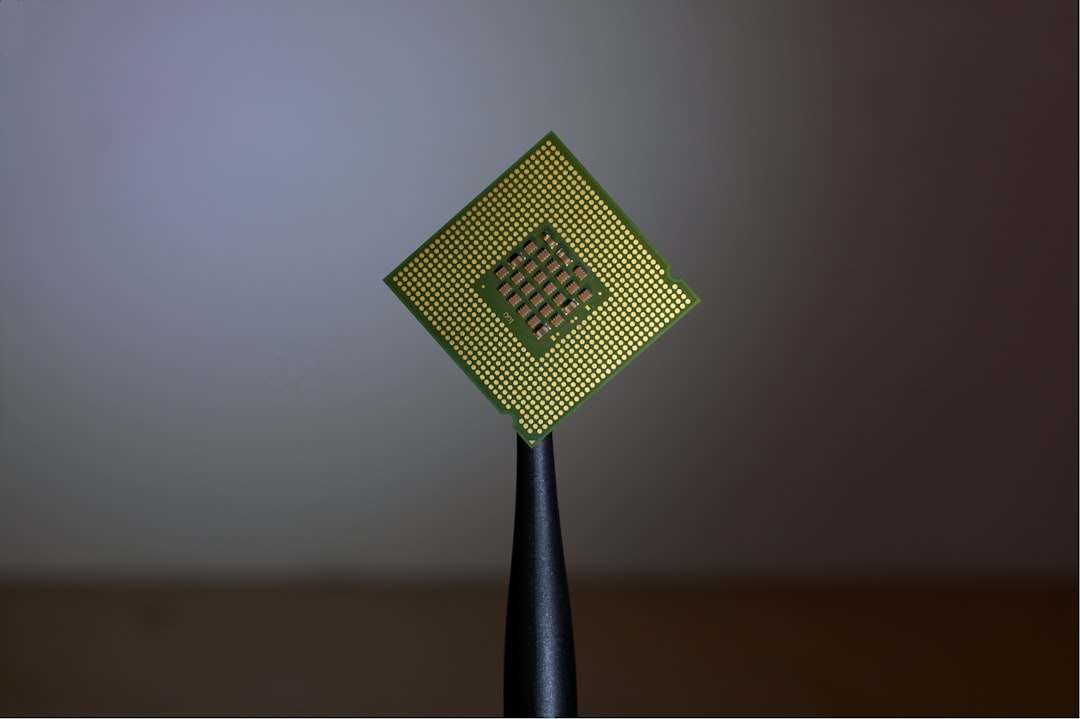
According to Gelsinger, the chip industry has hit a critical point: shrinking atomic-scale transistors further has become prohibitively expensive. The solution lies in moving beyond the current 13.5-nanometer wavelength light used by ASML machines. Playground Capital has invested in xLight, a startup developing novel lithography techniques based on free-electron lasers, capable of reaching wavelengths as low as 2 nanometers. 'If we solve the light problem, everything else follows,' says Gelsinger, invoking the biblical 'Let there be light' to emphasize the technology's importance. The goal is not to replace ASML but to enhance its machines by attaching the new light source.
Sponsored Protocol
Artificial intelligence as a catalyst for deep tech
The rise of AI has multiplied chip demand, pushing the semiconductor industry to reach a trillion dollars in revenue by 2025, five years ahead of schedule. Gelsinger notes that many venture funds are pivoting to deep tech, but few have the expertise to pick winners. His diligence process is rigorous: Playground's team, composed of engineers and PhDs, evaluates the technical depth of founders, checking whether they can articulate the hard problem and represent the best team on that topic. 'We look for the rare dodo bird, not another copycat startup,' he jokes.
Sponsored Protocol
AI inference and innovative memory architectures
Gelsinger predicts that inference will become the heart of the AI market, with specialized chips surpassing Nvidia's GPUs. His mission is to make AI 10,000 times more efficient, not just 10 times. This requires stacked memory architectures and new materials. Companies like d-Matrix, Fractile, and Cerebras are already breaking the mold, while high-bandwidth memory (HBM) will be obsolete by the end of the decade. 'One gigawatt of power must produce the equivalent of 10 gigawatts in tokens,' he states, emphasizing the urgency of innovation in power distribution as well.
Energy: the true bottleneck of the AI era
According to the former Intel CEO, U.S. energy capacity has grown only at low single-digit rates over the last decade, a 'despicable' situation for a digital age. Gelsinger criticizes the overemphasis on climate at the expense of capacity. Among the solutions, he cites upgrading existing nuclear plants through Alva Energy, a startup Playground has invested in, and the need to restart building new reactors. 'Winners and losers in the AI age will be determined by the energy capacity to run the systems,' he concludes.
Sponsored Protocol
For further context on AI-driven innovations, consider reading about OpenAI Presence, which showcases how AI is transforming enterprise landscapes. Additionally, Atlassian's team-based approach to AI adoption offers complementary insights. For a broader view on AI's energy challenges, see Wikipedia.
Source: https://www.wired.com/story/pat-gelsinger-moores-law-light-chips