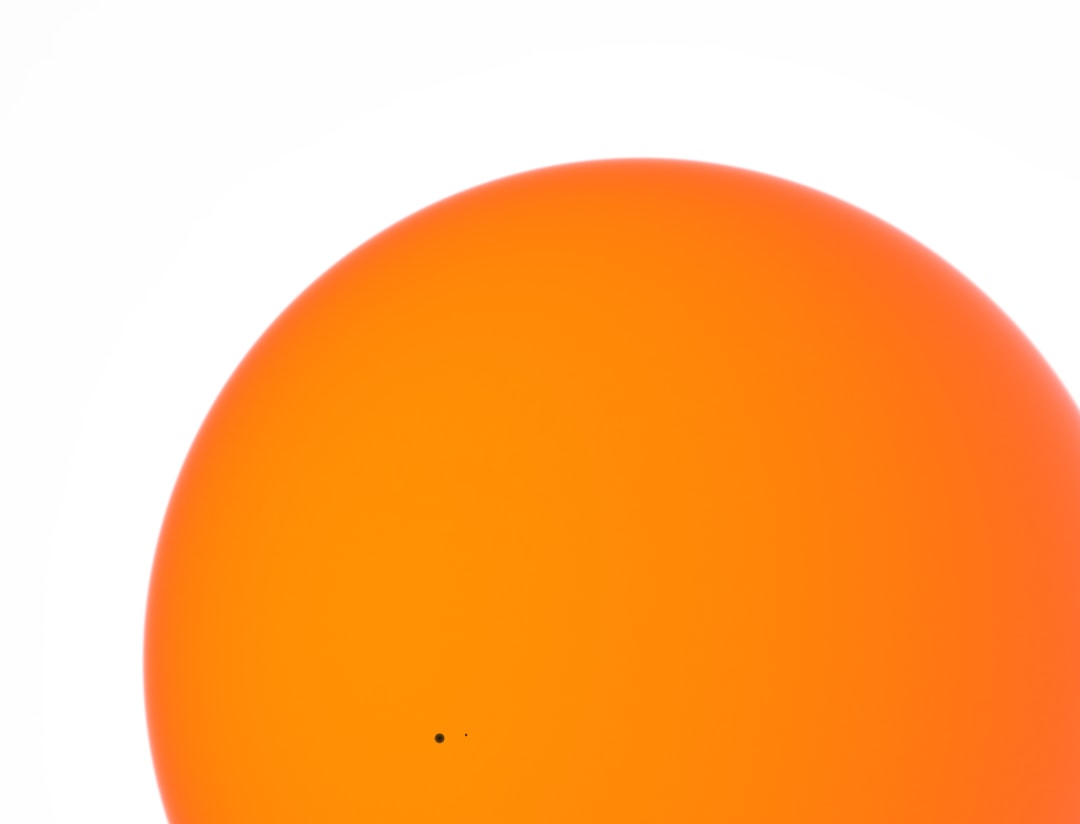
The Sun, our star, has finally revealed a never-before-seen detail. A team of astronomers has captured the sharpest image ever taken of the Sun in visible light, and this shot has made it possible to observe for the first time tiny plasma vortices that had been predicted for over a century. This discovery could rewrite some chapters of solar physics and offer new tools for predicting space weather.
The image, obtained thanks to the most advanced solar telescope in the world, the Daniel K. Inouye Solar Telescope (DKIST) in Hawaii, shows the solar surface with unprecedented detail. These vortices, called "solar vortices" or "plasma tornadoes", are swirling structures that form in the transition zones between convection cells. These phenomena had been hypothesized as early as the late 1800s, but no instrument had been able to resolve them directly.
Plasma vortices are finally visible
Thanks to a spatial resolution of about 20 kilometers on the solar surface, researchers were able to distinguish these swirling structures that measure only a few hundred kilometers across. Their rotational movement has been observed in real time, confirming computer simulations that had predicted them. These vortices play a crucial role in transporting energy from the Sun's core to its outer layers, and they could be responsible for heating the solar corona, a mystery that has persisted for decades.
Sponsored Protocol
This discovery is not just a technological triumph, but opens the way for new research. The collected data will allow scientists to study how these vortices influence the solar wind and solar eruptions, phenomena that can have significant impacts on Earth, such as interference with satellite communications and power grids.
A record-breaking telescope to unveil our star
The DKIST, with its 4-meter primary mirror, is currently the largest solar telescope in the world. Its ability to observe in visible light with such sharpness is the result of years of development and cutting-edge technologies, such as adaptive optics systems that correct atmospheric distortion. This instrument joins other observatories, like ESA's Solar Orbiter and NASA's Parker Solar Probe, to provide a comprehensive view of the Sun.
Sponsored Protocol
The publication of this image represents a historic moment for solar astrophysics. Scholars can now analyze in detail the dynamics of the vortices and verify existing theoretical models. Furthermore, these data will be fundamental to improve space weather forecasts, thus protecting technological infrastructure on Earth.