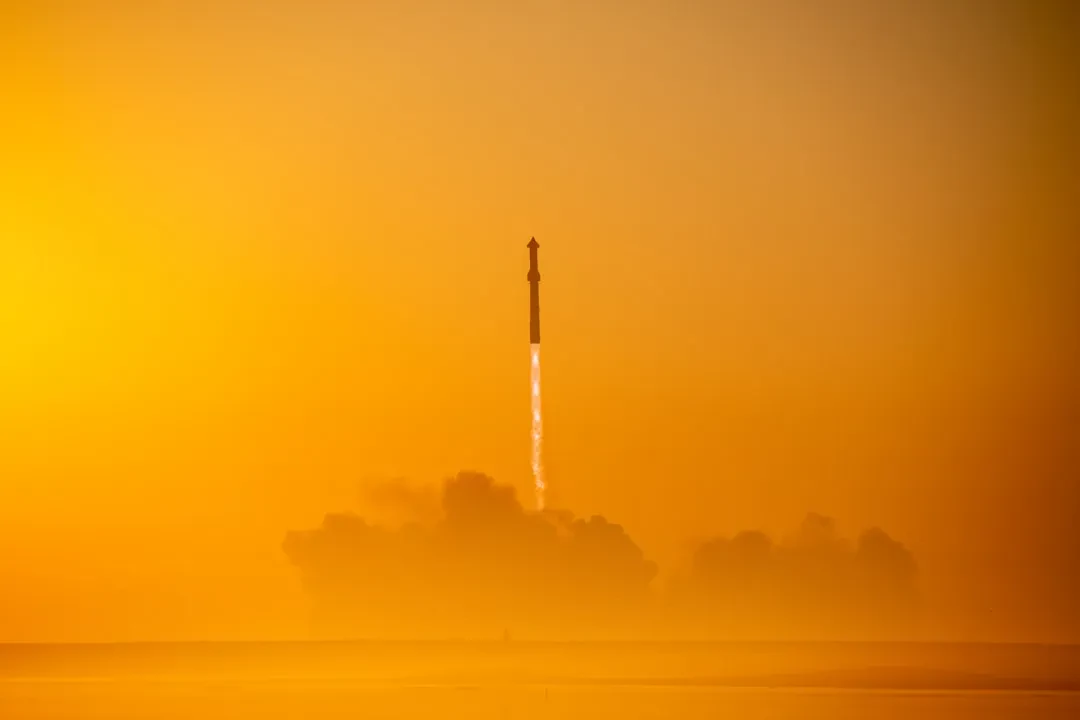
After weeks of technical speculation and delays that had kept the aerospace industry on edge, SpaceX has finally ignited the engines for the first test flight of the Starship V3 prototype. The stainless steel giant, standing over one hundred and twenty meters tall, looms over the launch pad in Boca Chica, Texas, awaiting the verdict of the countdown. This is not just any test; it represents a crucial step toward Elon Musk's vision of making humanity a multiplanetary species, with Mars as the next frontier.
Technical Specifications of the New Generation
The Starship V3 is not a simple cosmetic evolution. Compared to previous versions, the new prototype introduces radical improvements to the propulsion system. The completely redesigned Raptor 3 engines deliver fifteen percent more thrust while reducing mechanical complexity. The liquid methane and liquid oxygen fuel system has been optimized for more stable flow during ignition and shutdown, a critical aspect for landing maneuvers. Moreover, the thermal protection tiles on the vehicle's underside have been reinforced with a new composite material capable of withstanding temperatures exceeding one thousand six hundred degrees Celsius during atmospheric reentry. These innovations concern not only raw performance but also reliability, an element that has often hindered previous orbital flight attempts.
Sponsored Protocol
The Path to Launch: Between Hopes and Previous Delays
The path leading to this moment has been strewn with obstacles. As analyzed in our coverage of Remote Codex and Poisoned Code: The Double Threat to Digital Security in 2026, technical issues related to guidance systems and Federal Aviation Administration certification caused significant delays. However, today SpaceX appears to have overcome the last unknowns. The engineering team successfully completed a static fire test of all thirty-three Raptor engines, demonstrating the vehicle's ability to generate a combined thrust exceeding seven thousand tons. This figure positions Starship V3 as the most powerful rocket ever built, surpassing even the Saturn V from the Apollo program.
Sponsored Protocol
Implications for the Space Industry and Future Missions
Success today would open the door to a new era for commercial space transportation. The Starship V3 is designed not only to carry astronauts to Mars but also to deploy next-generation satellite constellations, including the most advanced versions of Starlink. The payload capacity, estimated at over one hundred tons to low Earth orbit, makes this launcher ideal for lunar resupply missions under NASA's Artemis program. Furthermore, the ability to perform orbital refueling via propellant transfer between different Starship vehicles could revolutionize interplanetary missions, eliminating the need for enormous single stages. For a historical overview of how SpaceX has gradually overcome technical challenges, refer to the Wikipedia entry.
Sponsored Protocol
From an economic standpoint, the full reusability of both the upper vehicle and the Super Heavy booster promises to reduce the cost per kilogram to orbit to a fraction of current levels. This could democratize access to space, enabling startups and research institutions to launch experiments and payloads with previously prohibitive budgets. The implications for the telecommunications, space manufacturing, and even orbital tourism industries are immense.
The Challenge of Reentry and Landing
The most delicate aspect of this mission remains the reentry and landing phase. The V3 prototype must demonstrate the ability to execute a controlled belly-flop maneuver, braking with its engines just meters above the Pacific Ocean. Onboard sensors, upgraded with artificial intelligence algorithms for trajectory prediction, represent a leap forward from previous tests. If all goes according to plan, the Super Heavy booster will attempt a landing on the drone ship "A Shortfall of Gravitas," while the Starship vessel will splash down off the coast of Hawaii. Any deviation from the path will be analyzed in real time by a ground control team, ready to intervene with emergency commands.
Sponsored Protocol
The industry watches closely. A failure could set back SpaceX's timeline by several months, while a success would cement the company's position as the undisputed leader in private space exploration. For technology enthusiasts and those following aerospace market dynamics, this launch represents a turning point, the beginning of a phase where dreams of interplanetary colonization start to become concrete projects. The countdown has begun, and the world holds its breath.