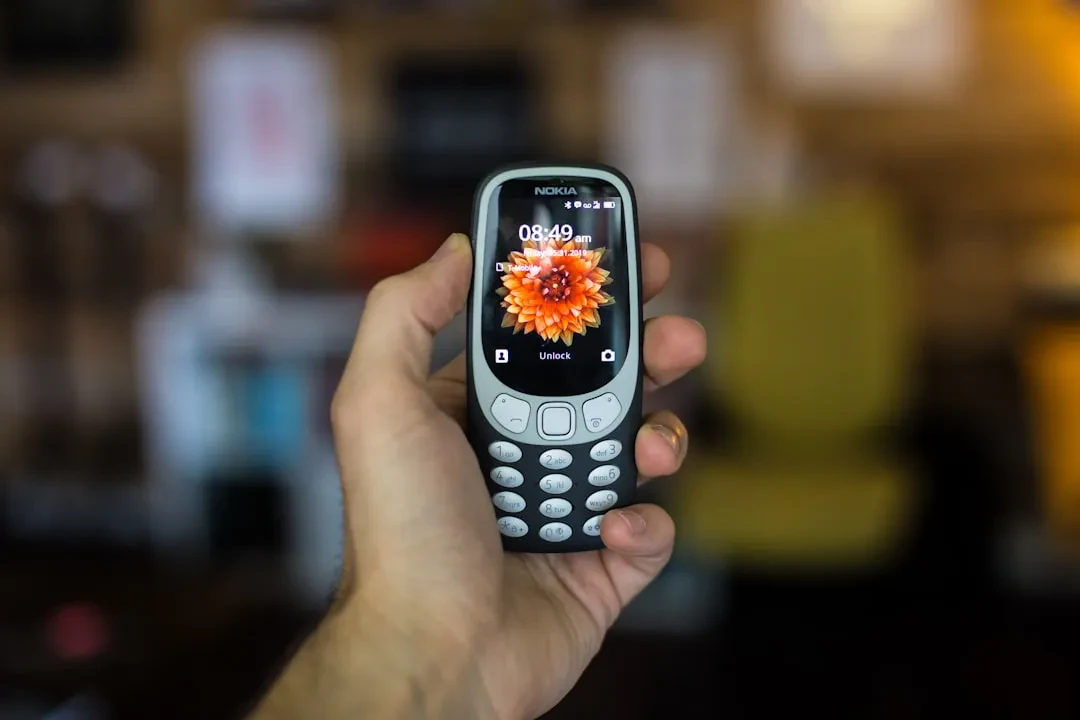
The United States Federal Communications Commission has set its sights on one of the most controversial and beloved technologies in anonymous communication: disposable phones, commonly known as “burner phones.” The federal agency is considering new regulations that could effectively make it much harder, if not impossible, to purchase and use these devices without providing personal data. If approved, this move would represent a historic shift for digital privacy and for how law enforcement and security companies handle sensitive communications.
Burner phones have been a fundamental tool for decades for those seeking to maintain anonymity. Journalists, activists, whistleblowers, and even ordinary citizens have used them to protect their identity. However, the same feature that makes them so useful for privacy has turned them into a vehicle for illegal activities. Drug trafficking, terrorism, cybercrime, and fraud often exploit the lack of traceability. Now the FCC intends to close this loophole by requiring every phone sold in the United States to be linked to a personal identifier, such as a government-issued ID or a Social Security number.
Sponsored Protocol
Potential consequences for user privacy
If the FCC proposal becomes law, buying a prepaid phone without registration would become illegal. The consequences would be enormous. On one hand, law enforcement agencies could gain precise data on who owns which device, facilitating investigations. On the other hand, millions of people who use these phones for legitimate privacy reasons would find themselves exposed. Mandatory registration would open the door to potential abuse by governments or malicious actors who could intercept or track anyone's movements. It is not hard to imagine scenarios where activists in authoritarian regimes or stalking victims lose their only protective tool.
Furthermore, mandatory registration could drive many users toward black markets or alternative technologies such as untraceable virtual SIMs, creating an even more dangerous underground economy. The challenge for the FCC is to balance security and privacy, a balance that historically is very difficult to achieve. There is no perfect solution that eliminates burner phones without impacting civil liberties.
Sponsored Protocol
Current technological and regulatory context
The FCC move fits into a broader pattern of tightening rules on digital surveillance. Recent months have seen a series of measures in the United States aimed at making communications more transparent. For instance, the US state attorneys general investigation into OpenAI has raised concerns about how health data is handled by AI platforms, as highlighted in the related article US State Attorneys General Investigate OpenAI Over Ads and Health Data Practices. While there is a push for greater accountability from tech companies, there is also the risk of sacrificing individual privacy on the altar of security. The growing adoption of VPNs to protect one's online identity is a sign that users are seeking tools to bypass tracking.
Sponsored Protocol
A crucial technical aspect is that modern smartphones, even budget ones, contain chips and sensors that can uniquely identify a device, such as the IMEI number. However, traditional burner phones work with prepaid cards and are often purchased with cash, with no link to the person. Eliminating this possibility means requiring every phone to be tied to a personal account, exactly as already happens with postpaid contracts. The FCC is also considering the impact on the most vulnerable communities, such as homeless individuals or undocumented immigrants, who might lose access to mobile communication.
According to cybersecurity experts, as reported by the Wired article that broke the news, the proposal may also be motivated by the growing threat of ransomware and cyberattacks that exploit the anonymity of disposable devices. A recent example is the Oracle zero-day exploit by the ShinyHunters group. For more on how to protect your data, the definitive cybersecurity guide offers practical advice for businesses and individuals. The battle over burner phones is just the latest chapter in a global debate over where security ends and mass surveillance begins.
Sponsored Protocol
Ultimately, the FCC decision will have repercussions far beyond US borders. Countries like India, where the Anthropic case has ignited debate on technological sovereignty, might take inspiration to introduce similar regulations. The future of anonymous communications hangs in the balance. The question we must all ask is: how much privacy are we willing to sacrifice in the name of security? The answer is not straightforward, but one thing is certain: the days of burner phones as we know them may be numbered. For further reading, consult the Wikipedia page on burner phones for a historical and legal overview.
Source: https://www.wired.com/story/security-news-this-week-the-fcc-wants-to-kill-burner-phones