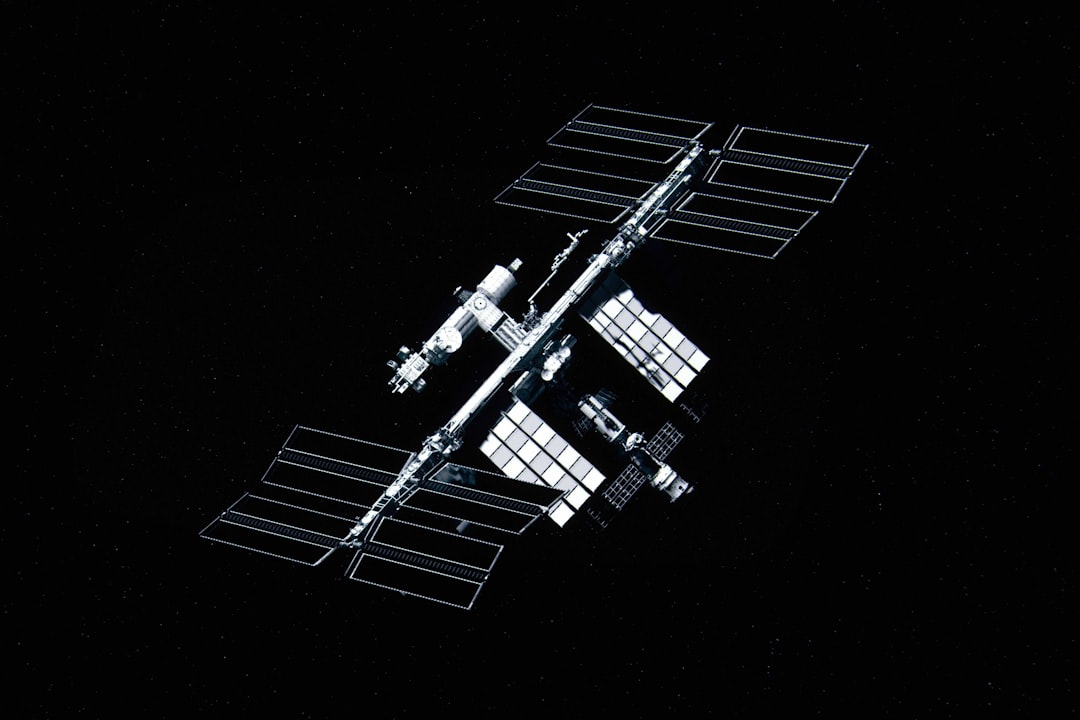
Many have dreamed of floating in microgravity, watching Earth from the Cupola of the International Space Station. Now that dream is within reach, thanks to an immersive virtual reality experience called "Space Explorers: The ISS Experience." Created by Felix & Paul Studios, this VR installation transports visitors directly inside the ISS, offering a faithful simulation of orbital life.
The project took about three years of production, with VR cameras sent to the station during six NASA expeditions. Footage was captured both indoors, with cameras placed at eye level to create an anthropomorphic point of view, and outdoors, using a camera mounted on the Canadian robotic arm. Astronauts themselves actively contributed, suggesting better angles and positions to capture daily life in orbit.
The Space Station in Virtual Reality
Wearing VR headsets, users find themselves immersed in a three-dimensional reconstruction of the ISS, with towering solar panels and lived-in corridors. Touching glowing orbs opens short documentary clips, including training sessions with astronaut Christina Koch and everyday moments. The feeling of being exposed to the vacuum of space is palpable, amplified by details like the dazzling sunlight on lab walls. The experience aims to be as realistic as possible, though the internal structure is slightly translucent for navigation.
Sponsored Protocol
Félix Lajeunesse, co-founder of Felix & Paul, explained that the VR camera was treated like a real person: it was never placed at the center of a table, but at eye level with those present, to create a sense of authentic presence. The astronauts embraced this idea, turning the camera into an invisible guest.
A Project Made by Astronauts
Collaboration with the crew was essential. Each day, the production team sent a "shooting script" with desired positions; astronauts offered practical alternatives given the complexity of ongoing experiments. The result is an emotional document, not just a technical one. The American premiere took place in Houston, space city, and many astronauts said the VR experience felt like "going home."
Sponsored Protocol
For a science journalist who always dreamed of space, as described in a recent article about an astronaut recalling the Mir incident, the opportunity to virtually visit the ISS was an intense emotion. The lived-in walls, the dizzying orbital speed, and the majestic Cupola exceeded all expectations.
A Time Capsule for Future Generations
The International Space Station is not forever. Unless a unlikely reprieve occurs, it will be deorbited in 2030 and most of its remnants will burn up in the atmosphere. When that happens, this VR experience will become a precious legacy: the only way to relive the interior of the ISS and for former astronauts to return, even virtually, to their orbital home. Already today, this simulation can be tried at venues like Eclipsio in Manhattan, a preview of what might become a historical archive for future generations who will never have known the ISS as part of the night sky.
Sponsored Protocol
For more on the history of the space station, consult the dedicated Wikipedia page. The VR experience represents not only technological advancement but an emotional bridge between those on Earth and those who have lived in space, testifying to the resilience and beauty of human collaboration beyond the planet's boundaries.