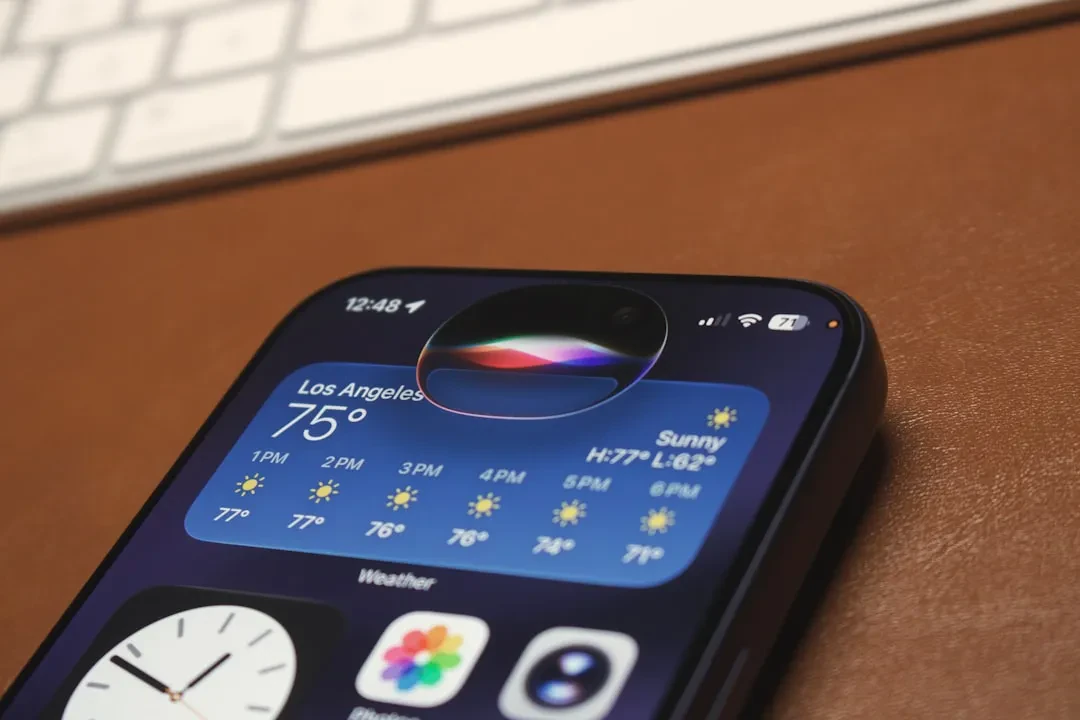
Anthropic just announced it has discovered a latent space inside its Claude model, an area where the AI actively 'puzzles over' concepts before producing answers. The finding, published by MIT Technology Review on July 10, 2026, comes as OpenAI accelerates its 'super app' project — an all-in-one platform merging chat, payments, social, and an AI assistant, modeled after WeChat but with an artificial brain at its core.
Two news items, one contradiction. Anthropic opens a black box; OpenAI wants to build a bigger, more closed one. For Europe and for Italian SMEs, this isn't tech gossip — it's a wake-up call.
Why it matters: over 90% of code running on Italian servers relies on proprietary APIs from US Big Tech — OpenAI, Google, Anthropic. We don't know what goes on inside. Anthropic's discovery proves there's an intelligence operating at levels even the creators don't fully control. Think about a bookkeeper in Sciacca using ChatGPT to draft contracts, or a warehouse manager in Palermo automating orders with an LLM: do they know what happens to their data? Who guarantees that hidden biases aren't skewing the output?
Sponsored Protocol
The EU AI Act already requires transparency for high-risk models. But how do you enforce transparency when the latent space is unknown? And how does Italy defend itself from dependency on super-apps that will hold its business data hostage? OpenAI wants to become the operating system of your digital life. For a struggling Italian SME, the alternative is being trapped in a closed ecosystem designed for US market logic.
Our position is clear: transparency is not optional — it's an industrial requirement
We, at Meteora Web, have been building websites and platforms for companies in Southern Italy for nearly a decade. We've seen the damage from hype-driven 'AI miracle' promises with no explanation. A clothing store that adopts an AI assistant cannot afford to not know why a customer gets a wrong recommendation. We come from accounting: margins, VAT, double-entry bookkeeping. We can't tolerate opaque errors.
Sponsored Protocol
That's why we support the EU AI Act and call for extending auditability mandates to proprietary models. Italy must invest in open, verifiable models — not in super-apps that demand your digital ID. Owning your stack beats renting it — we've always said that for CMS, and it applies to AI too.
What to do now. If you're a developer or entrepreneur: don't entrust critical processes to models you can't inspect. Demand explainability. Ask vendors: 'Where does my data go? How is it processed? Can I see an audit?' If they answer with marketing, run. AI should amplify your intelligence, not replace it with a black box. At Meteora Web, we've already started integrating open-source models into our stack. The future is ours — not some super-app's.