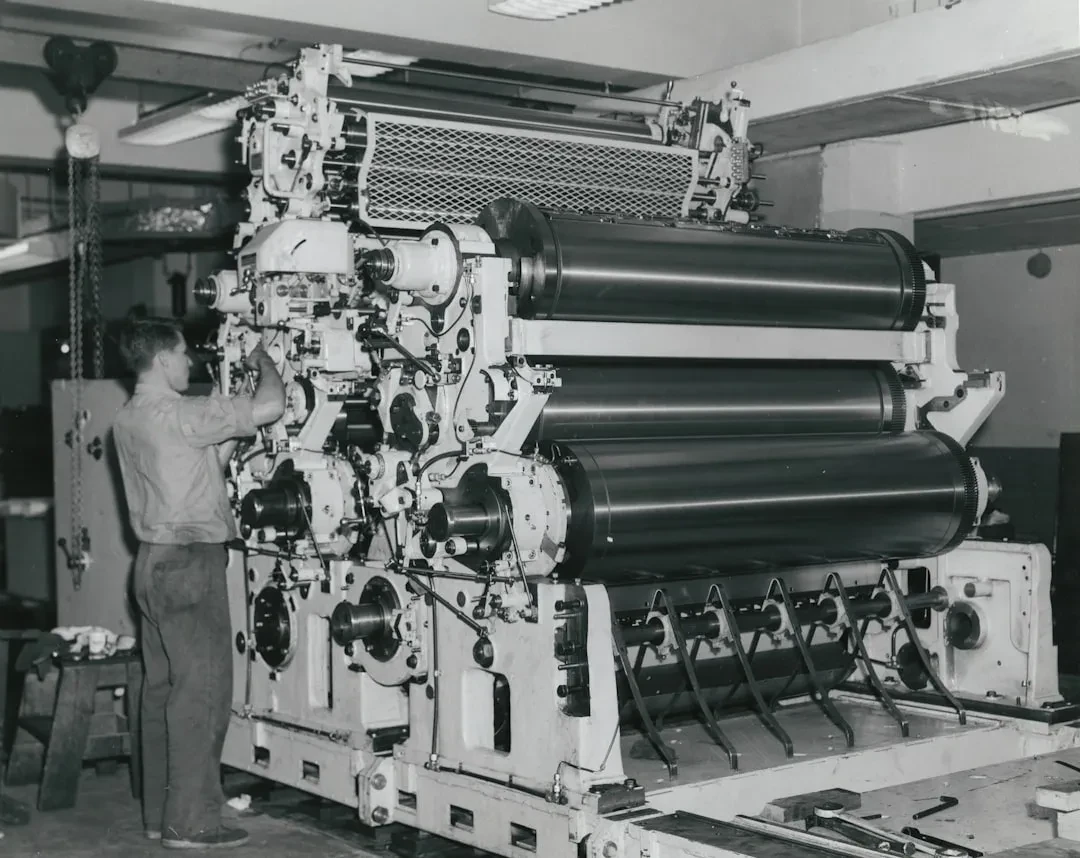
Dutch giant ASML has completed delivery of its new $400 million lithography machine, a behemoth the size of a double-decker bus weighing over 150 tons. This system is essential for producing the world's most advanced chips, the ones required by artificial intelligence for training ever more complex models. The machine uses extreme ultraviolet (EUV) light generated by lasers hitting molten tin droplets tens of thousands of times per second, etching nanometer-scale features on silicon wafers.
The bus-sized machine powering AI chipmaking
The sheer size of the lithography system is matched only by its cost: $400 million makes it one of the most expensive industrial tools ever built. Without it, companies like TSMC, Samsung, and Intel could not produce AI chips with the transistor density needed to keep pace with Moore's law. The production process requires ultra-clean environments and nanometer lens alignment, an engineering feat that ASML has dominated for years.
Sponsored Protocol
ASML's dominance and growing threats
ASML controls about 90% of the global lithography tool market, a position that has raised geopolitical concerns. Governments and rival companies, particularly in China and the United States, are trying to develop alternatives to reduce dependence on the Dutch firm. As highlighted in a recent article, Europe risks being a spectator if it does not invest in the semiconductor supply chain. The most immediate threat comes from Chinese startups and Japanese consortia attempting to replicate EUV technology, but the scale and complexity of ASML's production pose enormous barriers.
Sponsored Protocol
Impact on AI and blockchain industries
Demand for AI chips has exploded with the advent of models like GPT-5 and deep learning systems. The new ASML machines can double transistor density compared to the previous generation, reducing energy consumption per computation. The cryptocurrency and mining world, which requires specialized hardware, will also benefit from more efficient chips. According to industry sources, the new machine can cut per-chip costs by 30% over current technology, accelerating large-scale AI adoption. As reported by MIT Technology Review, ASML's rise parallels political tensions over export controls on sensitive technologies.
Future challenges and emerging competition
Despite current dominance, ASML faces the race to miniaturization pushed by the physical limits of EUV lithography. The next frontier is high-resolution lithography with even shorter wavelengths, but R&D costs are astronomical. Meanwhile, companies like Applied Materials and Canon are developing alternative systems based on electron beams. The real battle, however, is geopolitical: the United States has imposed export restrictions on ASML machines to China, pushing Beijing to invest billions in domestic research. Europe, with initiatives like the Chips Act, is trying to keep up. For more context, read our piece on the AI energy strategies of Microsoft and Chevron.
Sponsored Protocol