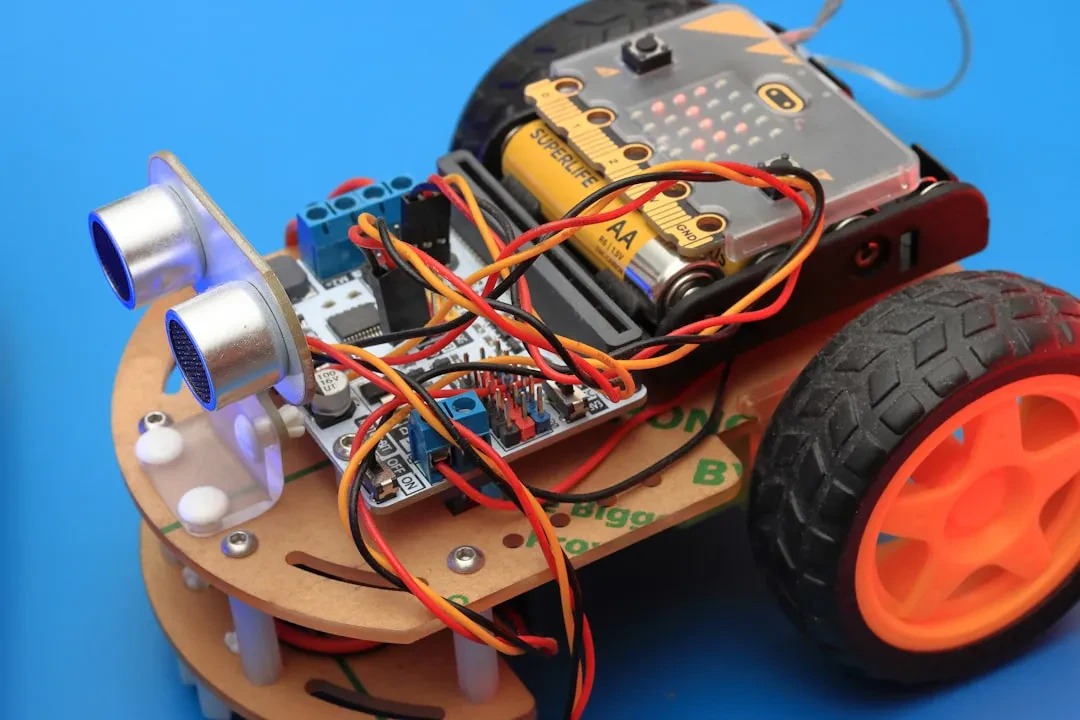
Jean-Baptiste Kempf, the French open-source legend behind VLC Media Player with over 6 billion downloads, has a new project. Convinced that hundreds of millions of robots and drones will roam our streets in a few years, Kempf founded Kyber, a Paris-based startup aiming to become the infrastructure layer for remote device control. The idea is simple but ambitious: provide an SDK that synchronizes video, audio, sensor data, and control inputs with minimal latency, enabling an operator to control a robot thousands of miles away as if they were there.
Kyber has raised $5 million in a round led by Lightspeed, the venture capitalist that also backed Anthropic and Mistral AI. Lightspeed called the project "a foundational piece for physical AI," emphasizing that "physical AI is only as good as the underlying systems running it." Kempf believes that "if you control things in the real world, every millisecond matters." The name Kyber is a nod to the lightsaber crystals in Star Wars, referencing both the speed of light and the responsiveness needed in applications like remote driving or robotic surgery.
Sponsored Protocol
Kyber's technology is rooted in video streaming, the same field where Kempf excelled with VLC. But the challenge here is far more complex: optimizing the transmission of commands and sensor data at industrial scale, managing fleets that could number thousands or millions of devices. "The largest fleets today have maybe 2,000 or 3,000 vehicles," Kempf explains. "Imagine needing to manage millions; current solutions are not enough."
An Open-Source Infrastructure for Remote Control
Kyber is open source in its base version, while the company sells an enterprise edition to clients in defense, telecom, robotics, and AI. The team of 25 people is spread across Paris, San Francisco, and Singapore, with a significant portion being forward-deployed engineers (FDEs) who help clients integrate the platform. Kempf compares it to what Palantir does: not just software, but custom deployment.
Sponsored Protocol
Among target sectors, Kempf focuses on robotics, drones of all kinds, and remote IT access, the latter already in high demand. Kyber aims to become an alternative to Citrix for remote computer and server control, but the real revolution is in the physical world. "Companies that tried to solve this problem spent years and tens of millions on custom solutions they will never share. We are building the version everyone else can use," reads the careers page.
Kempf stresses the importance of observability: "When AI agents manage entire fleets, we need to be certain that every device is working correctly." Scalability is key: from a handful of drones to millions of robots, Kyber wants to be the infrastructure connecting the digital and physical worlds in real time. For anyone who has used VLC, the leap from video to robots is not surprising: Kempf has always solved latency and interoperability problems. Now he does it on a much larger scale.
Sponsored Protocol
To explore the context of open source and Kempf's background, you can check his Wikipedia page. Additionally, for insights into remote device control and hardware integration, read our article on Akai MPC One G2. The No-Code and Low-Code in 2026 guide also shows how platforms are democratizing complex technologies, a parallel with Kyber's open-source approach.