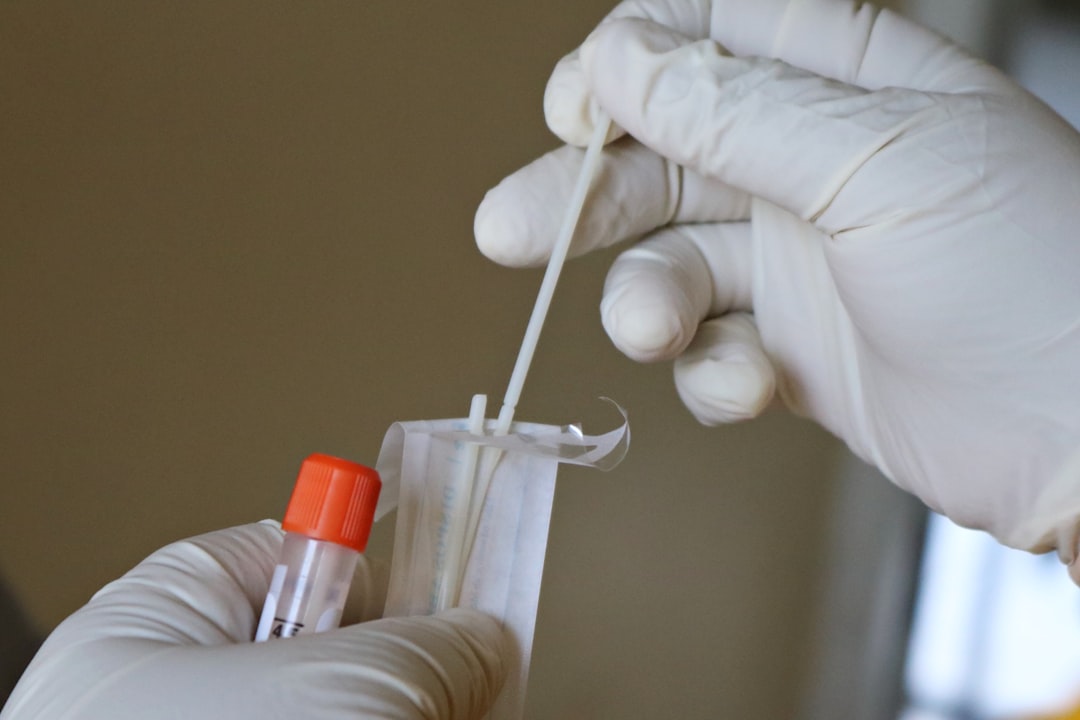
U.S. immigration enforcement has dramatically expanded DNA collection from people held for civil immigration violations. According to a new report from Georgetown Law's Center on Privacy and Technology, the Department of Homeland Security has become the largest single source of new genetic profiles in the nation's criminal DNA system. In 2025 alone, ICE may have added as many as 920,000 profiles to the FBI's CODIS database, bringing the total 'detainee' index to over 3.3 million profiles.
The Moreno-Mendez case illustrates the pressure on detainees
A striking example is the case of a man stopped in Waco, Texas. Taken to an ICE field office, officers repeatedly demanded he open his mouth for a DNA swab. After three refusals, he was charged with failing to provide DNA while in federal custody, a misdemeanor that ICE itself said had never been prosecuted as of 2021. A magistrate judge found him guilty in August 2025. This case shows how DNA collection is enforced with the threat of criminal prosecution.
Sponsored Protocol
Most detainees have no criminal convictions
The vast majority of people in ICE custody have no criminal record. Residing in the U.S. without documentation is typically a civil, not criminal, offense. However, once their DNA profiles enter CODIS, law enforcement agencies across the country can compare them against evidence from unsolved crimes, even years later. The physical samples, containing a person's entire genome, are stored indefinitely in federal laboratories.
DNA collection extends to families and children
The expansion has affected families held in immigration detention. Reports have emerged of children being swabbed at the Dilley family detention center in Texas. Representatives Joaquin Castro, Greg Stanton, and Nanette Barragán stated that none of those families have been convicted of a crime and should not be in a database meant for violent criminals, especially children. DHS defended the practice as a border-security and identification measure but did not address Georgetown's estimates.
Sponsored Protocol
Exponential increase in DNA collection
Until recently, DNA collection from migrants primarily occurred at the border by CBP. Internal data shows ICE collected only about 20,000 samples between 2020 and 2021, while CBP sent over 1.36 million profiles to the FBI between October 2020 and the end of 2024. In 2025, the situation changed drastically. The CODIS 'detainee' index grew by approximately 995,000 profiles in one year, with an average of over 2,700 people per day. CBP reported sending about 75,000 profiles, so the difference is attributed to ICE.
Legal roots of the policy
This expansion stems from a regulatory change in 2020, when the Justice Department eliminated an exemption that allowed DHS to skip DNA collection when resources were limited. In December 2020, ICE issued Directive 10092.1, requiring officers to collect DNA from nearly everyone in custody. Internal training materials from 2021 show officers are instructed to sample DNA even from asylum seekers and refugees, and that collection should occur after 'ANY arrest'.
Sponsored Protocol
Future impact on the criminal database
Before 2020, profiles from federal detainees were a negligible share of CODIS. According to Georgetown's projections, by 2030 DHS could supply more than a third of the index used by police to match DNA evidence. The official rationale for collection is administrative identification, like fingerprints, but critics argue that use in criminal investigations violates civil rights. This raises deep questions about the balance between security and privacy in a system that treats migrants as potential criminals.
Source: https://www.wired.com/story/ice-dna-collection-fbi-codis