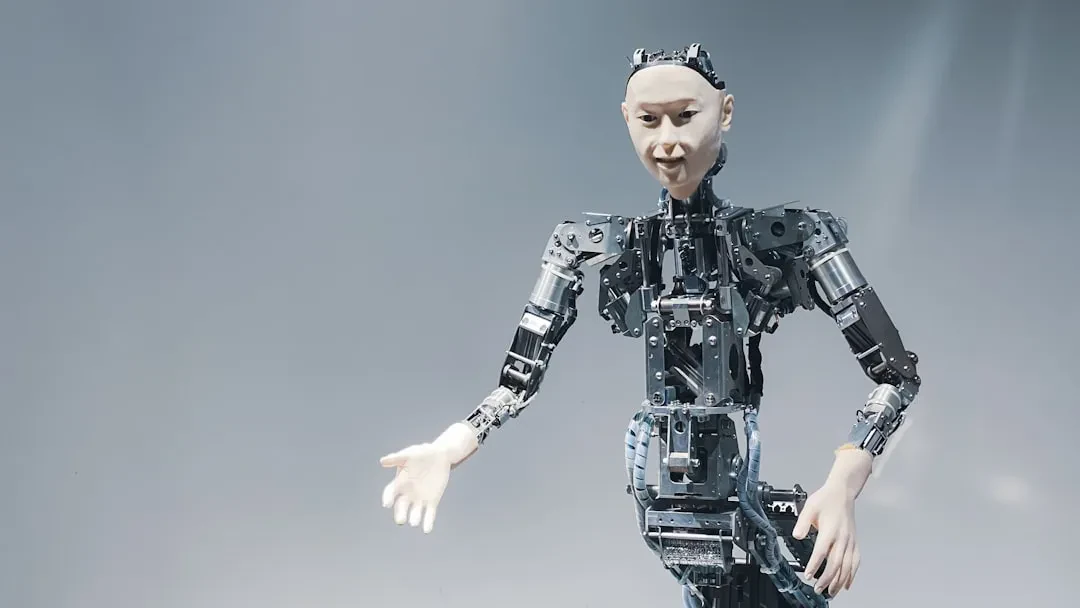
In China's hardware capital, Shenzhen, a new profession is emerging: the humanoid robot operator. Using a teleoperation system reminiscent of Ready Player One, local workers control anthropomorphic machines by wearing VR headsets and motion sensors. The startup IO-AI Tech, based in Shenzhen, is at the forefront of this revolution.
During a demonstration, a journalist wore a sensor-equipped glove and simultaneously controlled ten robotic hands from different manufacturers. Finger movements were instantly transferred to all fifty mechanical digits. After an initial playful moment, he was impressed by the system's responsiveness and the ability to feel tactile feedback, such as sensing a ball placed in one of the electronic hands.
Practical Training in Supply Chains
The startup is testing a system for a Chinese convenience store chain. Using a VR headset and robotic grippers, the operator can pick up medicine boxes from a shelf. Despite initial disorientation due to a slight delay in movements, after a little practice control becomes natural and shelving efficiency increases significantly. IO-AI Tech develops algorithms that transfer human motion to various robot forms, adapting to different heights and weights. Without a certain degree of autonomy, the robot could lose balance.
Sponsored Protocol
Integrating Human and Machine in Manufacturing
IO-AI Tech's cofounder, Si Chin, emphasizes that Shenzhen, with its thousands of factories, is the ideal place to develop and refine prototypes. The company collaborates with numerous local manufacturers eager to automate processes. One example is Jack Sewing Machines, an apparel equipment maker training two-armed robots to perform tasks like ironing shirts. These robots can be integrated into existing production lines to automate manual work. Teleoperation offers an incremental approach to automation, similar to autonomous vehicles: first collect data in controlled scenarios, then gradually increase autonomy.
Sponsored Protocol
China's manufacturing industry already produces high-quality, low-cost humanoid robots like those from Unitree. If companies like IO-AI Tech continue on this path, they could help artificial intelligence master the physical world. To learn more about technologies enabling this, read our article on Qualcomm Snapdragon Reality Elite. For deeper insight into humanoid robots, visit Wikipedia.
Source: https://www.wired.com/story/humanoid-robot-training-in-chinas-hardware-capital