A persistent problem in one of the world's most sophisticated scientific observatories has been solved using a simple, inexpensive component: a commercially available thermal camera. The Laser Interferometer Gravitational-Wave Observatory (LIGO), which detects ripples in spacetime caused by cosmic collisions like merging black holes, suffered from thermal distortions in its near-perfect mirrors. Now, a team led by Jonathan Richardson at the University of California, Riverside, has developed a method to correct these distortions using off-the-shelf infrared cameras.
The thermal distortion problem in LIGO's mirrors
LIGO uses two L-shaped facilities in the United States, located in Washington State and Louisiana. Inside each detector, a laser beam travels down two 4-kilometer-long tunnels, bouncing off ultra-pure mirrors at each end. When a gravitational wave passes through Earth, it subtly stretches one tunnel and compresses the other, altering the laser's path and revealing the cosmic event. However, the mirrors absorb a tiny fraction of the intense laser light, converting it into heat. This heat warps the mirror surface by a few nanometers, enough to degrade the observatory's overall sensitivity.
Sponsored Protocol
Innovative solution with infrared cameras
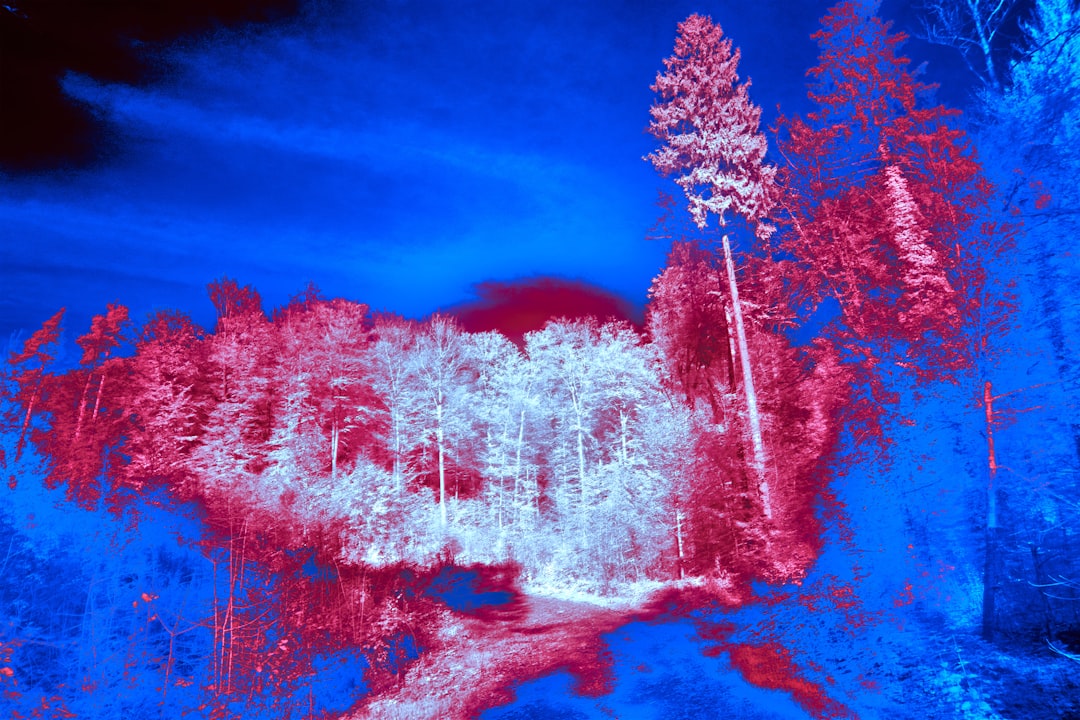
Physicists already knew that applying targeted heat to the back of the mirrors could counteract the distortions. The challenge was accurately measuring the distortions. Richardson and his team paired infrared thermal images with existing computer models to create a map of distortions across the mirror surface. "You can think of it like taking an infrared picture of a car engine," Richardson said in a statement. "An engineer can look at the temperature pattern on the outside and infer what's happening inside the engine. We're doing the same thing with LIGO's mirrors." This approach requires no new technology, as Richardson noted: "It doesn't require any new technology development, which is almost unheard of for solving a LIGO instrumentation problem."
Sponsored Protocol
A 33 million light-year extension and future implications
Once incorporated into LIGO's upcoming upgrade, the technique is expected to extend the observatory's reach by about 33 million light-years. While this number may seem small compared to the vastness of the universe, it opens an exponentially larger volume of space for detecting gravitational waves. Being able to look farther will allow astronomers to "hear" many more cosmic ripples, increasing the potential for discovering violent collisions beyond LIGO's current range. The technique was described in a paper published July 16 in the journal Classical and Quantum Gravity. This advancement also impacts the future of gravitational wave astronomy. The technique will be integrated into the planned Cosmic Explorer observatory, a next-generation facility targeted for the mid-2030s with 40-kilometer arms, ten times longer than LIGO's. According to Richardson, "the goal for the next generation of gravitational-wave detectors is to achieve about 10 times the sensitivity of today's instruments. One of the key obstacles to achieving that is reducing the fundamental quantum mechanical noise that limits the precision of the measurements." For further context, you can read a related article on NASA's exoplanet telescope and OpenAI's autonomous hacker. An authoritative external reference is the Wikipedia page on LIGO.
Sponsored Protocol