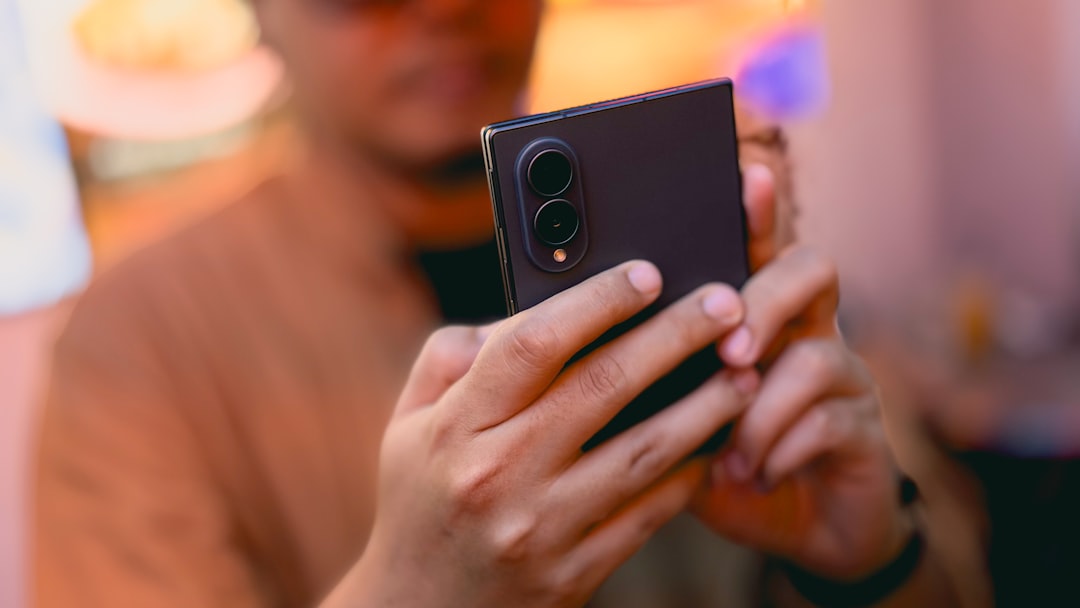
The summer of 2026 has brought a significant novelty to the world of foldable smartphones. Samsung has finally adopted silicon-carbon batteries on its Galaxy Z Fold 8 and Z Flip 8 models, a move that Chinese manufacturers have already made for a while. The engineering is remarkable, but the Korean company avoids committing to what really matters for consumers, namely the actual battery longevity over the years.
Si-C cells deliver more energy but age faster
Traditional lithium batteries use a graphite anode, a stable material but limited in the amount of ions it can hold. Silicon-carbon batteries replace part of the graphite with silicon, which can absorb about ten times more lithium ions, as explained on the Wikipedia page dedicated to lithium-silicon batteries. This allows for increased capacity without increasing volume. For foldables, where space is already sacrificed to hinges and displays, this technology represents a great opportunity. Thanks to these cells, the Galaxy Z Fold 8 Ultra reaches 5,000 mAh with a thickness of just 4.1 millimeters when open. The standard Fold 8 gets 4,800 mAh, while the Flip 8 keeps 4,300 mAh in a slimmer body. But there is a downside. Silicon is an excellent energy reservoir, but it is mechanically unstable. When it absorbs ions, it can swell up to 300%, and repeated expansion and contraction causes microcracks inside the cell, leading to capacity loss and swelling. For this reason, the cycle life of the new batteries is lower. Data from the European Product Registry for Energy Labelling indicates about 1,200 charge cycles before dropping to 80% health, compared to the 2,000 cycles of the previous graphite battery. This means the battery degrades faster than before.
Sponsored Protocol
The paradox of Samsung's seven-year update promise
Samsung has built its recent reputation on promising seven years of operating system and security updates, starting with the Galaxy S24 series and continuing with the foldables. However, the hardware coverage does not hold up. The standard battery warranty expires after just 12 months. After the first year, the cost of degradation falls entirely on the user, and replacing a dual-cell battery in a foldable will not be cheap. Samsung Care+ subscribers can get unlimited replacements when capacity drops below 80%, but that requires paying a monthly insurance premium on top of the already high price of the phone. This imbalance between software promises and hardware support is increasingly hard to justify.
Sponsored Protocol
Xiaomi's answer with a five-year warranty
Meanwhile, Chinese manufacturers are using battery longevity as a marketing wedge. Xiaomi, with the Redmi Note 17 Pro launched in July, introduced a 9,000 mAh battery and a guarantee called First Sale Free Five-Year Battery Upgrade Guarantee. If the capacity drops below 80% within four years of purchase, Xiaomi replaces the battery for free. This is a concrete response to a real problem. Samsung now has the opportunity to go a step further and align its battery warranty with its seven-year update promise. A transparent, multi-year warranty would be one more reason to choose a Galaxy over a competitor. In a market where loyalty also comes through after-sales support, the choice is clear. While Google prepares to launch its Pixel Tag to expand its ecosystem, and Apple has recently revamped its upgrade programs with Klarna, Samsung cannot afford to ignore the issue of battery lifespan. Consumers deserve an answer. Silicon-carbon technology is a step in the right direction, but without a warranty commitment it remains a half measure. The ball is in Samsung's court.
Sponsored Protocol
Source: https://www.androidpolice.com/samsung-si-c-battery-longevity-gap