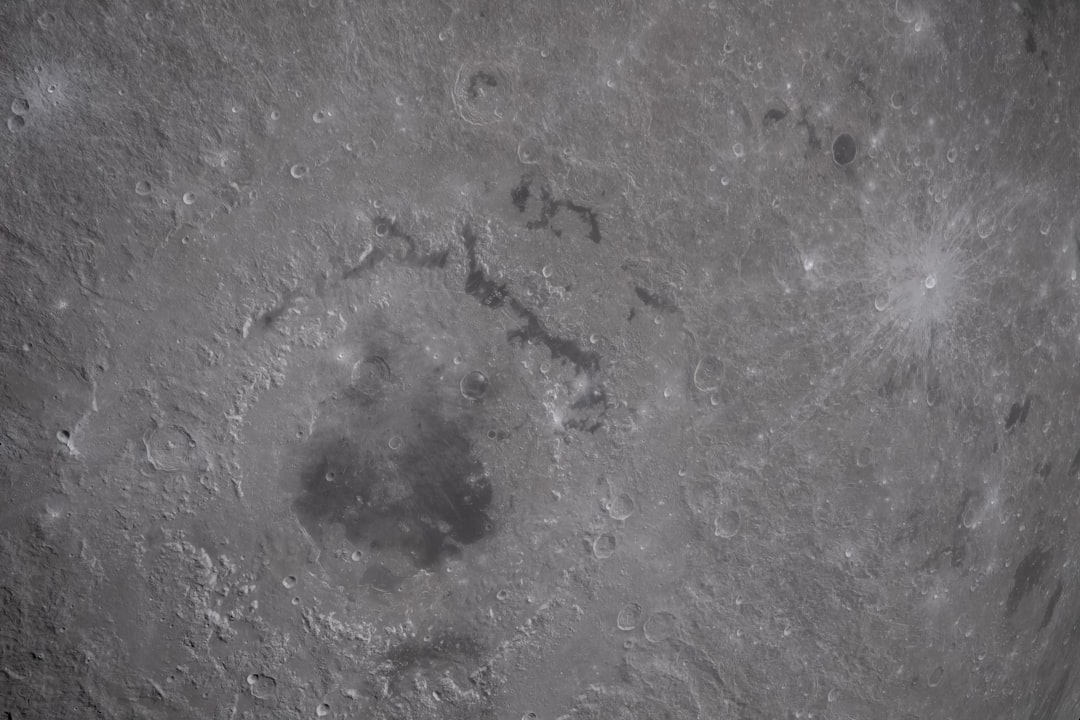
The upper stage of a SpaceX rocket that delivered two lunar landers in early 2025 is set to crash into the lunar surface in a spectacular end to its mission. According to Japan Today, the large piece of space debris is expected to hit the Moon at an estimated 5,400 mph (8,690 km/h), which is seven times the speed of sound. While a piece of debris hitting the Moon might seem inconsequential to most, scientists and astronomers are closely monitoring it because this will be one of the rare occasions when an impact on the Moon is observed in real time.
NASA's Lunar Reconnaissance Orbiter and South Korea's Danuri lunar orbiter will capture before-and-after images of the impact site. The Danuri will also fly close to the stricken SpaceX rocket a few minutes before it begins its final descent, providing valuable data to researchers.
A three-ton TNT blast set to reshape the lunar surface
Researchers are particularly interested in how the impact, expected to release energy equivalent to about three tons of TNT, will affect the lunar surface. Despite the huge amount of energy, the crash itself likely won't be visible from Earth with the naked eye. However, because the Moon lacks wind and atmosphere, the ejected material could stretch for miles and be observable through telescopes.
Sponsored Protocol
Benjamin Fernando of the Los Alamos National Laboratory explained that the Moon's low gravity and lack of wind will cause the dust kicked up by the impact to disperse differently than it would on Earth. This study is crucial for assessing potential hazards that debris impacts pose to future astronauts.
The new space race turns attention to lunar debris
Space debris is not currently as big a concern for the Moon as it is for Earth orbit, but that could change in the near future. With the renewed space race between the U.S. and China to land humans on the Moon again after more than half a century, operators will soon have to think about disposing of their rocket stages responsibly, rather than leaving them in orbital decay that could crash into future settlements or infrastructure. This upcoming event offers a unique chance to study impact effects and prepare for those challenges.
Sponsored Protocol
For more tech tests, you might want to read our hands-on with the Galaxy Z Fold 8 and the Dreo TurboCool fan test.