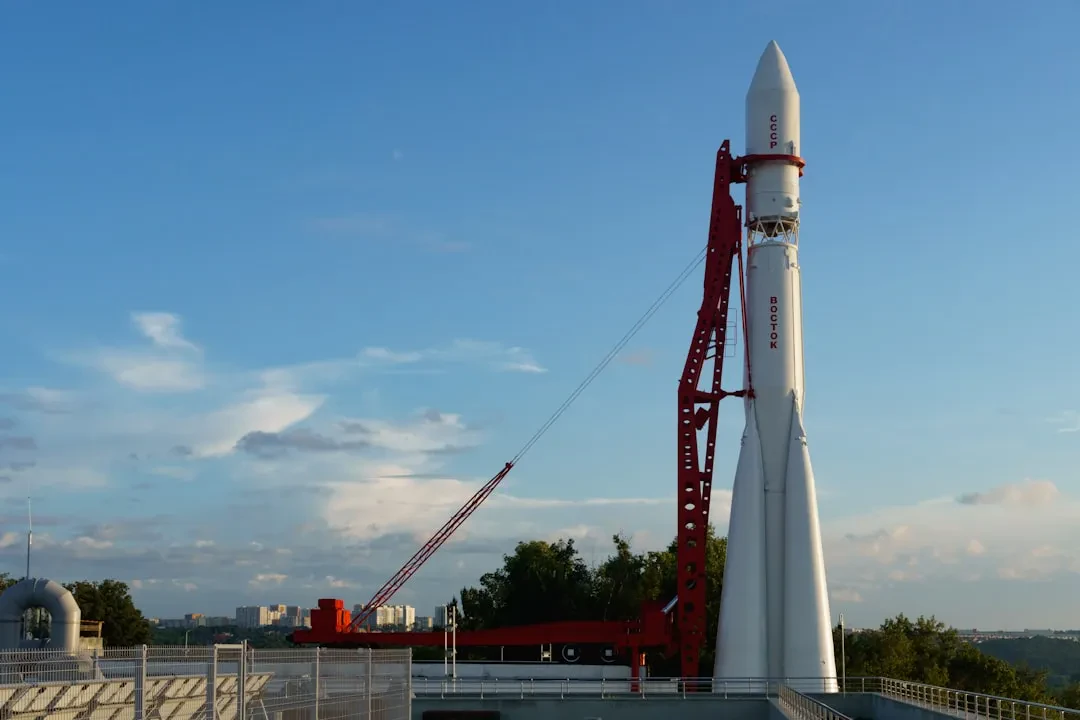
Stoke Space, an emerging player in the aerospace industry, has announced the successful closure of a funding round that amassed a substantial $1 billion. This significant capital infusion brings the company's total investor funding to $2.3 billion, marking a pivotal moment in its pursuit of advanced space launch capabilities.
Development of Nova Pathfinder and Nova Block 2 Rockets
The newly acquired funds are earmarked for the accelerated development of Stoke Space's fully reusable launch vehicles, the Nova Pathfinder and the yet-to-be-seen Nova Block 2. The Nova Block 2 is engineered to be a more powerful system, capable of delivering payloads up to 15 tons to low Earth orbit (LEO). Andy Lapsa, CEO and co-founder of Stoke Space, conveyed the company's gratitude for the trust placed by investors and customers, emphasizing that this investment is critical for scaling operations to meet market demands for capability and cadence. The Nova Pathfinder, which represents the company's first orbital launch vehicle and is reportedly the largest first rocket ever undertaken by a U.S. launch company, shares core technologies with the Block 2 design. Both two-stage vehicles are being manufactured with full and rapid reusability as a primary design tenet, with the Pathfinder serving as the foundational platform for this architecture.
Sponsored Protocol
Zenith Engine Technology and Andromeda Upper Stage
The Pathfinder's first stage is propelled by seven Stoke-designed Zenith engines, utilizing the complex Full-Flow Staged Combustion (FFSC) cycle and fueled by liquid oxygen and liquefied natural gas (LNG). The Nova Block 2's first stage will feature 14 Zenith engines. Stoke highlights FFSC as a challenging but advantageous engine cycle, leading to fewer residuals and reduced maintenance between flights. The upper stage of both rockets showcases a more unconventional design approach. Its aft end is equipped with a metallic heat shield, actively cooled by the liquid hydrogen that fuels the stage's Andromeda propulsion system. Rather than a single, large vacuum-optimized engine, the Nova's upper stage integrates 12 smaller dual-thrust chambers arranged in a circle around the heat shield's perimeter. This upper stage engine system underwent a successful "hopper" test flight in 2023.
Sponsored Protocol
The Future of Space Launch with Nova Block 2
Scaling up, the Nova Block 2 aims to equip its upper stage system with independent components for each of the 12 engines, potentially increasing thrust by over fivefold. The Block 2 configuration transitions from the Pathfinder's tapered design to cylindrical tanks, thereby increasing propellant and payload volume to accommodate a 5-meter-wide fairing. This more robust rocket is being developed to support the anticipated high demand for large commercial and national security satellite constellations. Key competitors for the Nova Block 2 include SpaceX's Falcon 9 rocket and Rocket Lab's forthcoming Neutron launch vehicle. While SpaceX is transitioning towards its Starship, Falcon 9 missions, particularly for NASA, are expected to continue until at least 2030. Stoke targets the first launch of the Block 2 for 2029, with expectations for increased production and flight cadence thereafter. Meanwhile, the Nova Pathfinder is slated for its debut in early 2027, with plans for multiple missions throughout 2027 and 2028 while Block 2 development progresses. The evolving landscape of commercial strategies, such as those seen in the gaming industry with Ubisoft's moves, mirrors the dynamic shifts occurring in space technology and commercialization.
Sponsored Protocol
Infrastructure Expansion and Recovery System
The substantial funding will also be directed towards building the necessary physical infrastructure for manufacturing, testing, and operating both launch vehicles. Stoke is planning a significant expansion of its 75-acre Moses Lake Test Site in Washington to accommodate propulsion and vehicle testing. Concurrently, the company is enhancing its operations at Cape Canaveral Space Force Station (CCSFS) in Florida, where it is constructing a new payload processing facility. To facilitate its full reusability system, Stoke is also developing an offshore recovery platform.
Sponsored Protocol